Owner’s manual




What is the average lifespan of an LG washer?
An LG washer like the WM3400CW typically lasts 10 to 15 years with normal household use and consistent maintenance. Keeping the tub clean, preventing mineral buildup, and fixing small issues early are the biggest factors in reaching the high end of that range.
- Usage frequency (daily loads wear parts faster than a few loads per week)
- Overloading (stresses the motor, bearings, and suspension)
- Hard water scale (builds up on internal components and shortens life)
- Drain and fill health (slow draining or filling strains the pump and valves)
- Vibration and leveling (excess movement accelerates wear)
LG’s care guidance for this washer emphasizes routine cleaning and scale control. Use these habits to keep performance steady:
- Run the Tub Clean cycle when the tcL reminder appears (often every 1 to 2 months)
- If you use a descaler or drum cleaner, follow with Rinse+Spin before the next load
- In hard-water areas, use a water softener and periodically remove mineral buildup
- Replace water inlet hoses on schedule (a common interval is every 5 years)
- Keep hoses unkinked and check for cracks or leaks
| What you do | What it helps prevent | Why it matters |
|---|---|---|
| Tub Clean on schedule | Odor, residue, poor washing | Protects the drum and internal surfaces |
| Control mineral scale | Heater/sensor issues, buildup | Extends component life |
| Replace inlet hoses | Leaks, bursts | Avoids water damage and valve stress |
- Repair makes sense when the washer is under ~8 years old and the issue is isolated (leak, no fill, no drain).
- Replacement makes sense when the washer is 10 to 15 years old and needs multiple major parts.
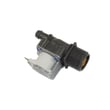
If you’re troubleshooting filling problems that can shorten lifespan, the WM3400CW uses a water inlet valve such as the washer water inlet valve 5220FR2006Z.
A front-load washer’s best lifespan comes from reducing stress on high-wear systems (drain pump, inlet valve, suspension) and preventing residue and scale from building up inside the tub.
For model-specific maintenance steps and cycle guidance, follow the WM3400CW owner's manual.
Last updated: February 2026
What is the most common problem with LG washers?
Drain and spin problems are the most common issues we see with LG washers, including the LG WM3400CW. A clogged drain path (pump filter, drain hose, or household standpipe) can leave water in the tub and prevent a full spin, which often looks like “won’t drain” or “won’t spin.”
- Clean the drain pump filter and remove coins, lint, and small socks.
- Confirm the drain hose is not kinked, crushed, or pushed too far into the standpipe.
- Check for water backing up from the household drain during pump-out (a clogged standpipe can mimic a washer failure).
- Reduce load size; the drum can be full, but laundry should not be tightly packed.
- Make sure the washer is level; an out-of-balance load can stop or limit spin.
| Symptom | Most likely cause | What to do first |
|---|---|---|
| Water left in tub | Clogged pump filter or drain restriction | Clean filter; inspect drain hose |
| Stops before high spin | Out-of-balance or overloaded load | Redistribute; run Spin Only |
| Leaking during fill or drain | Loose/damaged hoses or drain backup | Tighten hoses; check standpipe |
| Banging during fill | Water hammer in home plumbing | Add water hammer arrestors |
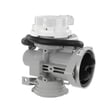
If the washer drains slowly, won’t drain at all, or you hear the pump hum without moving water after the filter is clear, the drain pump can be the next suspect. For this model, the replacement is the washer drain pump assembly AHA75853804.
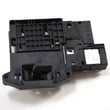
If the washer won’t start and the door won’t lock (or it stops and unlocks mid-cycle), a failed door lock can cause “no run” symptoms. The matching part is the LG washer door lock EBF61315802.
Drain restrictions and overloads force the washer to protect itself by limiting spin and stopping cycles. Fixing the drain path and loading habits prevents repeat clogs, reduces vibration, and helps the WM3400CW control water levels and temperatures correctly.
For model-specific troubleshooting steps and safety notes, follow the WM3400CW owner's manual.
Last updated: February 2026
Why are LG parts so expensive?
LG parts for the WM3400CW washer often cost more because they are model-specific components built to tight fit and performance requirements, and they are typically sold as complete assemblies (not individual sub-pieces). Pricing also reflects manufacturing, distribution, and warranty support expectations.
- Model-specific design: Front-load washers like LG WM3400CW use parts engineered for exact alignment, sealing, and sensing.
- Assembly-level replacement: Many repairs require replacing an entire assembly (for example, a door lock or drain pump) instead of a small internal piece.
- Electronics and sensors: Control boards, user interfaces, and sensors add cost compared to purely mechanical parts.
- Water-sealing requirements: Door boot and clamp components must seal reliably to prevent leaks.
- Supply chain and availability: In-stock OEM parts and shipping logistics can raise the delivered cost.
| Part type | What it does | Why it can be pricey |
|---|---|---|
| Door lock | Confirms the door is locked so the washer can run | Safety interlock plus switches and housing (assembly) |
| Drain pump assembly | Pumps water out during drain/spin | Motorized assembly, seals, and housing |
| Main control board | Runs cycles and monitors sensors | High-cost electronics |
| Door boot | Seals the door opening | Large molded rubber part with precise fit |
If your washer is not starting or the door will not latch, the LG washer door lock EBF61315802 is a common assembly-style replacement that illustrates why costs can be higher.
- Confirm the symptom and any error code using the WM3400CW manual before ordering.
- Check for simple causes first (loose connectors, clogged drain path, pinched hoses).
- Replace only the failed part, not multiple “just in case” parts.
- Avoid off-spec parts; improper parts can create leaks, no-drain issues, or repeat failures.
- Do basic maintenance (cleaning, correct detergent amount) to reduce wear on pumps and seals.
Using the correct LG parts helps the WM3400CW run safely and prevents secondary damage (leaks, repeated no-drain problems, or door-lock faults) that can turn a small repair into a bigger one.
Last updated: February 2026