Installation guide
 Owner’s manual
 Error Codes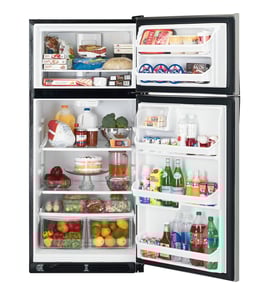



What is the PowerPlus freeze on a Frigidaire?
PowerPlus Freeze is a fast-freeze feature on some Frigidaire refrigerators that temporarily drives colder freezer operation to freeze newly added food more quickly. On the Frigidaire FRT18L4FW3, use the freezer temperature control and good airflow practices described in the FRT18L4FW3 owner's manual to get the same practical result.
How to “fast freeze” on the FRT18L4FW3
Because this model uses manual temperature controls, we recommend these steps when you load fresh groceries into the freezer:
- Turn the freezer control slightly toward Colder several hours before (or right after) adding a large amount of unfrozen food.
- Keep packages spaced so cold air can circulate freely.
- Avoid overloading; adding too much warm food at once slows freezing.
- Keep the freezer about 2/3 full for efficient operation (use frozen items or ice packs to help fill space).
- Do not block cold air vents with food containers.
What to expect (feature vs. manual control)
| Item | PowerPlus Freeze (feature on some models) | FRT18L4FW3 approach |
|---|---|---|
| How it works | One-touch temporary boost | Manual adjustment of freezer control |
| Best use | Large grocery load, quick freeze | Same situations; plan ahead |
| What to watch | Can overcool if left on | Return control to normal after freezing |
Why it matters
Fast freezing helps reduce ice crystal size and protects food texture and flavor. It also helps keep the freezer closer to 0°F when you add warm items, which protects already-frozen foods from temperature swings.
Helpful tip for temperature balance
On many top-mount designs like this Frigidaire, changing the refrigerator control can affect overall cooling balance, while the freezer control changes only freezer temperature. If the refrigerator section starts running too cold after a freezer adjustment, move the refrigerator control slightly warmer and recheck after several hours.
Last updated: January 2026
What is the upper part of a fridge called?
On the Frigidaire FRT18L4FW3 top-mount refrigerator, the upper section is the freezer compartment. It is the colder compartment designed to keep foods frozen, and on some setups it can also support an ice maker or ice trays (see the FRT18L4FW3 owner's manual).
What the freezer compartment does
The freezer is built to hold temperatures low enough for long-term frozen storage and to help protect food quality.
Common freezer uses include:
- Freezing meats, vegetables, and prepared foods
- Storing ice cream and frozen desserts (best kept in the interior, not the door)
- Making ice with trays or an automatic ice maker (if equipped)
- Keeping frozen foods organized so air can circulate between packages
Freezer vs. refrigerator section (quick comparison)
| Section | Typical temperature range | Best for | Notes |
|---|---|---|---|
| Freezer compartment (upper) | 0°F to 5°F | Frozen foods, ice | Avoid overloading with warm food; leave space for airflow |
| Fresh food compartment (lower) | 34°F to 40°F | Produce, dairy, leftovers | Door bins are convenient but can run warmer than interior shelves |
Tips for better freezing performance
These habits help the freezer in a top-mount refrigerator cool evenly and keep food in good condition:
- Avoid adding too much warm food at once; it slows freezing and can raise temperatures
- Leave space between packages so cold air can circulate
- Keep hard-to-freeze items (like ice cream) in the freezer interior, not on the door shelves
- Level the refrigerator so the doors close tightly
- Use the temperature control settings recommended in the FRT18L4FW3 owner's manual
Why it matters
Knowing the correct name helps when you are ordering parts, reading troubleshooting steps, or describing a cooling problem. For example, “freezer not cold enough” points us toward airflow, defrost, or fan-related checks rather than fresh-food storage issues.
Last updated: January 2026
Why is my Frigidaire top mount freezer not freezing?
If your Frigidaire FRT18L4FW3 top-mount freezer is not freezing, the most common causes are incorrect control settings, blocked air vents, poor airflow from overpacking, or a door that is not sealing. Set the freezer for 0°F or lower and adjust controls gradually per the FRT18L4FW3 owner's manual.
Quick checks we recommend first
- Turn the freezer control slightly toward Colder, then wait for temperatures to stabilize (small adjustments work best).
- Make sure food packages are not blocking cold air vents; airflow is required to cool both compartments.
- Avoid overcrowding; the freezer runs best when it is at least 2/3 full, but still has space between packages for air circulation.
- Confirm the freezer door closes fully and stays closed.
- If you have an ice maker, remember it will not make ice if the freezer is not cold enough.
Temperature and loading targets
Use these targets to judge whether the freezer is truly undercooling or just slow to recover after loading.
| What to check | Recommended target | What it tells you |
|---|---|---|
| Freezer temperature | 0°F or lower | Needed for proper freezing and ice production |
| How you adjust controls | Small changes, then wait | Prevents overshooting and uneven temps |
| Food loading | Space between packages | Improves circulation and freezing speed |
Common causes (and what to do)
- Controls set too warm: Turn the freezer control slightly toward Colder; if you also changed the refrigerator control colder, you may need to rebalance the freezer control afterward.
- Warm food overload: Adding too much warm food at once slows freezing and can raise the temperature of frozen foods.
- Air circulation problem: Blocked vents or tightly packed items prevent the fan-driven airflow that maintains temperatures.
- Door not sealing: Warm, moist air entering the freezer can prevent freezing and can lead to frost buildup. If the gasket is torn, hardened, or not gripping, replace it with the refrigerator gasket 242193213.
Why it matters
A freezer that cannot hold 0°F or lower risks food spoilage, freezer burn, and poor ice maker performance. Good airflow, correct control settings, and a tight door seal are the fastest ways to restore normal freezing.
Last updated: January 2026
What is the most common problem with a Frigidaire refrigerator?
Cooling problems are the most common issue we see with Frigidaire refrigerators, including the Frigidaire FRT18L4FW3. Most “not cold enough” complaints come from restricted airflow, dirty condenser coils, a weak evaporator fan, or warm air leaking in through a door gasket; start with the checks in the FRT18L4FW3 owner's manual.
Most common symptoms customers notice
- Fresh food section is warm but freezer seems OK
- Freezer is warm and ice cream is soft
- Fridge runs a lot or seems to never shut off
- Frost buildup on the back wall of the freezer
- Clicking, buzzing, or unusual fan noise (some operating sounds are normal)
Quick checks that fix many cooling complaints
- Confirm settings and give it time: After changing controls, allow 24 hours for temperatures to stabilize.
- Reduce door openings: Organize food so the door stays open less.
- Check door sealing: Look for gaps, torn gasket areas, or doors that do not close firmly.
- Listen for the evaporator fan: You should typically hear airflow when the unit is running.
- Verify power quality: Low voltage can affect performance and damage the compressor.
Common causes and what to do
| Likely cause | What you’ll notice | What we recommend |
|---|---|---|
| Dirty condenser coils / poor airflow | Long run times, warm temps | Clean coils and ensure vents are not blocked |
| Evaporator fan issue | Weak airflow, warm fridge, noise | Inspect fan area; use how to fix your evaporator cooling fan for guidance |
| Door gasket leak | Moisture, frost, warm temps | Inspect and replace if torn; see refrigerator gasket 242193213 if it matches your door |
| Defrost system problem | Frost blanket on freezer back wall | Check defrost components; refrigerator defrost bi-metal thermostat 5303918202 is a common service part |
Why it matters
A refrigerator that cannot move air correctly or seal tightly will struggle to hold safe food temperatures (the fresh food compartment is typically kept around 34°F to 40°F, with 37°F as a common target). Fixing airflow and sealing issues early also reduces compressor run time and wear.
Last updated: January 2026