Owner’s manual
 Error Codes


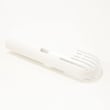
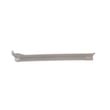
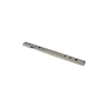
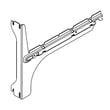
Can I replace my fridge shelves?
Yes. On your Kenmore 59679463410 bottom-mount refrigerator, the shelves are designed to be removable and adjustable, so replacing a broken glass shelf or shelf frame is a straightforward DIY job as long as you match the replacement to your exact shelf style and dimensions (see the owner's manual).
Follow the shelf steps used for this model:
- Tilt the shelf or shelf frame up at the front.
- Lift it out of the shelf supports.
- To reinstall, guide the rear shelf hooks into the shelf supports.
- Tilt the front up until the rear hooks drop into place.
- Confirm the shelf sits level and does not rock.
Tempered glass shelves are heavy and can break if handled the wrong way.
- Use both hands when removing or installing glass.
- Do not wash cold glass with warm water (sudden temperature change can shatter it).
- Avoid bumping the glass edge on the liner or shelf supports.
- Set the shelf on a flat, padded surface while you work.
We recommend replacing shelves with model-matched parts whenever possible.
| What’s damaged | What you typically replace | Notes |
|---|---|---|
| Glass insert only | Glass shelf insert | Must match width, depth, and edge profile. |
| Frame or trim | Shelf frame/trim | Often replaced with the glass as an assembly. |
| Whole shelf assembly | Shelf and frame | Best option when multiple pieces are cracked or missing. |
| Pantry/crisper cover glass | Cover glass insert | Removal differs from standard shelves (see manual). |
If you need a full shelf assembly, check the parts list for your model; for example, a shelf part may be listed as a refrigerator glass shelf W11033333 depending on location and configuration.
A properly fitting shelf keeps food stable, prevents rattles, and helps the refrigerator maintain airflow. Poor fit can lead to items shifting, spills, and longer door-open time (which wastes energy).
Last updated: February 2026
How to tell if a Kenmore refrigerator compressor is bad?
If your Kenmore refrigerator model 59679463410 is warm, runs almost constantly, or repeatedly clicks while trying to start, the compressor can be failing. We first rule out airflow, door-seal leaks, and control issues because they create the same “no-cool” symptoms.
- Fridge and freezer temperatures rise while the unit “runs”
- Repeated click, hum, then shutoff (start attempt fails)
- Compressor is very hot but there is little or no cooling
- Breaker trips when the compressor tries to start
- New loud mechanical noises (grinding or knocking)
Your 59679463410 may run longer in a warm room, after adding groceries, or when doors are opened often; that is normal for high-efficiency compressors.
- Confirm controls are on and set correctly
- Allow 24 hours after installation or major setting changes
- Check door sealing; gaps cause long run times and poor cooling
- Listen for normal sounds like hissing, sizzling, or water running
Use the 59679463410 owner's manual for model-specific troubleshooting steps and normal sound descriptions.
Disconnect power before accessing internal components.
- Verify the evaporator fan runs and airflow is strong
- Check for heavy frost buildup (defrost or airflow problem)
- Confirm the condenser fan runs (if equipped)
- Look for inconsistent operation that points to controls
| Symptom | Often involved | Example part for this model |
|---|---|---|
| Warm temps, weak airflow | Evaporator fan motor | Refrigerator evaporator fan motor WPW10128551 |
| Intermittent cooling or odd behavior | Electronic control board | Refrigerator electronic control board WPW10503278 |
| Long run time from air leak | Door gasket | Refrigerator door gasket W10830189 |
| Sealed-system failure | Compressor | Refrigerator compressor W10233960 |
A compressor replacement is a major repair; checking fans, frost patterns, and door sealing first prevents unnecessary sealed-system work and gets cooling restored faster.
Last updated: February 2026
How to tell what model Kenmore refrigerator?
To identify your Kenmore refrigerator model, we look for the model and serial tag on the cabinet walls or behind lower panels. On Kenmore model 59679463410, the tag is typically inside the fresh food section or freezer, often near the crisper area or behind the base grille; confirm the exact location in the owner's manual.
Check these common spots first (use a flashlight and look for a sticker or metal plate):
- Inside the refrigerator compartment on a side wall
- Inside the refrigerator compartment behind or near the lower crisper drawers
- Inside the freezer compartment on a side wall
- Behind the base grille (kick plate) at the bottom front
- On the cabinet frame just inside the door opening
The tag usually lists both a model number and a serial number.
- Copy the model number exactly as printed (letters and numbers)
- Write down the serial number too (helps match production series and parts)
- Take a clear photo of the tag for reference when ordering parts
| Item | What it’s used for | Example format |
|---|---|---|
| Model number | Identifies the exact refrigerator design for parts lookup | 59679463410 |
| Serial number | Identifies the specific unit built | Mix of letters and numbers |
Kenmore refrigerators can look similar across multiple series, but parts like a door gasket, electronic control board, or water inlet valve can vary by model. Using the exact model number helps us match the correct replacement parts the first time.
Last updated: February 2026
What is the bottom part of a refrigerator called?
On a Kenmore bottom-mount refrigerator model 59679463410, the “bottom part” most people mean is the base area that houses key cooling components, especially the compressor and condenser-side parts. The base also includes the front grille and leveling hardware used to stabilize the cabinet.
Depending on whether you mean the front bottom, back bottom, or inside the freezer section, these are the most common “bottom” components:
- Compressor: pumps refrigerant through the sealed system (usually at the back/bottom)
- Condenser fan and condenser coil: remove heat from the refrigerant (back/bottom)
- Base grille (toe grille): front cover you remove for access and cleaning
- Leveling screws/rollers: used to level the refrigerator so doors close properly
- Freezer drawer and slide rails: bottom compartment hardware on bottom-mount designs
| If you mean... | Common name | What it does |
|---|---|---|
| Back, near the floor | Compressor area | Runs the cooling system |
| Front, under doors | Base grille | Covers access area; helps airflow |
| Bottom compartment | Freezer drawer area | Stores frozen food; slides in/out |
Using the right name helps you match symptoms to the right repair. For example, door-closing issues often point to leveling screws (base area), while warm temperatures can involve the compressor, condenser fan, or evaporator fan.
Your manual describes accessing the base area to adjust stability and door closing. It notes the refrigerator has two adjustable front leveling screws and explains raising or lowering the cabinet using a 1/4-inch hex driver; see the owner's manual for the step-by-step procedure.
If you are trying to identify a specific bottom component by function, these parts are commonly associated with bottom or airflow/cooling performance:
- Refrigerator compressor W10233960
- Refrigerator condenser fan motor W11613295
- Refrigerator evaporator fan motor WPW10128551
Last updated: February 2026