Owner’s manual
 Error Codes






Why does my LG freezer keep icing up at the bottom?
Ice building up on the bottom of the freezer in our LG LFC20760ST bottom-mount refrigerator almost always happens when the defrost drain is clogged or frozen; defrost water cannot flow to the drain pan, so it refreezes into a sheet of ice.
What to check first (fast, high-success steps)
- Unplug the refrigerator to prevent shock and protect the control board.
- Remove the freezer drawer/bins and look for a solid ice layer on the freezer floor.
- Melt the ice with a hair dryer on low or by leaving the door open (use towels to catch water).
- Find the drain opening under/behind the evaporator cover and clear slush or debris.
- Flush the drain with hot water using a turkey baster until it flows freely.
- Make sure the door closes tightly so humid air is not adding extra frost.
Likely causes and the right fix
| Symptom | Most likely cause | What we do |
|---|---|---|
| Ice sheet on freezer floor | Drain clogged with ice/debris | Defrost and flush the drain line |
| Water puddles then refreezes | Drain tube restricted or misrouted | Inspect/replace the drain tube |
| Heavy frost plus warm temps | Door not sealing or left ajar | Check gasket, hinges, door alignment |
| Repeated icing every 1 to 3 weeks | Drain refreezing after defrost | Improve drain flow, verify defrost components |
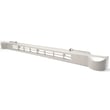
If the drain tube is cracked, blocked internally, or will not flush clear, replacing the refrigerator drain tube 5251JA3003D restores proper drainage.
Why it matters
A blocked drain forces defrost water to refreeze in the freezer, which can jam the drawer slides, cause water leaks, and reduce airflow around the evaporator so cooling performance drops.
Helpful DIY guidance
- Use the LFC20760ST owner’s manual to locate freezer panels and the drain area for safe access.
- For leak-focused troubleshooting steps, follow how to get rid of refrigerator puddles.
Last updated: February 2026
How long to let a refrigerator sit after laying it down?
For the LG LFC20760ST, we recommend letting the refrigerator sit upright for 24 hours after it has been laid on its side before you plug it in. This gives compressor oil time to drain back where it belongs, helping prevent hard starting, noisy operation, or compressor damage.
Recommended wait time (based on how it was moved)
- Laid fully on its side (any length of time): wait 24 hours
- Only briefly tilted during moving (not fully laid down): wait 4 to 6 hours
- Unknown how long it was on its side: wait 24 hours
If you want model-specific moving and leveling guidance, check the LFC20760ST owner's manual.
Why the wait matters
When a refrigerator is laid down, compressor oil can migrate into the sealed system lines. Powering up too soon can cause the compressor to run without proper lubrication or try to compress liquid, which can shorten compressor life.
Before you plug it back in (quick checklist)
- Set the refrigerator upright and level in its final location.
- Leave doors closed so temperatures stabilize faster after startup.
- Confirm the power cord and outlet are in good condition.
- If it has a water line, check for kinks and leaks before turning water on.
- After plugging in, allow 24 hours for temperatures to fully stabilize.
What to expect after restart
| What you notice | Usually normal? | What to do |
|---|---|---|
| Compressor hums, fans run | Yes | Let it run and cool |
| Gurgling or whooshing sounds | Yes | Normal refrigerant flow |
| Not cold enough in first few hours | Yes | Give it up to 24 hours |
| Loud clicking repeatedly or won’t start | No | Unplug and wait longer; then recheck |
Related maintenance tip (water and ice)
If you reconnect the water line after moving, air in the line can affect dispensing and ice production. Our guide on how to purge air from a refrigerator water dispenser video helps prevent sputtering and slow flow.
Last updated: February 2026
What is the most common problem with LG refrigerators?
The most common problem we see with LG refrigerators (including the LG LFC20760ST bottom-mount) is a cooling problem: the fridge or freezer gets too warm, temperatures swing, or cooling stops altogether. The fastest way to narrow the cause is to follow the temperature and troubleshooting checks in the LFC20760ST owner's manual.
What “cooling problem” usually looks like
- Fresh food section is warm but freezer is cold (or the reverse)
- Food spoils faster, ice cream is soft, or ice cubes are hollow
- Unit runs constantly or seems to short-cycle
- Clicking, buzzing, or unusual fan noise
- Frost buildup on the freezer back wall (airflow restriction)
Common causes to check first (most to least likely)
- Airflow blocked: overpacked shelves, blocked vents, or frost restricting airflow.
- Dirty condenser area: dust on coils or a blocked condenser fan can reduce heat removal.
- Defrost system issue: heavy frost can point to a defrost sensor or control problem (for example, the refrigerator defrost sensor assembly 6615JB2005C).
- Door not sealing: warm air leaks in, causing temperature swings and frost.
- Water and ice symptoms tied to cooling: weak ice production often follows poor freezer temps.
Quick diagnostic checklist (10 to 20 minutes)
- Confirm controls are set to normal targets (typical: 37°F fridge, 0°F freezer).
- Make sure vents are not blocked by food containers.
- Check door closure: dollar-bill test around the gasket.
- Listen for fans: evaporator fan (freezer) and condenser fan (rear/bottom area).
- If you see heavy frost, plan a defrost-system inspection.
Helpful symptom-to-cause guide
| Symptom | Most likely area | What to do next |
|---|---|---|
| Fridge warm, freezer OK | Air damper/airflow | Clear vents; check damper operation |
| Freezer warm, no ice | Cooling system or airflow | Clean condenser area; verify fans |
| Heavy frost on freezer panel | Defrost system | Inspect defrost sensor and wiring |
| Water dispenser slow | Filter/valve/air in line | Follow how to change the water filter in an LG refrigerator |
Why it matters
Cooling problems are the root cause behind many complaints (soft ice, spoiled food, frost, long run times). Catching airflow, fan, or defrost issues early helps prevent bigger failures and reduces energy use.
Last updated: February 2026
How to tell LG refrigerator model?
To tell your LG refrigerator model, look for the model and serial tag inside the fresh food (refrigerator) compartment. On the LG LFC20760ST, it’s typically on an interior side wall near the top; match the printed model number exactly when ordering parts or checking specs in the LFC20760ST owner's manual.
Where to find the model number label
Check these common locations first:
- Inside the refrigerator section on the left or right wall near the top
- On the ceiling of the fresh food compartment near the light housing
- Behind the crisper drawers on the side wall
- Along the door frame (hinge side) when the door is open
- On the back exterior panel (less common, but possible)
What to write down (and why)
Record the information exactly as shown on the tag.
- Model number (example for this page: LFC20760ST)
- Serial number (helps confirm production run and compatible parts)
- Revision or suffix (if shown; can affect part fit)
Quick guide: model vs. serial
| Item on the label | What it’s used for | When you need it |
|---|---|---|
| Model number | Identifies the refrigerator design | Always, especially for parts lookup |
| Serial number | Identifies the specific unit built | When troubleshooting or confirming compatibility |
| Suffix/revision | Identifies a variation of the model | When a part listing asks for it |
Why it matters
Using the exact model number prevents ordering the wrong LG refrigerator parts (like a door switch, water inlet valve, or drawer track) and helps you follow the correct troubleshooting steps and diagrams.
Last updated: February 2026
What is the lifespan of an LG refrigerator?
LG refrigerators typically last 10 to 15 years. For an LG LFC20760ST bottom-mount refrigerator, consistent maintenance (cleaning coils, keeping doors sealing, and fixing leaks quickly) is what most often determines whether you reach the high end of that range.
Typical lifespan and what to expect
Most modern refrigerators fall into a predictable lifespan range when they are installed correctly and kept clean.
| Item | Typical range | What usually ends life early |
|---|---|---|
| Refrigerator overall lifespan | 10 to 15 years | Poor airflow, dirty condenser coils, chronic door seal leaks |
| Major sealed-system components (compressor/evaporator) | 10 to 15 years | Overheating, low refrigerant charge, heavy run time |
| Wear items (switches, hinges, valves) | 5 to 10 years | High use, moisture, misalignment |
Maintenance that extends refrigerator life
We recommend these habits for LG bottom-mount models like LFC20760ST:
- Vacuum and brush the condenser coil area regularly to prevent overheating.
- Keep the doors closing squarely; correct sagging or rubbing before it damages hinges.
- Confirm the door gaskets seal all the way around; warm air leaks drive long compressor run times.
- Keep the drain system clear so water does not back up and refreeze.
- Replace water filters on schedule (if equipped) to protect the water system.
- Maintain stable temperatures (about 37°F fresh food, 0°F freezer) to reduce cycling stress.
Quick checks when performance starts slipping
If your refrigerator is running constantly, warming up, or leaking, these are common first checks:
- Interior light stays on when the door closes; a failed switch can cause heat and longer run time (see LG refrigerator door switch 6600JB1010A).
- Water puddles under or inside the unit; a restricted drain path often contributes (see refrigerator drain tube 5251JA3003D).
- Weak ice maker or dispenser flow; a restricted filter or failing valve can strain the system (see how to diagnose a faulty refrigerator water inlet valve).
Why it matters
A refrigerator that runs hot, leaks air at the doors, or cannot drain properly works harder than it should. That extra run time is the biggest driver of early compressor wear, higher energy use, and temperature swings that spoil food.
For model-specific care and cleaning intervals, follow the LFC20760ST owner's manual.
Last updated: February 2026
How big is the LFC20760ST?
The LG LFC20760ST bottom-mount refrigerator has an approximate 19.7 cu. ft. total capacity. For the exact exterior height, width, and depth (and required clearances for airflow and door swing), use the specification section in the LFC20760ST owner's manual.
What “big” usually includes
When you’re planning a fit, we recommend confirming these measurements on your refrigerator and in the installation space:
- Overall width (often widest at hinges)
- Overall height (floor to top of hinge)
- Overall depth (include handles if they protrude)
- Door and freezer-drawer swing clearance
- Ventilation clearance behind and above the cabinet
Quick measuring checklist
Use a tape measure and record each number twice:
- Measure width at the widest point (cabinet, then hinge area)
- Measure height with hinges installed
- Measure depth with doors closed; note with-handle vs without-handle
- Check that the floor is level; leveling changes door alignment and sealing
- Measure the delivery path (doorways, turns, stairs)
Capacity vs. exterior size (why they differ)
Capacity is the interior storage volume; exterior dimensions are what determine whether the refrigerator fits your kitchen.
| Measurement | What it tells you | Where to confirm |
|---|---|---|
| Capacity (cu. ft.) | How much food it holds | Model specs (19.7 cu. ft. for LFC20760ST) |
| Width/height/depth | Whether it fits the opening | LFC20760ST owner's manual |
| Clearances | Airflow and door swing space | LFC20760ST owner's manual |
Why it matters
Correct sizing prevents delivery surprises, ensures proper airflow for the compressor and condenser, and helps doors seal correctly so temperatures stay stable and frost buildup is reduced.
Last updated: February 2026