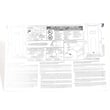
Installation guide
 Owner’s manual
 Error Codes



How long should a Kenmore gas stove last?
A Kenmore gas range like model 79078779406 typically lasts 15 years with normal household use. Consistent cleaning, correct burner setup, and addressing weak ignition or uneven flames early helps you get the full service life; see the care guidance in the 79078779406 owner's manual.
- Cleaning habits: keeping burner heads, grates, and the oven cavity free of baked-on grease
- Flame quality: steady blue flames indicate good combustion; persistent yellow/orange flames need attention
- Ignition health: repeated clicking or delayed lighting stresses igniters and valves
- Door seal condition: heat loss makes the oven run longer and hotter than necessary
- Ventilation: good airflow reduces heat and grease buildup around controls
- Remove and wash grates; dry fully before reinstalling.
- Clean burner heads and ports so flames stay even.
- Wipe spills promptly to prevent carbon buildup and odors.
- Check the oven door closes firmly and evenly.
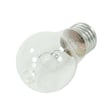
- Replace a burned-out oven light so you do not open the door repeatedly while cooking (a common heat-loss habit).
| Item type | Examples on 79078779406 | Typical replacement timing |
|---|---|---|
| Wear items | Light bulb, screws, some seals | As needed when they fail or loosen |
| Performance parts | Burner heads, igniters, regulator | When symptoms appear (poor flame, no-heat, gas odor) |
| Major assemblies | Control panel/board, main top | Less common; usually after years of heavy use |
If you are doing routine upkeep or fixing a small issue, these are common replacements for this model:
- Range oven light bulb 316538904 (burned-out oven light)
- Range surface burner head 316212400 (uneven flame, clogged ports, corrosion)
- Range oven door seal 5304498835 (heat leaking, longer bake times)
A gas range that is clean, sealed well, and lighting correctly reaches temperature faster, cooks more evenly, and puts less strain on components like the igniter and gas valve. That is how most owners reach the full 15-year lifespan.
Last updated: February 2026
How to remove the top of a Kenmore gas range?
To remove the top on a Kenmore gas range model 79078779406, we lift off the cooktop pieces first (grates, burner caps, and burner heads), then remove any mounting screws holding the burner bases or burner tubes so the main top can be raised or removed. Use the steps in the installation guide for safe access points and shutoff guidance.
- Turn all burner knobs to OFF and let the range cool completely
- Shut off the gas supply at the range shut-off valve
- Unplug the range or switch OFF the circuit breaker
- Protect the countertop with a towel or cardboard (edges can scratch)
- Keep a small container for screws so nothing gets lost
- Remove the burner grates.
- Lift off the burner caps.
- Remove the burner heads (they typically lift straight up once the cap is off).
- Look for mounting screws securing burner bases or burner tubes; remove them as needed.
- If the top is hinged, lift the front and support it; if it is not hinged, lift carefully and watch for any attached wiring (spark ignition) or gas tubing routing.
| Item you remove | Why it matters | What to watch for |
|---|---|---|
| Grates and caps | Clears access to fasteners | Don’t mix caps between burners |
| Burner heads | Exposes burner base screws | Keep ports clean and dry |
| Burner base/tube screws | Releases the main top | Use the correct driver to avoid stripping |
| Control knobs (sometimes) | Allows top to clear the panel | Pull straight off to avoid cracking |
- A hidden screw near a burner base or at the front lip
- Spills or grease acting like adhesive around the edges
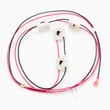
- Ignition wires snagging when you lift the top
- Burner parts not seated correctly after reassembly (causes uneven flame)
Removing the main top is the first step for many repairs, such as cleaning under the cooktop, checking igniter wiring, or replacing a damaged burner component like the range surface burner head 316212400. Doing it in the right order prevents chipped porcelain, stripped screws, and ignition problems.
Last updated: February 2026
Where to find model number on Kenmore gas range?
On Kenmore gas range model 79078779406, the model number and serial number are printed on an identification plate located on the right side of the oven front frame, inside the Storage Drawer or Warmer Drawer compartment. This is the primary location to check first; see the 79078779406 owner's manual.
- Turn the range off and let it cool completely.
- Pull the storage drawer out fully (or remove the warmer drawer if your model has one).
- Look on the right side of the oven front frame for a label or metal plate.
- Record both the model and serial numbers for parts lookup.
- If the label is greasy or faded, wipe gently with a damp cloth and mild dish soap; avoid abrasives.
| Item | What it’s used for | Example format |
|---|---|---|
| Model number | Matching the correct parts diagrams | 790.XXXXXXX |
| Serial number | Identifying production run details | Letters and numbers |
We use the exact model number to match the correct Kenmore range parts (burner components, oven controls, door parts, and gas components). Even small model-number differences can change which parts fit.
Last updated: February 2026
Why is my Kenmore gas oven clicking but not lighting?
If your Kenmore gas range model 79078779406 is clicking but the oven will not light, the most common causes are a weak hot-surface igniter, a gas supply/regulator issue, or an oven gas valve that is not opening. Start by confirming power and gas are on, then inspect ignition and burner operation steps in the 79078779406 owner's manual.
- Make sure the range has electrical power; the oven needs power for ignition and controls.
- Confirm the gas supply is turned ON.
- Verify the gas regulator valve is ON (the manual notes this as a common “oven does not operate” cause).
- Set the clock/time of day; some ranges require the time to be set before the oven will operate.
- Cancel any active cycle by pressing STOP/CLEAR, then try BAKE again.
Clicking typically indicates the ignition system is trying to light, but one of these conditions is preventing flame:
| Symptom | Most likely cause | What to do next |
|---|---|---|
| Clicking continues, no flame | Weak igniter or gas not reaching burner | Check gas supply and igniter glow/condition |
| Burner lights after a long delay | Igniter getting weak | Plan to replace the igniter (common on gas ovens) |
| No heat even though controls are set | Gas regulator OFF or control not set correctly | Recheck regulator and control settings |
If gas supply and settings are correct, these model-specific parts are often involved:
- Range oven gas valve 316404901 (if the valve is not opening)
- Range bake burner 316404400 (if the burner is damaged or not distributing gas properly)
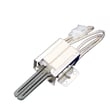
- Igniter (not listed in the parts shown above; use the model parts list to locate the correct igniter for 79078779406)
Repeated ignition attempts without lighting can leave unburned gas odor and prevent the oven from heating properly. Confirming gas supply, regulator position, and correct control settings helps you avoid unnecessary part replacement and gets you to the right repair faster.
Last updated: February 2026