Owner’s manual
 View engine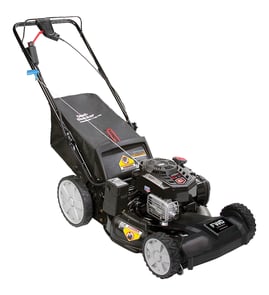



What does 160cc mean on a lawn mower?
On a lawn mower, 160cc means the engine’s displacement is 160 cubic centimeters, which describes the total volume inside the cylinder(s). On a Craftsman gas walk-behind mower like model 917377160, higher cc generally means more torque for thicker grass and easier recovery in heavy cutting.
Engine cc is a size measurement, not a direct promise of speed or cut quality. Two 160cc mowers can feel different depending on blade design, deck airflow, and engine tuning.
- More cc usually helps in tall, wet, or dense grass
- Less cc can be fine for smaller, flatter lawns with regular mowing
- Cut quality depends heavily on blade condition and deck cleanliness
- Starting and reliability depend on maintenance (oil level, air filter, spark plug)
- Drive performance (self-propelled feel) depends on the belt, pulleys, and drive system
Here is a practical way to think about it for walk-behind mowers:
| Engine size (cc) | Typical best use | What you’ll notice |
|---|---|---|
| 140 to 160cc | Regular weekly mowing, average grass | Good balance of power and fuel use |
| 160 to 190cc | Thicker grass, bagging, tougher conditions | Stronger pull through heavy patches |
| 190cc+ | Larger lawns, frequent heavy cutting | More torque, often more weight/noise |
If your mower feels underpowered, the fix is often maintenance or blade/deck setup, not engine size.
- Check oil level before each use (low oil can reduce performance)
- Replace the spark plug yearly for consistent ignition
- Replace or clean the air filter so the engine can breathe
- Keep the underside of the deck clean to maintain airflow
- Keep the blade sharp and balanced; a dull blade makes any engine struggle
For model-specific operating and maintenance intervals, use the 917377160 owner's manual.
Choosing the right cc helps match the mower to your lawn conditions. A 160cc engine is a solid “all-around” size, but a sharp blade, clean deck, and proper tune-up are what keep your Craftsman mower cutting strong all season.
Last updated: January 2026
What model number is the Craftsman 917377160?
The model number is 917.377160 (commonly written without the dot as 917377160) for this Craftsman gas walk-behind lawn mower. You’ll see it printed on the cover of the 917377160 owner's manual, and it’s the number we use to match the correct parts and diagrams.
We recommend checking the mower’s model tag and matching it to the manual.
- Look for a model label on the rear of the deck, near the height adjusters, or around the handle mounting area
- Match the label to 917.377160 (or 917377160)
- Record the full model number before ordering parts like a drive belt, blade adapter, or control cable
- If you also need engine parts, note the engine model number separately (it can be different from the mower model)
These are not the same thing; both matter when you’re troubleshooting or ordering parts.
| What you’re identifying | Example from this mower’s documentation | Used for |
|---|---|---|
| Mower model number | 917.377160 (917377160) | Deck, wheels, drive system, handle, blade parts |
| Engine model number | 12H802-2682-B1 | Carburetor, ignition, internal engine parts |
Using the correct model number prevents ordering the wrong parts, especially on common wear items like the drive belt, blade, and control cable. It also ensures diagrams and repair steps match your exact Craftsman configuration.
If you’re replacing common drive or blade hardware on this mower, the lawn mower ground drive belt 532166060 is one example of a model-matched part.
Last updated: January 2026
What's the average lifespan of a lawn mower?
A typical residential gas walk-behind lawn mower like the Craftsman 917377160 lasts 5 to 9 years with normal use and routine maintenance. Keeping the blade sharp, changing oil on schedule, and storing the mower correctly are the biggest factors that extend service life.
- Oil care: Check oil before each use and change it about every 25 hours of operation or at least yearly.
- Cooling and cleanliness: Remove grass and debris buildup; a clogged engine runs hotter and shortens engine life.
- Blade condition: Keep the blade sharp and replace it if bent or damaged.
- Fuel and storage habits: Don’t store it with old fuel; prep it for storage if it will sit 30+ days.
- Fasteners and wear items: Periodically inspect nuts, belts, screws, and pins and tighten or replace as needed.
Use these as practical intervals; follow the exact procedures in the 917377160 owner’s manual.
| Task | Good interval | What it prevents |
|---|---|---|
| Check engine oil level | Before each mow | Low-oil engine damage |
| Change engine oil | Every 25 hours or yearly | Premature engine wear |
| Clean underside of deck | After mowing (as needed) | Rust, poor cut, overheating |
| Inspect blade | Every few mows | Vibration, poor cut quality |
| Storage prep | End of season or 30+ days idle | Hard starting, corrosion |
Most “short lifespan” complaints come from heat, dirty oil, and neglected blade care. When the engine runs hot or low on oil, internal wear accelerates quickly, and the mower reaches end-of-life years earlier than it should.
If you’re doing blade service or noticing vibration, these model-matched items are commonly involved:
- Lawn mower blade adapter 581547901 (helps the blade mount correctly)
- Husqvarna lawn mower mulching blade, 21-in 159267 (replace if bent or badly worn)
For step-by-step guidance, we use these DIY resources often:
Last updated: January 2026