Installation guide
 Owner’s manual
 Error Codes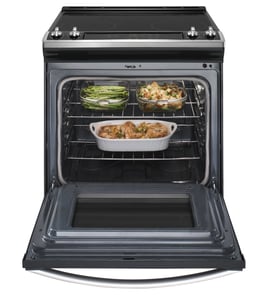


Are JennAir ovens gas or electric?
Jenn-Air ovens can be gas, electric, or dual-fuel, depending on the model. The JES8850CAS02 is an electric slide-in range, so its oven and cooktop are designed to run on household electrical power.
How to tell which type you have
Use these quick checks to identify whether a Jenn-Air range is gas or electric:
- Model number lookup: The model number on the rating label identifies the fuel type.
- Power connection: Electric ranges use a heavy 3-prong or 4-prong power cord; gas ranges use a standard outlet for ignition plus a gas line.
- Cooktop style: Smooth glass radiant elements are typically electric; sealed burners indicate gas.
- Installation requirements: Electric models specify a dedicated high-voltage circuit; gas models specify a gas supply connection.
For your range, the best confirmation is the JES8850CAS02 owner’s manual.
What “electric range” means for JES8850CAS02
This model uses electric heating for both cooking areas:
| Feature | What you will see on JES8850CAS02 | What it indicates |
|---|---|---|
| Cooktop | Radiant elements under a smooth top | Electric cooktop |
| Oven heat | Electric bake and broil heating | Electric oven |
| Typical service parts | Surface element, control switch, door gasket | Electric range components |
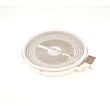
If a surface element is not heating correctly, a common related part is the range radiant surface element W11171119 (when the symptom matches that element position and wattage).
Why it matters
Fuel type affects installation, troubleshooting, and which replacement parts fit. Ordering parts by the exact model number (JES8850CAS02) helps ensure the correct oven control, surface element, and wiring components.
Last updated: January 2026
Is JennAir considered high end?
Yes. Jenn-Air is widely considered a high-end kitchen appliance brand, and your JES8850CAS02 electric range is positioned as a premium product with design-forward styling and feature-focused performance compared with mainstream ranges.
What “high end” typically means for ranges
High-end (or premium) ranges usually stand out in a few practical ways:
- More refined design and finishes (controls, trim, glass, and overall fit)
- Feature-rich cooking options (specialty elements, enhanced oven functions)
- Higher replacement-part costs for premium components (controls, glass, elements)
- Stronger focus on service support and factory-specified parts
How to confirm what your model includes
The fastest way to confirm which premium features apply to your exact range is to check the feature and control descriptions for model JES8850CAS02 in the JES8850CAS02 owner’s manual.
Common premium features you may see listed
| Feature area | What to look for | Why it feels “high end” |
|---|---|---|
| Cooktop | Dual or triple radiant elements | Better pan-size matching and heat control |
| Oven door | Multi-panel glass and tight sealing | More stable temperatures and safer exterior temps |
| Controls | Electronic control features | More precise settings and convenience |
Why it matters
Knowing Jenn-Air is a premium brand helps set expectations for maintenance and repairs. When performance issues come up, using factory-specified parts and following the model-specific guidance helps the range heat correctly, seal properly, and operate safely.
Examples of premium parts on this model
If you are troubleshooting heating or cooktop performance, these are common premium components used on ranges like JES8850CAS02:
- Radiant surface elements (single, dual, or triple)
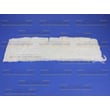
- Oven door sealing components such as the range oven door gasket WPW10162384
- Electronic controls and indicator lights
Last updated: January 2026
What are common problems with JennAir stoves?
Common problems we see with the Jenn-Air JES8850CAS02 electric range include surface elements not heating, uneven baking, a door that leaks heat, and control or indicator light issues. Many are caused by a failed radiant element, a worn door gasket, or a faulty switch or control.
Most common symptoms and what they usually point to
- Cooktop element will not heat: failed radiant surface element, loose wiring, or a bad infinite switch
- Element heats only on high or cycles oddly: failing surface element switch
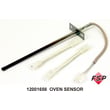
- Oven cooks unevenly or takes too long to preheat: bake or broil heating circuit issue, temperature sensing or calibration issue
- Heat escaping around the oven door: worn or torn door gasket
- Indicator light stays on or will not come on: indicator light or control circuit issue
Quick checks you can do first
- Confirm the range has power; check the household breaker for a tripped condition.
- For cooktop issues, test a different burner position to see if the problem follows the element or stays with the control.
- Inspect the oven door seal for gaps, tears, or hardened spots.
- Review operating and care guidance for dual and triple elements in the JES8850CAS02 use and care guide.
Parts that commonly fix these problems (when symptoms match)
| Symptom | Common part involved | Example part for this model |
|---|---|---|
| One surface burner dead | Radiant surface element | Range radiant surface element W11171119 |
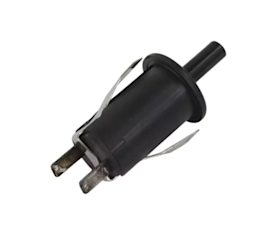
| Burner control erratic | Surface element switch | Switch- el WP74010824 |
| Oven losing heat | Oven door gasket | Range oven door gasket WPW10162384 |
Why it matters
Catching a weak surface element, failing switch, or leaking door gasket early helps prevent longer cook times, uneven results, and extra strain on the range’s electrical components.
Last updated: January 2026
How long should a JennAir oven last?
A Jenn-Air oven like model JES8850CAS02 typically lasts 15 to 20 years with normal household use and basic maintenance. Heavy daily cooking, frequent self-clean cycles, and heat-related wear on controls and elements can shorten that lifespan.
Typical lifespan and what affects it
Most electric ranges fall into a similar life range; what changes the outcome is how hard the oven and cooktop are worked.
- Usage frequency: daily baking and broiling wears heating components faster
- Self-cleaning habits: high-heat self-clean cycles add stress to wiring and controls
- Ventilation and cooling: blocked airflow can overheat internal components
- Cleaning and spills: baked-on spills can damage finishes and door sealing surfaces
- Power quality: surges can shorten the life of electronic controls
Parts that commonly wear first (and what you may notice)
If your range is aging, these symptoms often show up before a full failure.
| What you notice | Common cause | Example part on this model page |
|---|---|---|
| Cooktop burner not heating or cycling oddly | Radiant element or infinite switch issue | Range radiant surface element W11171119 or switch- el WP74010824 |
| Oven takes longer to preheat, uneven baking | Heating circuit wear (element, wiring, control) | Check diagnostics in the JES8850CAS02 owner’s manual |
| Heat leaking, longer cook times, hot handle area | Worn door seal | Range oven door gasket WPW10162384 |
Maintenance that helps you reach the full lifespan
We recommend these practical habits for an electric slide-in range:
- Wipe spills after the oven cools; avoid letting sugary spills bake on repeatedly
- Use self-clean only when needed; remove large debris first
- Keep the door closing firmly; replace a flattened gasket when you feel heat escaping
- Use cookware that matches the radiant element size to reduce cycling stress
- If controls act erratically after a storm, reset power at the breaker and monitor
Why it matters
Knowing the typical 15 to 20 year range helps you decide whether a repair (like a surface element, switch, or door gasket) makes sense versus planning for replacement, especially when multiple heat-related issues start appearing together.
Last updated: January 2026