Owner’s manual
 Error Codes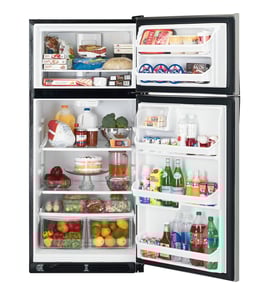


What are the disadvantages of a top mount fridge?
Top-mount refrigerators like the GE GTH22SBSARSS are reliable and space-efficient, but their main disadvantages are convenience and organization: fresh-food items sit lower (more bending), freezer access is higher (harder reach for some users), and they typically offer fewer premium layout features than bottom-freezer designs.
- More bending for daily use: the refrigerator compartment is below the freezer, so you reach down more often for fresh food.
- Less “eye-level” organization: shelves and drawers can feel less accessible compared with bottom-mount layouts.
- Freezer ergonomics: heavier frozen items are stored higher up, which can be awkward to lift down.
- Fewer built-in convenience features on many models: some top-mount designs have fewer options like advanced drawer systems.
- Temperature swings from frequent door openings: opening either door often can introduce warm, humid air, which can affect frost buildup and temperature stability.
| Feature | Top mount (like GTH22SBSARSS) | Bottom mount |
|---|---|---|
| Fresh-food access | Lower, more bending | Higher, easier access |
| Freezer access | Higher, easier for light items | Lower drawer, easier for heavy items |
| Organization | Often simpler | Often more flexible |
| Footprint/value | Typically efficient | Often higher cost |
- Keep everyday items on the upper refrigerator shelves to reduce bending.
- Avoid blocking air vents; it helps prevent uneven cooling and freezing issues.
- Minimize long door openings; humid air can increase frost and temperature recovery time.
- Set controls to a steady mid-range setting and adjust one step at a time.
- Confirm recommended clearances for airflow (sides/top/back) during placement; see the owner's manual.
Most “disadvantages” are really usability tradeoffs. If your household accesses fresh food far more than frozen food, a bottom-mount can feel easier day to day; if you want a straightforward, efficient layout, a top mount is often a great fit.
Last updated: February 2026
What is the most common problem with a GE refrigerator?
The most common issue we see with GE refrigerators like model GTH22SBSARSS is a cooling problem (fresh food or freezer not staying at the set temperature). The usual causes are airflow restrictions, dirty condenser coils, or a failed temperature-sensing or defrost component; start with the basics in the owner's manual.
- Confirm the temperature controls are set correctly and give the unit 24 hours to stabilize.
- Make sure doors fully close and nothing is holding them open.
- Clear blocked vents inside the refrigerator and freezer so air can circulate.
- Clean dust from the condenser area; poor heat release causes warm temps.
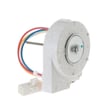
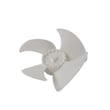
- Listen for the evaporator fan; if it is not running, cooling will suffer.
- If you see heavy frost on the freezer back wall, suspect a defrost problem.
If basic checks do not help, these model-compatible parts are often involved in temperature and defrost complaints:
| Symptom | What it often points to | Example part for this model |
|---|---|---|
| Temps swing up and down | Bad sensor feedback to controls | Refrigerator temperature sensor WR55X10025 |
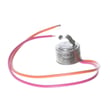
| Frost buildup, warm fridge | Defrost system not terminating correctly | Refrigerator thermostat WR50X10068 |
| No interior light (separate issue) | Burned-out bulb or door switch issue | Refrigerator light bulb 40A15 |
A refrigerator that runs warm can spoil food and also force the compressor to run longer than normal. Catching airflow, coil, and defrost issues early helps restore stable temperatures and reduces wear on major components.
Last updated: February 2026
What is the upper part of a fridge called?
On a GE GTH22SBSARSS top-mount refrigerator, the upper compartment is the freezer compartment. It’s the section designed to hold frozen foods and maintain freezer temperatures (the factory preset is 0°F), separate from the fresh food (refrigerator) compartment.
In a top-mount refrigerator like the GE GTH22SBSARSS, the freezer compartment is built to:
- Keep foods frozen for long-term storage
- Maintain a colder temperature range than the refrigerator section
- Support ice storage and freezing (depending on your setup)
- Work with the refrigerator’s airflow system to help stabilize temperatures
For the exact control settings and adjustment steps for your model, use the owner's manual.
The manual for this refrigerator lists these factory presets and adjustment ranges:
| Compartment | Factory preset | Adjustable range |
|---|---|---|
| Refrigerator (fresh food) | 37°F | 34°F to 44°F |
| Freezer (upper) | 0°F | -6°F to +6°F |
Knowing the correct name helps when you’re troubleshooting cooling issues, ordering parts, or reading instructions. For example, if the freezer temperature is off, you may be checking items like a sensor, thermostat, or airflow components rather than fresh food controls.
If you’re diagnosing temperature problems, a common related part is the refrigerator temperature sensor WR55X10025.
Last updated: February 2026