Owner’s manual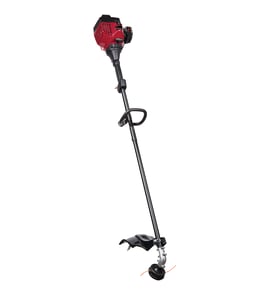





How to unflood a string trimmer?
To unflood a Craftsman string trimmer like model 316711192, we clear excess fuel from the cylinder by opening the throttle, disabling choke, and pulling the starter until it fires; then we let it warm up at a fast idle. Use the starting steps in the 316711192 owner's manual as your baseline.
Quick steps to clear a flooded engine
- Move the choke to OFF/RUN (no choke).
- Hold the throttle wide open (or set the trigger lock, if equipped).
- Pull the starter rope 8 to 15 times to push excess fuel out.
- If it starts, keep it running at a fast idle for 30 to 60 seconds.
- If it does not start, remove and dry the spark plug, then try again.
If it still will not start
A trimmer that repeatedly floods usually has a fuel, air, or carburetion issue.
- Check the air filter; a clogged filter makes the mixture too rich.
- Verify fresh, properly mixed fuel (most 2-cycle trimmers use 50:1, unless your manual specifies otherwise).
- Inspect the primer bulb and fuel lines for cracks or leaks.
- If it loads up with fuel after priming, the carburetor may be sticking or out of adjustment.
| Symptom | Most likely cause | What we recommend |
|---|---|---|
| Strong fuel smell, wet plug | Over-choking or too much priming | Choke off, throttle open, pull to clear |
| Starts then dies unless choked | Lean condition or restricted fuel flow | Check fuel lines, tank vent, filter |
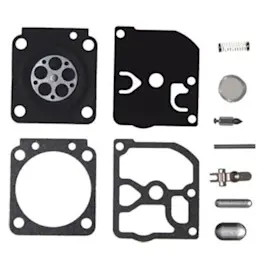
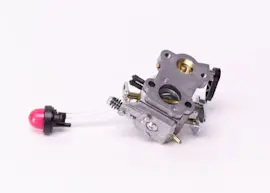
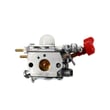
| Floods every start attempt | Carburetor metering issue | Consider replacing the line trimmer carburetor 753-06288 |
Why it matters
Flooding washes oil off internal engine surfaces and can foul the spark plug, making starting harder and increasing wear. Clearing the cylinder correctly gets you back to a stable air-fuel mix and prevents repeat no-start cycles.
Last updated: January 2026
What is the fuel mixture for a Craftsman trimmer?
For the Craftsman gas line trimmer model 316711192, we use a 40:1 fuel mix: 40 parts fresh unleaded gasoline to 1 part 2-cycle engine oil. Mixing accurately helps the engine start easier, run cleaner, and avoid premature wear.
How to mix 40:1 correctly
- Use fresh unleaded gasoline (stale fuel causes hard starting and poor acceleration).
- Use 2-cycle engine oil labeled for air-cooled 2-stroke engines.
- Mix in an approved fuel container; do not mix in the trimmer tank.
- Add about half the gas first, then the oil, then the remaining gas.
- Cap and shake thoroughly to blend.
Quick mix chart (40:1)
| Gasoline amount | 2-cycle oil needed |
|---|---|
| 1 gallon | 3.2 fl oz |
| 1/2 gallon | 1.6 fl oz |
| 1 quart | 0.8 fl oz |
| 1 liter | 25 ml |
Common symptoms of the wrong mix
- Too much oil (rich mix): excessive smoke, fouled spark plug, carbon buildup, sluggish power
- Too little oil (lean mix): overheating, scoring, loss of compression, engine damage
- Old fuel: surging, stalling, won’t start, poor throttle response
Why it matters
A 2-cycle trimmer like the Craftsman 316711192 relies on oil in the fuel for lubrication. The correct 40:1 ratio protects internal engine parts while keeping the carburetor and muffler from loading up with deposits. For model-specific fuel and maintenance notes, use the 316711192 owner's manual.
Last updated: January 2026
How to replace line on Craftsman gas trimmer?
To replace the cutting line on your Craftsman gas line trimmer model 316711192, we install the correct diameter line and wind it evenly on the spool so it feeds smoothly when you bump the head. The exact head style varies by build, so follow the steps in the 316711192 owner's manual.
Before you start
- Shut the engine off and let the muffler cool completely.
- Disconnect the spark plug boot to prevent accidental starting.
- Wear gloves and eye protection; trimmer line ends can be sharp.
- Clean grass and debris off the cutting head so the tabs and arrows are easy to see.
Replacing the line (most bump-head styles)
- Remove the spool: Press the two side tabs on the cutting head cover and lift it off.
- Pull out the spool and note how it sits in the housing.
- Remove old line and clean the spool channels.
- Cut new line: Most heads use two equal lengths (commonly 10 to 20 ft each), or one long length folded in half.
- Anchor the line in the spool slot/hole, then wind in the direction of the arrow on the spool.
- Keep the wraps tight and level; do not overlap layers because overlap causes tangles and feed problems.
- Thread the line ends through the eyelets in the head housing.
- Reinstall the spool and cover, then pull both line ends to confirm they move freely.
Quick checks after reassembly
| What you see | What it usually means | What we do |
|---|---|---|
| Line will not pull out by hand | Line crossed or overlapped | Rewind neatly, tight, no overlap |
| Line feeds too fast | Line wound loose | Rewind tighter and evenly |
| Line breaks at the head | Wrong line size or nicked eyelet | Use correct size; inspect eyelets |
If the line will not feed when you bump
- Make sure the spool is wound the correct direction.
- Confirm the line is not welded together from heat (rewind with fresh line).
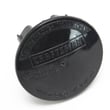
- Inspect the cover for cracks or wear; replace if damaged using the line trimmer cutting head cover 753-06765.
- Check for heavy debris packed under the spool.
Why it matters
Even, non-overlapping wraps reduce tangles inside the spool, which helps the bump-feed mechanism work correctly and prevents constant line breakage.
Last updated: January 2026