Error Codes



What is a refrigerator with the freezer on the bottom called?
A refrigerator with the freezer on the bottom is called a bottom-mount (also commonly called a bottom-freezer) refrigerator. Your GE GNE25JGKKFWW is this style: fresh food on top for everyday access, with the freezer compartment below (often as a pull-out drawer).
Common names you will see
- Bottom-mount refrigerator
- Bottom-freezer refrigerator
- Freezer-drawer refrigerator (when the freezer is a pull-out drawer)
- French door bottom-freezer (when the fresh-food section has two doors)
How it compares to other common styles
| Refrigerator style | Freezer location | Typical access | Common benefit |
|---|---|---|---|
| Bottom-mount (bottom-freezer) | Bottom | Drawer or door | Fresh food at eye level |
| Top-freezer | Top | Swing door | Usually lower cost |
| Side-by-side | Left side | Swing door | Narrow door swing |
| All-refrigerator | None | Swing door | Maximum fresh-food space |
Why it matters
Knowing the style helps when you are shopping for parts and troubleshooting. Bottom-mount designs like the GE GNE25JGKKFWW rely heavily on airflow between compartments, so issues such as warm fresh-food temps or uneven cooling often point to airflow or sensing components.
Parts that commonly relate to bottom-mount cooling and airflow
If you are diagnosing temperature or airflow proves, these are common components to check on this model:
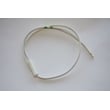
- GE profile refrigerator temperature sensor WR55X10025 (helps the control board regulate temperatures)
- Refrigerator evaporator fan motor WR60X32614 (moves cold air through the refrigerator)
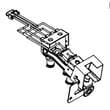
- Technician refrigerator air damper assembly WR17X12456 (controls airflow into the fresh-food section)
For GE-specific troubleshooting steps, use GE refrigerator error codes.
Last updated: January 2026
What is the average lifespan of a GE refrigerator?
Most GE refrigerators, including the GE GNE25JGKKFWW bottom-mount refrigerator, typically last 10 to 20 years, with about 12 years being a common average when the unit is installed correctly and maintained (clean coils, good door seals, stable temperatures).
Typical lifespan and what to expect
Refrigerator life varies most by usage, room temperature, and how hard the sealed system has to work.
- Typical range: 10 to 20 years
- Common average: about 12 years
- Often replaced earlier for cosmetic issues, noise, or repeated ice maker and water dispenser problems
- Often lasts longer when doors seal tightly and airflow is not blocked
| What you notice | What it usually means | What to do first |
|---|---|---|
| Temps swing, food spoils faster | Cooling control or airflow issue | Check vents, settings, and listen for the evaporator fan |
| Frost buildup in freezer | Defrost system problem | Inspect for heavy frost behind the rear panel |
| Water dispenser slows | Filter restriction or valve issue | Replace filter, then check supply pressure |
| Loud humming/clicking | Compressor start components or compressor strain | Clean coils, then diagnose start/cooling components |
Maintenance that helps a GE refrigerator last longer
These steps reduce compressor run time and prevent common failures.
- Vacuum condenser coils and the grille area regularly
- Keep door gaskets clean; confirm doors close without resistance
- Avoid overpacking; leave space for airflow at vents
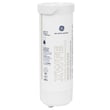
- Replace the water filter on schedule; use the correct filter for your model (example: GE refrigerator water filter XWFE)
- If cooling is inconsistent, test temperature sensing and airflow components (example: GE profile refrigerator temperature sensor WR55X10025)
Why it matters
A refrigerator that runs warmer or longer than normal wears out faster. Simple upkeep (airflow, seals, clean coils, fresh filter) lowers energy use and helps the compressor and control system last closer to the 10 to 20 year range.
Last updated: January 2026
What is the most common problem with a GE refrigerator?
The most common GE refrigerator complaint is not cooling properly, and on the GE GNE25JGKKFWW that usually traces back to airflow or temperature-control issues such as a failed evaporator fan, a bad temperature sensor, or frost buildup from a defrost problem.
Most common symptoms customers notice
- Fresh food section is warm but freezer seems OK
- Freezer is warm and ice cream is soft
- Fan noise changes, gets loud, or stops
- Frost or ice buildup on the freezer back wall
- Temperatures swing up and down over a day
Quick checks we recommend first (before buying parts)
- Confirm settings: Set refrigerator to about 37°F and freezer to about 0°F.
- Check airflow: Make sure vents are not blocked by food packages.
- Inspect door sealing: Look for gaps, torn gasket areas, or doors not closing squarely.
- Listen for the evaporator fan: With the freezer door switch held closed, you should typically hear the fan running.
- Look for frost patterns: Heavy frost behind the freezer panel often points to a defrost issue.
Parts that commonly fix “not cooling” on this model
If your checks point to a component failure, these parts are common culprits for the GNE25JGKKFWW:
| Symptom | Likely system | Example part to check |
|---|---|---|
| Warm fridge, freezer OK | Airflow from freezer to fridge | Refrigerator evaporator fan motor WR60X32614 |
| Temps inaccurate or swing | Temperature sensing | GE profile refrigerator temperature sensor WR55X10025 |
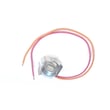
| Frost buildup, weak cooling | Defrost system | Refrigerator defrost bi-metal thermostat WR50X10069 or refrigerator defrost heater WR51X10108 |
Why it matters
A refrigerator that is not cooling can spoil food quickly and also force the compressor to run longer than normal. Catching airflow, sensor, or defrost problems early helps restore stable temperatures and can prevent secondary issues like ice buildup and water leaks.
Related help for GE refrigerators
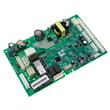
If you see a code or suspect an electronic control issue, use GE refrigerator error codes to narrow the failure to a specific circuit or component.
Last updated: January 2026