
How big of a tree can an electric chainsaw cut?
Most electric chainsaws, including the Mcculloch EAGER, are best for small to medium trees and limbs; a practical limit is usually up to about 10 to 14 inches in diameter, depending on bar length, chain sharpness, and how hard the wood is.
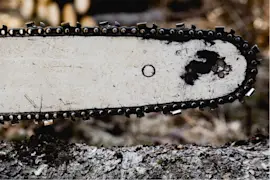
Your maximum cut is limited by the usable cutting length of the guide bar and whether you can cut from one side or need to cut from both sides.
| Guide bar length (typical) | Best-use tree diameter (typical) | Notes |
|---|---|---|
| 10 to 12 in. | 6 to 10 in. | Great for limbing and small trees |
| 14 in. | 10 to 14 in. | Common homeowner sweet spot |
| 16 in. | 12 to 16 in. | Often requires slower feed rate on corded saws |
- Bar length and nose clearance: longer bars handle larger diameters with fewer reposition cuts.
- Chain sharpness: a sharp chain cuts faster and reduces motor strain; a dull chain makes even small cuts feel “too big.”
- Wood hardness and moisture: oak and hickory cut slower than pine; wet wood loads the motor more.
- Power delivery: long, undersized extension cords reduce voltage and cutting power.
- Cutting technique: letting the saw do the work (no forcing) prevents stalling and overheating.
When the tree is larger than your bar can comfortably reach, you can still cut it by working from both sides, but only if you can keep the kerf open and maintain control.
- Plan an escape path and clear the work area
- Use proper PPE (eye, hearing, gloves, chaps)
- Keep the chain brake functional and use it when repositioning
- Avoid cutting above shoulder height
- Stop if the saw bogs down or the cord gets warm
Oversizing the job for an electric chainsaw can overheat the motor, trip breakers, and increase kickback risk. Matching the tree diameter to your bar length and keeping the chain sharp gives cleaner cuts and safer control.
For more chainsaw sizing and general repair guidance, use our chainsaw category landing page.
Last updated: February 2026
Why does my electric chainsaw chain keep coming loose?
On your Mcculloch EAGER electric chainsaw, the chain keeps coming loose when chain tension is set with slack in the bar, the chain stretches during the first few minutes of use, or the bar, adjuster, or cover hardware is worn or packed with debris. Correct tensioning and a quick inspection usually stop repeat loosening.
- Unplug the chainsaw before touching the chain, bar, or sprocket cover.
- Loosen the bar nuts slightly so the guide bar can slide.
- Hold the bar nose up while you adjust tension so slack does not return during cutting.
- Adjust until the chain sits fully in the bar groove and you can pull it around by hand with gloves.
- Tighten the bar nuts while still holding the bar nose up.
- Run the saw briefly, unplug it, then recheck tension; new chains need a second adjustment.
| Checkpoint | Common sign | What to do |
|---|---|---|
| Chain stretch | Needs frequent retensioning | Retension during break-in; replace the chain when adjustment runs out |
| Guide bar rails and groove | Uneven rails, widened groove | Clean the groove; flip the bar periodically; replace a worn bar |
| Tensioner adjuster/pin | Adjuster turns but bar does not move | Clean sawdust; inspect for stripped or damaged adjuster parts |
| Sprocket cover and bar studs | Cover does not sit flat | Reinstall correctly; clean mating surfaces and hardware |
A loose chain can derail, cut poorly, and accelerate wear on the guide bar and drive sprocket. Keeping proper tension also helps the bar and chain oiling system lubricate correctly.
Last updated: February 2026
How do I find the model number on my EAGER?
For your Mcculloch EAGER chainsaw, the model number is printed on the saw’s identification label (often called the data plate). On most chainsaws, that label is on the motor housing or near the rear handle; once you find it, copy the model and any type or serial numbers exactly.
Check these common label locations first (unplug the cord before handling the saw):
- Side of the motor housing (left or right side cover area)
- Rear handle area, near the trigger or cord entry
- Bottom of the housing, near the oil tank cap area
- Near the bar mount studs or clutch cover area (label may be adjacent)
- Under a removable side cover (label visible after cover removal)
Model labels can include multiple identifiers. Recording all of them helps match the correct parts diagram for your exact EAGER version.
| Label item | What it’s used for | Example format |
|---|---|---|
| Model number | Primary identifier for parts lookup | EAGER |
| Type number | Distinguishes versions within a model | TYPE #### |
| Serial number | Production run identifier | ###### |
If the label is worn, you can usually still recover the information.
- Wipe the label with a dry cloth; avoid solvents that can remove ink
- Use a flashlight at an angle to highlight stamped or embossed text
- Take a close-up photo and zoom in
- Check for a second label on the opposite side of the housing
Mcculloch chainsaws often have multiple “EAGER BEAVER” variations; the exact model and type determine the correct chain, guide bar, oiling components, and electrical parts.
For more chainsaw identification and repair basics, use our [chainsaw common questions] resource.
Last updated: March 2026