Owner’s manual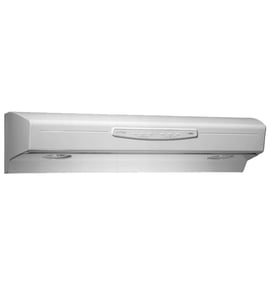





How do I know what model range hood I have?
You can identify your Kenmore range hood model by finding the rating label and matching the model number on it to your paperwork. On model 23352363200, the label is typically on the top of the hood, on the underside, or behind a grease filter; confirm the exact location in the 23352363200 owner’s manual.
Where to look for the model number label
Check these common spots on a wall-mounted chimney-style hood like Kenmore 23352363200:
- On the top of the hood canopy (often easiest to see with a flashlight)
- On the underside of the hood near the controls
- Behind the grease filter (remove the filter and look on the inner frame)
- Near the wiring area or electrical plate (after power is off)
How to read the label correctly
The label usually includes several identifiers. Use the model number to find the right parts list and manual.
| What you might see | What to use for parts/manuals | Example format |
|---|---|---|
| Model number | Use this | 23352363200 |
| Serial number | Not needed for most parts | Letters and numbers |
| Electrical ratings | Not used for lookup | Volts/amps/watts |
Tips if the label is hard to find or read
- Turn off power at the breaker before reaching inside the hood.
- Remove and clean the grease filters; built-up grease can hide the label.
- Take a close-up photo and zoom in to read faded print.
- If the hood has a decorative flue, check around the blower and wiring area after removing the filters.
Why it matters
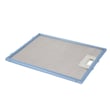
Using the exact model number (like 23352363200) ensures you get compatible parts such as the correct range hood grease filter SB08087294 and avoids ordering a similar-looking part that will not fit.
Last updated: January 2026
What is the life expectancy of a range hood?
A Kenmore range hood like model 23352363200 typically lasts 15 years (common range: 10 to 20 years). Lifespan depends most on how often you cook, how well grease is managed, and whether the blower and filters are kept clean per the 23352363200 owner’s manual.
What usually determines how long it lasts
- Grease filter cleaning frequency: clogged filters make the blower work harder.
- Cooking style: frequent frying and high-heat cooking shortens blower life.
- Vent setup: restricted ducting or a stuck damper reduces airflow and strains the motor.
- Cleaning habits: grease buildup inside the hood increases noise and wear.
- Electrical health: loose connections, worn switches, or repeated fuse issues can reduce reliability.
Maintenance schedule that supports a full lifespan
The manual calls out regular filter care and periodic replacement for recirculating setups.
| Item | What to do | Typical interval |
|---|---|---|
| Grease filters | Wash with warm detergent solution (dishwasher-safe) | Every 2 to 4 weeks |
| Charcoal filter (recirculating) | Replace | Every 6 months |
| Hood surfaces | Clean with mild cleaner; avoid harsh chemicals on stainless | Monthly |
Parts that most often end a range hood’s service life
If performance drops (weak airflow, loud operation, or intermittent fan), these are common wear points:
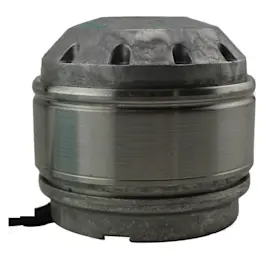
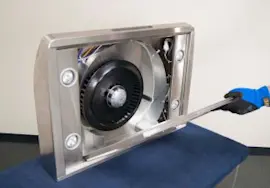
- The blower/motor assembly (complete unit): range hood blower assembly SB06001991
- The blower wheel (can cause vibration/noise): range hood blower wheel assembly SB03295076
- The grease filter (restricted airflow when clogged or damaged): range hood grease filter SB08087294
- The vent damper (stuck damper reduces exhaust): range hood round damper, 6-in SB08088378
Why it matters
A range hood that is maintained moves more air, runs cooler and quieter, and puts less load on the blower motor. That directly improves odor and smoke removal and helps the hood reach its typical 10 to 20 year life.
Last updated: January 2026
How many CFM do I need for a 36 range?
For a 36-inch range, we typically recommend starting around 300 CFM (about 100 CFM per 12 inches of cooktop width). Then increase CFM if you do a lot of high-heat cooking, use a grill, or want faster smoke and odor capture; confirm any model-specific airflow details in the 23352363200 use and care manual.
Quick sizing guidelines (36-inch cooking surface)
Use these common rules to pick a practical CFM range:
- Baseline: ~300 CFM for a 36-inch range.
- Frequent searing, wok cooking, or heavy frying: 400 to 600 CFM.
- Indoor grill or very smoky cooking: 600+ CFM.
- Long duct runs, multiple elbows, or restrictive caps: choose a higher CFM to offset airflow losses.
- Recirculating (non-vented) setups: higher CFM helps, but filter condition matters just as much.
Venting and installation details that affect real performance
Even a strong blower can feel weak if the venting is restrictive.
| Factor | What to aim for | What happens if not |
|---|---|---|
| Hood height above cooktop | 24 to 30 inches | Too high reduces capture; too low can be unsafe or inconvenient |
| Ducting | Short, smooth, minimal elbows | More resistance, more noise, less airflow |
| Grease filter condition | Clean and seated correctly | Reduced airflow and more grease buildup |
The Kenmore 23352363200 installation guidance calls for mounting the hood 24 to 30 inches above the cooking surface, which directly impacts how much CFM you need for good capture. See the 23352363200 use and care manual for the mounting guidance and other specifications.
Why it matters
Right-sizing CFM helps the hood capture smoke and grease at the source, keeps the kitchen more comfortable, and can reduce residue buildup on cabinets and the blower area.
If airflow seems weak even with enough CFM
These checks often restore performance:
- Clean or replace the grease filter (model uses a metal grease filter such as the range hood grease filter SB08087294).
- Verify the damper opens freely and is not stuck (a common vent part is the range hood round damper, 6-in SB08088378).
- Inspect ducting for crushed sections, excessive elbows, or a blocked exterior cap.
- If the motor overheats and shuts off, let it cool and address airflow restrictions (overheating can be triggered by poor airflow).
Last updated: January 2026