Installation guide
 Owner’s manual
 Error Codes



How to reset a GE wall oven?
To reset your GE JTP35SM1SS electric wall oven, turn OFF power at the home circuit breaker (or remove the fuse) for at least 30 seconds, then restore power. This resets the electronic control and clears many temporary glitches and some “F” error codes.
Reset steps (safe, standard method)
- Turn the oven OFF using the Clear/Off pad.
- Switch the oven’s circuit breaker to OFF (or remove the fuse).
- Wait at least 30 seconds (60 seconds is fine).
- Turn the breaker back ON (or reinstall the fuse).
- Set the clock; then re-enter any cooking settings.
What a reset fixes (and what it does not)
A power reset is most helpful for control and display issues.
| Symptom | Reset usually helps? | Next best step |
|---|---|---|
| “F” plus a number/letter flashing | Yes | If it returns, troubleshoot the sensor or control circuit |
| Display blank or flashing after outage | Yes | Reset clock and cooking functions |
| Oven not heating at all | Sometimes | Check elements, sensor, and wiring |
| Cooling fan runs after cooking | No (normal) | Let it run; it can continue after shutoff |
If the problem comes back right away
These checks narrow down the most common causes on an electric wall oven like the JTP35SM1SS:
- Confirm the breaker is fully reset (OFF then ON), not left half-tripped.
- If you see repeated temperature-related errors or unstable temps, test the wall oven temperature sensor WB23T10015.
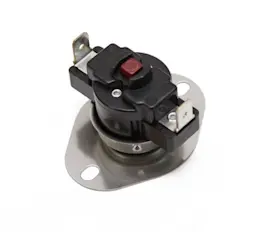
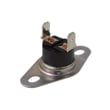
- If the oven overheats or shuts down for safety, inspect the wall oven safety thermostat WB24T10060.
- If the oven will not heat but the display works, inspect the bake and broil elements and their connections.
- If the control is unresponsive after a reset, the control board or keypad circuit may need service.
Why it matters
A proper power reset clears the control’s temporary memory and restores normal operation after a power surge or glitch. It also helps you confirm whether you have a one-time control lockup or an ongoing part problem (sensor, thermostat, element, or control board).
For model-specific control features and troubleshooting steps, use the JTP35SM1SS owner’s manual.
Last updated: February 2026
What is the difference between a regular GE and GE profile?
GE Profile is GE’s premium line, so you typically get more advanced features, upgraded styling, and more electronic controls than a standard (regular) GE appliance. For your GE wall oven model JTP35SM1SS, the exact feature set depends on the specific series and options listed in the JTP35SM1SS owner’s manual.
What you usually get with GE Profile vs standard GE
- More feature-rich electronic controls (more cooking modes and programming options)
- More premium finishes and design details
- More convenience features (timers, enhanced displays, specialty settings)
- Higher typical price point
- More complex parts in the control and sensing system (more boards, sensors, and switches)
How this affects parts and repairs
Profile models often use more control and sensing components, which can change troubleshooting and parts selection. If your oven has temperature accuracy issues or error symptoms, these parts are commonly involved:
- Wall oven temperature sensor WB23T10015 (helps the control measure oven temperature)
- Range oven control board WB27T11161 (runs heating logic and user interface functions)
- Wall oven safety thermostat WB24T10060 (safety device that can interrupt heating if overheating occurs)
Quick comparison
| Category | Standard GE | GE Profile |
|---|---|---|
| Positioning | Core features | Premium features |
| Controls | Often simpler | Often more advanced |
| Styling | Classic | More upgraded |
| Repair complexity | Often lower | Often higher |
Why it matters
Knowing whether you have standard GE or GE Profile helps you set expectations for features and also helps match the correct replacement parts (especially control boards, sensors, and thermostats). We recommend confirming your exact configuration and operating features in the JTP35SM1SS owner’s manual before ordering parts.
Last updated: February 2026
What are common problems with GE ranges?
Many common GE cooking-appliance problems show up as no-heat or uneven baking, temperature that runs too hot or too cool, a dead or beeping control panel, and door or self-clean issues. On the GE JTP35SM1SS electric wall oven, these symptoms often trace to a failed heating circuit, sensor, or control.
Most common symptoms we see
- Oven will not heat in bake or broil
- Oven heats but temperature is inaccurate or swings widely
- Long preheat times or uneven baking
- Control display is blank, beeps, or buttons do not respond
- Door will not latch or unlock after a clean cycle
- Cooling fan runs a long time after shutoff (this can be normal)
Quick checks before replacing parts
- Power reset: Turn the breaker off for 1 minute, then back on (a tripped breaker can mimic a failure).
- Confirm settings: Verify bake vs. broil selection and temperature setpoint in the JTP35SM1SS owner’s manual.
- Look for obvious damage: Burn marks on wiring, loose connectors, or a warped element.
- Door and latch: Make sure the door closes fully; a latch issue can prevent some functions.
Parts that commonly cause these problems (and what they affect)
| Symptom | Likely part area | Example part for JTP35SM1SS |
|---|---|---|
| Temperature too hot/cold | Temperature sensing | Wall oven temperature sensor WB23T10015 |
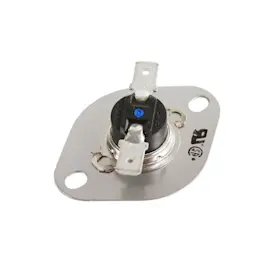
| No heat or overheating protection trips | Safety/limit devices | Wall oven safety thermostat (WB24T10060), temperature limit switch (WB24T10118) |
| No bake or weak bake | Bake heating | Bake element (WB44T10105) |
| No broil or weak broil | Broil heating | Range broil element (WB44T10106) |
| Fan noise or extended cooling | Cooling system | Oven blower assembly (WB26T10049) |
Why it matters
Accurate temperature and reliable heating protect cooking results and help prevent repeated shutdowns. If the oven is overheating or underheating, the sensor, bake element, or a safety thermostat is often the fastest path to a lasting fix.
Helpful reference
For fault patterns and what they typically mean on GE cooking products, use our GE manual cleaning range error codes guide alongside your model’s manual.
Last updated: February 2026
How long do GE wall ovens last?
Most GE wall ovens, including model JTP35SM1SS, last about 12 years with normal household use. With consistent cleaning, good ventilation, and prompt repairs (like fixing heating or sensor issues early), it’s common to reach 15 years.
What affects wall oven lifespan most
- Heat stress over time (frequent high-temp baking or broiling)
- Self-clean usage (high heat cycles accelerate wear on wiring and controls)
- Cooling airflow: this model uses a cooling fan that can run after cooking to protect internal parts
- Door seal condition: a worn gasket leaks heat and forces longer run times
- Electrical supply quality: loose connections and overheating at the junction box shorten component life
Typical lifespan by component (what usually fails first)
| Component | Typical issue | Common symptom |
|---|---|---|
| Electronic control | Heat-related wear | Dead display, erratic temps, error beeps |
| Temperature sensor | Drift/out of range | Overheats, underheats, long preheat |
| Bake/broil element | Burnout | No heat in bake or broil |
| Door gasket | Compression/tears | Uneven baking, hot cabinet, heat escaping |
If you’re chasing temperature problems, the wall oven temperature sensor WB23T10015 is a common wear item on this model.
How we recommend extending the life of a GE wall oven
- Keep vents clear and let the cooling fan finish its run cycle
- Use self-clean only when needed; wipe spills sooner instead
- Avoid slamming the door; it stresses hinges and can damage the seal
- Replace a damaged gasket promptly to prevent heat loss
- If baking temps seem off, verify with an oven thermometer and recalibrate if your controls allow it (see the JTP35SM1SS owner’s manual)
Why it matters
A wall oven that has to run longer to maintain temperature (from a weak element, drifting sensor, or leaking door seal) puts extra heat load on the control area. That extra stress is one of the biggest reasons ovens fail earlier than the typical 12-year lifespan.
Last updated: February 2026