Owner’s manual
 Error Codes


Is a bottom mounted refrigerator good?
Yes. A bottom-mount refrigerator like the Whirlpool GI6SDRXXY00 is a strong choice for most kitchens because it keeps fresh-food items at eye level and puts the freezer in a pull-out drawer. It also installs well when you follow the spacing and ventilation guidance in the GI6SDRXXY00 owner's manual.
Pros and cons to know
Common advantages
- Fresh food is easier to reach (less bending for daily items).
- Wide refrigerator compartment makes organizing groceries simpler.
- Freezer drawer can hold bulky frozen items more efficiently than many top-freezer layouts.
- Good fit for families who use the refrigerator section more than the freezer.
Common tradeoffs
- You bend more to access freezer items.
- Freezer drawers can feel “deep”; baskets and dividers help.
- Door swing clearance matters in tight spaces.
Installation and clearance (why it matters)
A bottom-mount is only “good” if it can breathe and the doors can open fully. For GI6SDRXXY00, our manual guidance calls for:
- 1/2 inch space on each side and at the top
- 1 inch space behind the refrigerator
- 3 3/4 inches minimum to a fixed wall so the door can swing open
- Extra space behind if you have an ice maker water line
| What you’re checking | Why it matters | What to do |
|---|---|---|
| Side/top clearance | Prevents heat buildup | Leave at least 1/2 inch |
| Rear clearance | Protects airflow and water line | Leave at least 1 inch |
| Wall clearance | Prevents door bind and poor access | Leave at least 3 3/4 inches |
When a bottom-mount is the best choice
- You cook often and want fresh ingredients easiest to reach.
- You want a freezer drawer for better frozen-food organization.
- You have enough room for proper ventilation and door swing.
Last updated: January 2026
How do I remove the base grille on my Whirlpool refrigerator?
On the Whirlpool GI6SDRXXY00 bottom-mount refrigerator, you remove the base grille by grasping it firmly and pulling it straight toward you. This gives you access to the front leveling screws and the condenser area behind the grille; reinstall by aligning it and pressing it back into place.
Steps to remove the base grille
- Unplug the refrigerator if you plan to clean behind the grille (recommended for safety).
- Stand in front of the refrigerator and locate the base grille at the bottom front.
- Grasp the grille firmly with both hands.
- Pull the grille straight toward you to release it.
- Set it aside where it will not get stepped on or cracked.
When you typically remove it (and what to do next)
Removing the base grille is commonly done for leveling adjustments and condenser cleaning.
| Task | What you do after removing the grille | Tool you may need |
|---|---|---|
| Level the refrigerator | Turn the front leveling screws to raise or lower the cabinet | 1/4-inch hex driver |
| Clean the condenser area | Vacuum dust from the grille and the open area behind it | Vacuum with soft brush |
| Prep to move the refrigerator | Raise leveling screws so front rollers touch the floor | 1/4-inch hex driver |
For the model-specific leveling procedure and notes, follow the instructions in the GI6SDRXXY00 owner's manual.
Tips if the grille feels stuck
- Pull evenly from both sides; twisting can bind the clips.
- If one side releases first, keep steady pressure and work the other side free.
- If the grille is brittle or cracked, replace it before it breaks completely.
Why it matters
A properly seated base grille helps protect the condenser area from debris and makes routine maintenance (like cleaning dust buildup) easier, which supports efficient cooling and steadier temperatures.
Last updated: January 2026
Do you remove cardboard from the bottom of a Whirlpool refrigerator?
For Whirlpool model GI6SDRXXY00, remove and recycle the packaging cardboard, tape, and foam, but do not remove any cardboard-like panel that is part of the refrigerator’s base or rear cover. That panel protects components and helps proper airflow.
How to tell packaging from a protective panel
Use these quick checks before removing anything:
- Packaging cardboard is loose, taped on, or used as a spacer; it comes off easily.
- A protective cover is usually secured with screws or clips and sits at the rear bottom or base area.
- If removing it would expose wiring, the condenser area, or moving parts, leave it in place.
- If you are unsure, follow the removal steps shown in the GI6SDRXXY00 owner's manual.
What the manual says about cardboard
The GI6SDRXXY00 manual specifically mentions using cardboard or hardboard under the refrigerator when moving it to prevent floor damage. That is separate from packaging removal, and it is a good reminder that cardboard is often used as a protective material during handling.
Safe setup checklist after unboxing
After you remove packaging materials, we recommend:
- Wipe off tape and adhesive residue with warm water and mild dish soap.
- Confirm the base grille is installed and seated correctly.
- Verify doors close fully and gaskets seal all the way around.
- Set temperatures to typical targets: 37°F fresh food, 0°F freezer.
- Allow time for cooling (often 24 hours) before judging performance.
| Item you see | Remove it? | Why |
|---|---|---|
| Loose cardboard spacers, corner blocks, tape | Yes | Shipping protection only |
| Screwed-on bottom/rear panel (may look like cardboard/fiberboard) | No | Protects components and supports airflow |
Why it matters
Removing a protective base or rear cover can reduce airflow across the condenser area and leave electrical and refrigeration components exposed, which can lead to poor cooling and avoidable damage.
Last updated: January 2026
What is the most common problem with whirlpool refrigerators?
The most common Whirlpool refrigerator problems are cooling issues (warm fridge or freezer), ice maker or water dispenser troubles, and water leaks. On the Whirlpool GI6SDRXXY00, start with the basics in the GI6SDRXXY00 owner's manual because many “no cool” and “won’t run” complaints trace back to power, control settings, airflow, or a simple blockage.
Most common issues we see (and what they usually point to)
- Not cooling or weak cooling: dirty condenser area, evaporator fan problem, damper stuck, or a control issue.
- Water puddles or leaks: clogged defrost drain, cracked drain tube, or a loose water line connection.
- Ice maker or dispenser problems: restricted water supply, air in the line, or a failing inlet valve.
- Fridge won’t run at all: outlet or breaker issue, controls turned off, or a failed start component.
- Door not sealing: gasket not sealing, door alignment, or bins/shelves preventing closure.
Quick checks before replacing parts
- Confirm the refrigerator is plugged into a grounded outlet and the outlet has power.
- Verify the temperature controls are turned on and set correctly.
- Make sure vents inside the fresh food section are not blocked by food packages.
- Check for water under the crisper drawers or under the freezer (often a drain issue).
- Inspect door gaskets for gaps, tears, or areas that do not contact the cabinet.
Common symptoms and likely fixes
| Symptom | Most likely cause | What to do next |
|---|---|---|
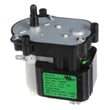
| Warm refrigerator, freezer OK | Airflow problem between sections | Check for a stuck damper; consider refrigerator damper control assembly WPW10196393 |
| Water pooling inside | Defrost drain restriction | Clear the drain path; replace a damaged drain tube such as refrigerator drain tube W10619951 |
| No ice or slow ice | Water supply or valve issue | Check supply pressure and filter status; test/replace refrigerator water inlet valve WPW10498990 |
| Runs a lot, poor cooling | Dirty condenser or airflow restriction | Clean condenser area and confirm fans run |
Why it matters
Catching the “common” problems early helps protect food, reduces compressor run time, and prevents small issues (like a drain clog) from turning into repeated leaks or ice buildup.
For model-specific troubleshooting steps and safety notes (including power checks), follow the GI6SDRXXY00 owner's manual.
Last updated: January 2026