Owner’s manual
 Error Codes



How much does it cost to replace a control board on a GE refrigerator?
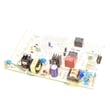
For a GE GDSL3KCXARLS bottom-mount refrigerator, replacing a control board typically runs about $250 to $600 total: roughly $100 to $350+ for the board plus $150 to $250+ for professional labor. DIY replacement usually costs just the part.
- Which board failed: main electronic control board vs temperature control board
- Service call minimums: many repairs include a trip/diagnostic charge
- Access time: boards behind covers or in tight compartments take longer
- Related damage: moisture, corrosion, or burnt connectors can add parts and time
- Your comfort level: DIY saves labor but requires careful handling
These are examples of boards listed for GE GDSL3KCXARLS; your exact fix depends on the symptom and diagnosis.
| Board type | Example part for this model | Typical symptom match |
|---|---|---|
| Main electronic control board | GE refrigerator electronic control board WR55X10832 | Intermittent cooling, fans not running, odd behavior, no response |
| Temperature control board | Refrigerator temperature control board WR55X10831 | Temperature regulation issues, incorrect readings, cycling problems |
We recommend ruling out simpler causes first because a sensor or defrost issue can mimic a “bad board.”
- Verify the outlet has power and the cord is firmly seated
- Check for obvious loose plugs or pinched wires near the control area
- Look for heavy frost buildup that points to a defrost problem
- If temperatures are erratic, consider testing the sensor circuit (a failed sensor can mislead the board)
- Use the troubleshooting and component locations in the owner's manual
Control boards are high-cost parts, and replacing the wrong one is an expensive guess. A basic symptom check (and confirming sensors, fans, and defrost components) helps you spend money once and restore reliable cooling.
Last updated: February 2026
What is the most common problem with a GE refrigerator?
The most common problem we see on GE refrigerators like model GDSL3KCXARLS is a cooling complaint (fresh food too warm, freezer too warm, or temperatures swinging). In many cases, the root cause is restricted airflow or a failing cooling-system component such as the evaporator fan, defrost system, or a temperature sensor; our owner's manual also highlights common airflow and temperature-setting issues.
- Dirty condenser area (heat cannot leave the system efficiently)
- Air vents blocked by food (manual guidance: move food away from vents)
- Evaporator fan problem (weak airflow from freezer to fresh food section)
- Defrost problem (frost buildup blocks airflow over the evaporator)
- Temperature sensing/control issue (sensor or control board misreading temps)
- Confirm the doors close fully and nothing is holding them open.
- Move packages away from the rear air vents; avoid overstuffing.
- Set controls one step colder or warmer as needed, then wait 24 hours to judge results.
- Look for heavy frost on the freezer back wall (often points to a defrost issue).
- Listen for the evaporator fan when the freezer door switch is pressed (fan should run during cooling).
| Symptom | What it usually points to | Example part for GDSL3KCXARLS |
|---|---|---|
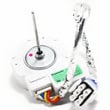
| Fresh food warm, freezer cold | Airflow problem from freezer | Refrigerator evaporator fan motor WR60X10277 |
| Frost buildup, weak airflow | Defrost system issue | Refrigerator defrost heater WR51X10108 or refrigerator defrost thermostat WR50X10068 |
| Temps swing or seem “wrong” | Sensor/control reading issue | Refrigerator temperature sensor WR55X10025 |
Cooling problems are usually progressive: restricted airflow and frost buildup force the compressor to run longer, which can lead to food spoilage and higher energy use. Catching the cause early (airflow, defrost, or sensing) prevents repeat warm-ups.
Last updated: February 2026
Is GE Cafe considered high end?
Yes. GE Café is widely considered a high-end (premium) line within the GE brand; it is positioned above standard GE appliances and focuses on upgraded design, finishes, and feature sets compared with typical models.
GE organizes products into different tiers. In general, GE Café and GE Monogram sit in the premium space, while standard GE models cover the mainstream range.
- GE Café: premium styling and feature upgrades for everyday kitchens
- GE Monogram: luxury tier with more built-in and pro-style options
- Standard GE: core features and value-focused configurations
“High end” is mostly about materials, design options, and convenience features, not just price.
- More finish choices and coordinated hardware
- More precise temperature management and controls
- More convenience features (lighting, storage, dispenser options)
- More design-forward, built-in look across a kitchen suite
Your GE GDSL3KCXARLS is a bottom-mount refrigerator model. Whether it is branded as Café depends on the exact product labeling and trim package for your unit; the best place to confirm the series and feature set is the model documentation.
- Check the model identification label inside the fresh food compartment
- Compare listed features and controls to the owner's manual
- Use the parts list to match key components (controls, sensors, lighting) to your configuration
| Line | Market position | Typical focus |
|---|---|---|
| GE Café | Premium | Design, upgraded features |
| GE Monogram | Luxury | Built-in, pro-style, top-tier options |
| Standard GE | Mainstream | Core performance and value |
Knowing whether you have a Café-series appliance helps when you are matching parts, finishes, and feature-specific components (for example, control boards, sensors, or lighting) so you get the right fit for your exact configuration.
Last updated: February 2026
How to figure out GE fridge model?
To figure out the model for your GE refrigerator (including the GDSL3KCXARLS bottom-mount style), we look for the model and serial number label on the cabinet, typically inside the fresh food compartment along the side wall or near the ceiling. Use the exact model number from that label when ordering parts or checking instructions in the GDSL3KCXARLS owner's manual.
Check these common locations first:
- Inside the refrigerator section on the left or right side wall
- Near the top (ceiling) of the fresh food compartment
- Around the door opening (door jamb area)
- Behind the crisper drawers (sometimes on the liner wall)
- On a label that also lists electrical ratings and the serial number
Record the information exactly as shown on the tag.
- Model number (example: GDSL3KCXARLS)
- Serial number (helps identify production run details for service)
- Brand (GE)
The model number is what ensures the parts list matches your exact refrigerator configuration. For example, electrical and cooling components like a temperature sensor or control board can vary by model, even within similar bottom-mount designs.
Use this as a simple reference so you do not mix up numbers when ordering.
| You are looking at | Example format | Used for |
|---|---|---|
| Model number | GDSL3KCXARLS | Finding the correct parts diagram and manual |
| Part ID | WR55X10025 | Matching the exact part listing |
| Part number | WR55X10026 | Manufacturer part reference |
Once you confirm the model number, we recommend:
- Use the model number to match the correct parts list for your refrigerator
- Cross-check the symptom with the troubleshooting section in the manual
- If you are diagnosing a cooling issue, focus first on airflow and temperature sensing parts
If you are troubleshooting temperature problems, common related parts for this model include the refrigerator temperature sensor WR55X10025 and the GE refrigerator electronic control board WR55X10832.
Last updated: February 2026
Why is my GE fridge leaking water from the bottom?
Water leaking from the bottom of your GE GDSL3KCXARLS bottom-mount refrigerator is usually caused by a defrost drain that is clogged or frozen and overflowing into the base, or by a water supply connection that is seeping and running down to the floor. Use the owner's manual to locate access points and confirm your water line routing.
- Look for a sheet of ice or water under the freezer basket; that points to a clogged defrost drain.
- Check the drain pan underneath for cracks, warping, or being out of position.
- Inspect the water line connection at the back; even a slow seep can travel and drip at the front.
- If you have an icemaker, confirm the tubing is clamped and not rubbing the cabinet.
- If the leak happens after filter changes, reseat the filter and wipe the housing dry.
| What you notice | Most likely cause | What we recommend |
|---|---|---|
| Water appears after a defrost cycle; ice in freezer bottom | Defrost drain clogged or frozen | Thaw the drain area, then flush the drain with warm water until it flows to the drain pan |
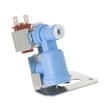
| Water only when icemaker runs or dispenser is used | Seeping water line or valve | Inspect fittings for mineral tracks; if the valve body leaks, replace the refrigerator water inlet valve assembly WR57X10086 |
| Puddle grows slowly all day | Drain pan issue or slow seep | Reposition pan, check for cracks, then recheck rear connections |
Your manual’s installation section notes that overtightening fittings can cause leaks and that the refrigerator connects to the house water line at the back. Focus on these spots first:
- Compression nut and ferrule at the refrigerator connection
- Tubing clamp holding the line in place
- Kinks or abrasion where the line passes behind the unit
- Water pressure that is too high (typical operating range is 20 to 120 psi)
A small leak can wick under flooring and also create ice buildup that blocks airflow, which can lead to warm refrigerator temperatures and extra compressor run time.
Last updated: February 2026