Owner’s manual
 Error Codes



Do you remove cardboard from the bottom of a Whirlpool refrigerator?
No. On a Whirlpool GB2FHDXWB01 bottom-mount refrigerator, any cardboard-like panel or cover at the bottom area is typically there to protect components and help manage airflow; it should stay in place during normal use. Follow the unpacking steps in the owner's manual.
Remove only the temporary packaging used for shipping; leave any fixed cover or panel that’s part of the refrigerator’s base.
- Remove: tape, foam blocks, plastic wrap, and loose cardboard spacers
- Remove: any cardboard used only to protect shelves and drawers in transit
- Leave installed: any bottom cover/panel that’s screwed in or clipped in place
- Leave installed: any rear or lower access cover designed to shield wiring, fans, or the compressor area
- When moving for service/cleaning: use cardboard on the floor to prevent damage (do not store cardboard under the unit)
Use this simple guide before pulling anything out from underneath.
| What you see | Usually means | What to do |
|---|---|---|
| Loose, slides out easily | Shipping packaging | Remove and recycle |
| Fastened with screws/clips | Protective cover/airflow shield | Leave in place |
| Located under the cabinet near mechanical parts | Component protection/airflow | Leave in place |
That lower cover helps protect electrical and refrigeration components and supports proper airflow. Removing it can lead to overheating, noise, poor cooling performance, or damage during normal operation.
- Unplug the refrigerator before inspecting underneath.
- Look for missing screws/clips or a panel that no longer covers the bottom area.
- Reinstall the cover if it was fastened originally.
- If cooling or fan noise changed afterward, check the airflow path and reinstall any missing panels before running the unit.
Last updated: February 2026
How do I remove the base grille on my Whirlpool refrigerator?
To remove the base grille on your Whirlpool GB2FHDXWB01 bottom-mount refrigerator, grasp the grille firmly at the bottom front and pull it straight toward you until it releases from the clips. Reinstall by aligning it and pressing it back into place.
- Unplug the refrigerator if you will be working near wiring or moving the unit for leveling.
- Stand in front of the refrigerator and locate the base grille at the very bottom.
- Grasp the grille firmly with both hands.
- Pull the grille straight toward you (do not pull upward); it will pop free.
- To reinstall, line up the ends with the base area and press until it snaps into place.
Once the grille is off, you can access the front roller adjustment screws and brake foot used to raise or lower the cabinet.
| Adjustment goal | What you typically do | Tool commonly used |
|---|---|---|
| Raise the front | Turn the roller adjustment screw to the right | 3/8-inch hex driver |
| Lower the front | Turn the roller adjustment screw to the left | 3/8-inch hex driver |
| Prevent rolling | Turn the brake foot clockwise until firmly on the floor | Hand or wrench (varies) |
A properly seated base grille helps protect the lower components and keeps airflow paths clear. Removing it correctly also prevents broken grille tabs and makes leveling adjustments easier so doors close smoothly.
For the exact leveling and grille instructions for GB2FHDXWB01, follow the steps in the owner's manual.
Last updated: February 2026
Is a bottom mounted refrigerator good?
Yes. A bottom-mount refrigerator like the Whirlpool GB2FHDXWB01 is a good choice for most kitchens because the fresh-food section sits at eye level, so you reach everyday items with less bending; the freezer stays below in a pull-out drawer.
- Easier access to refrigerated foods (less stooping for milk, produce, leftovers)
- Better organization for fresh foods with shelves and crisper drawers up top
- Freezer drawer storage that can hold bulky items more efficiently
- Good door-seal performance when doors are aligned and closing squarely
- Strong everyday usability for families and frequent cooks
Bottom-mount models are not “better” for every home. Here are the common downsides to weigh:
- You bend more often for frozen foods (drawer access)
- Freezer drawers can feel heavy when fully loaded
- Some layouts need extra clearance for door swing and drawer pull-out
- Repairs can be more involved if the issue is in the freezer drawer area
Our manual guidance for this model emphasizes ventilation and clearance so the refrigerator runs efficiently and the doors open properly.
| What to plan for | Typical guidance for this model type | Why it matters |
|---|---|---|
| Ventilation | About 1/2 inch at the top and behind | Helps prevent overheating and poor cooling |
| Wall clearance | About 2 1/2 inches on the hinge side (some installs need more) | Allows the door to swing open fully |
| Room for water line | Extra space behind if you have an ice maker | Prevents kinks and leaks |
For the exact placement and safety notes, use the owner's manual.
A bottom-mount refrigerator is “good” when it matches how you use your kitchen. If you access fresh food far more than frozen food, the bottom-mount layout reduces daily strain and keeps the most-used items in the most convenient zone.
Last updated: February 2026
What is the most common problem with Whirlpool refrigerators?
The most common Whirlpool refrigerator problem is a cooling complaint (warm fresh-food section, warm freezer, or temperature swings). On your Whirlpool GB2FHDXWB01, the most frequent root causes are airflow and heat-transfer issues (dirty condenser area, fan problems, or defrost system trouble) and ice maker or water valve-related issues. See the owner's manual troubleshooting section for model-specific checks.
- Refrigerator runs a lot but temperatures stay warm
- Freezer is cold but the refrigerator section is warm (airflow issue)
- Frost buildup on the back wall of the freezer (defrost problem)
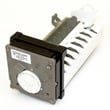
- Ice maker stops making ice or makes small/hollow cubes
- New or unusual noises after installation or during defrost
- Give it time after setup: after a new installation, allow 24 hours for the refrigerator to cool completely.
- Confirm power and controls: make sure the unit is plugged into a grounded 3-prong outlet and the controls are turned on.
- Listen for normal operating sounds: buzzing (water valve filling ice maker), pulsating (fans/compressor adjusting), sizzling/gurgling (defrost water on heater), and water running during defrost can all be normal.
- Check door sealing and airflow: avoid overpacking; make sure vents are not blocked.
If your checks point to a component issue, these are common suspects for this model:
| Symptom | Common system | Example part for this model |
|---|---|---|
| Warm refrigerator section, weak airflow | Evaporator fan | Refrigerator evaporator motor W11024089 |
| Frost buildup, warming over time | Defrost system | Refrigerator defrost heater WP12729128 and refrigerator defrost bi-metal WPW10165425 |
| Ice maker not filling or slow ice | Water supply/valve | Refrigerator water inlet valve assembly WP2315576 |
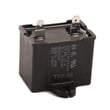
| Clicking/humming at compressor start | Start components | Refrigerator run capacitor WPW10662129 |
Cooling problems can spoil food quickly and also make the compressor run longer than normal. Fixing airflow, defrost, or water-supply issues early helps the refrigerator maintain stable temperatures and reduces wear on major components.
Last updated: February 2026