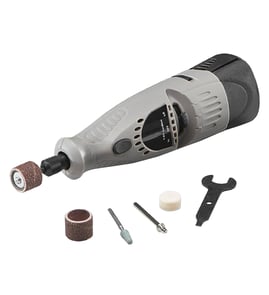

How powerful is the Dremel 732?
The Dremel 732 is a flex shaft tool, and its “power” is best judged by how well it maintains speed under load and how smoothly it runs with the right accessory. For exact motor output (amps/watts) and RPM range, match the tool’s rating label to the model details you use for parts lookup.
Power is not just top speed; it is the combination of motor strength, speed control, and torque at the bit.
- Speed range (RPM): higher RPM helps with light grinding, sanding, and polishing
- Torque under load: keeps the bit from bogging down when cutting or shaping
- Duty cycle and heat: stronger setups run cooler during longer jobs
- Accessory size: larger bits need more torque and lower RPM
- Flex shaft condition: a dry or kinked shaft can feel “weak” even when the motor is fine
Use these practical checks before assuming the motor is failing.
- Run at mid speed for 30 to 60 seconds; listen for surging or speed hunting
- Apply light pressure to a scrap piece; the tool should not stall easily
- Inspect the collet and collet nut for slippage (bit creeping out)
- Check the flex shaft for tight bends; keep curves gentle during use
- If it has a speed control, rotate through settings; power should change smoothly
Because rotary tools vary by generation, we recommend using the rating label on your specific Dremel 732 to confirm the exact numbers.
| Spec on rating label | What it tells you | Why it matters |
|---|---|---|
| Amps (A) or watts (W) | Motor input power | Higher usually means better load handling |
| RPM range | Speed capability | Helps match speed to accessory and material |
| Duty rating | Intended run time | Prevents overheating and premature wear |
Choosing the right RPM and accessory for the material (wood, metal, plastic) prevents bogging down, reduces overheating, and improves cut quality. Many “low power” complaints are actually caused by bit slippage, incorrect speed, or flex shaft drag.
For help confirming you have the correct model identification for parts and specs, use how to find your appliance model number (and what it means for parts).
Last updated: February 2026
What do I use a rotary tool for?
A rotary tool like the Dremel 732 is a high-speed, handheld tool you use for detailed cutting, sanding, grinding, polishing, and engraving on many materials. It is best for small, precise jobs where a full-size saw or sander is too bulky.
- Carving and engraving: wood signs, metal tags, stone details, glass etching
- Cutting: plastic, thin wood, drywall openings, small trim cuts
- Sanding and shaping: edges, curves, tight corners, small parts
- Grinding and sharpening: mower blades (light touch-ups), tools, rust removal
- Polishing and buffing: metal cleanup, plastic restoration, small hardware
Rotary tools are all about using the right accessory and controlling speed and pressure.
| Task | Typical accessory type | Best practice |
|---|---|---|
| Cutting | Cutoff wheel | Let the wheel do the work; avoid side-loading |
| Sanding | Sanding drum/band | Keep it moving to prevent gouges |
| Grinding | Grinding stone | Use light pressure; short passes |
| Polishing | Felt wheel + compound | Lower speed; keep compound off plastics |
| Engraving | Engraving bit | Practice on scrap first; steady two-hand grip |
- Wear eye protection; cutoff wheels and debris can fly.
- Clamp the workpiece; don’t hold small parts in your hand.
- Use light pressure; forcing the tool overheats accessories and the motor.
- Start at a lower speed, then increase until the tool cuts cleanly.
- Unplug before changing accessories, collets, or attachments.
Using the right accessory, speed, and pressure gives cleaner results and prevents broken wheels, burned material, and premature wear on your Dremel 732 flex shaft tool.
For general DIY safety habits that apply to power tools, we recommend: are diy appliance repairs safe.
Last updated: February 2026
What is the best rotary multi tool?
The best rotary multi-tool is the one that matches your projects and how you work; for most DIY users, a variable-speed rotary tool with a comfortable grip, common accessory compatibility, and easy-to-service brushes is the best all-around choice. For Dremel model 732, prioritize control, accessory fit, and runtime (if cordless).
- Variable speed control: Lower speeds for plastics and polishing; higher speeds for cutting and grinding.
- Power and torque: More torque helps prevent stalling when sanding, carving, or using small cutoff wheels.
- Accessory and collet compatibility: Most rotary tools use common shank sizes (often 1/8 inch); confirm your bits fit.
- Ergonomics: Slim body, low vibration, and a switch you can hold comfortably for longer sessions.
- Serviceability: Replaceable carbon brushes, accessible bearings, and a durable power cord (corded models).
| If you mostly do this | Best tool type | Why it’s best |
|---|---|---|
| Cutting, grinding, long sessions | Corded variable-speed | Consistent power and no battery downtime |
| Light-duty, quick fixes | Cordless compact | Convenience and portability |
| Detail carving, engraving | Pen-style or flex-shaft setup | Better control and less hand fatigue |
| Polishing and cleaning | Variable-speed with soft-start | Helps avoid burning or flinging compound |
- List your top 3 tasks (cutting, sanding, engraving, polishing).
- Choose the speed range that fits those tasks.
- Confirm accessory fit (collet size and included adapters).
- Decide corded vs cordless based on session length.
- Keep a basic maintenance plan: clean vents, inspect the cord, and replace brushes when worn.
Rotary tools can all look similar, but the right speed control, torque, and accessory fit directly affect cut quality, bit life, and safety, especially on small parts where overheating and kickback happen fast.
For help confirming you have the exact model and the right parts list, use how to find your appliance model number (and what it means for parts).
Last updated: February 2026