Owner’s manual
 Error Codes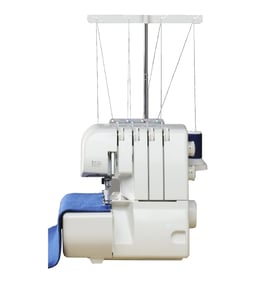

What year is the Kenmore sewing machine model 38516644690?
The Kenmore 38516644690 is a Kenmore 385-series overlock (serger) model; the exact production year is not printed in the model identification shown in the owner's manual. Use the machine’s nomenclature plate on the back side of the machine to capture any date or serial information that can narrow the year.
We use the model number to match parts and documentation, but the build year is typically tied to the serial number or date code on the ID plate.
- Unplug the machine before inspecting labels.
- Look on the back side of the machine for the nomenclature plate (ID plate).
- Write down the full model number and the serial number exactly as shown.
- Check for a stamped date code or a month/year format near the serial.
- Compare what you find to the identification section in the owner's manual.
The “385” prefix identifies a Kenmore sewing machine family that spans many years; it helps us match the correct manual, accessories, and common service information, but it does not by itself pinpoint a single calendar year.
| Identifier | What it’s used for | What it usually reveals |
|---|---|---|
| Model number (38516644690) | Parts lookup, manual match, feature family | Family/series, not an exact year |
| Serial number/date code | Manufacturing traceability | Often the best clue to the year |
| Nomenclature plate location | Physical ID reference | Confirms the exact unit you own |
Knowing the year helps when you are matching compatible accessories (like foot controls), confirming needle system recommendations, and choosing the right maintenance steps for your exact revision of the Kenmore overlock machine.
If you’re diagnosing a problem while you’re identifying the machine, our Kenmore 385 error codes guide can help you interpret common fault indications for Kenmore 385-series machines.
Last updated: February 2026
What is the difference between a sewing machine and an overlock machine?
A standard sewing machine builds seams and finishes with straight, zigzag, and topstitching, while an overlock (serger) like the Kenmore 38516644690 trims the fabric edge and overedges the seam at the same time for a clean, durable finish. See the stitch and setup details in the owner's manual.
- Sewing machine: construction seams, zippers, buttonholes, hems, and precise topstitching
- Overlock machine (serger): trimming and finishing raw edges, stretchy knit seams, fast seam finishing
- Both together: sew the main seam on a sewing machine, then serge the edge for a professional finish
| Feature | Sewing machine | Overlock (serger) like Kenmore 38516644690 |
|---|---|---|
| Edge trimming | No | Yes (built-in knives trim as you stitch) |
| Stitch type | Straight, zigzag, specialty stitches | Overedge/serging stitches (2/3/4-thread) |
| Best fabrics | Wovens and knits | Especially strong on knits and stretch fabrics |
| Primary goal | Construct and detail | Finish edges and seam quickly and cleanly |
On the Kenmore 38516644690, overlocking can trim, overedge, and seam in one operation using 2, 3, or 4 threads. For high-stress areas, we use a conventional sewing machine to add a reinforcing row of straight stitches over the seam line when needed (a common garment-making technique).
Choosing the right machine prevents fraying, improves seam strength on knits, and saves time. A sewing machine gives you precision and decorative control; an overlock machine gives you speed and a clean, factory-style edge finish.
Last updated: February 2026
Can an overlocker be used as a sewing machine?
An overlocker (serger) like the Kenmore 38516644690 is designed to trim, overedge, and seam fabric edges in one pass; it does not replace a conventional sewing machine for straight stitching, topstitching, or sewing in the middle of fabric panels. For best results, use both machines together.
The Kenmore 38516644690 overlock machine is built for edge finishing and seam construction, especially on knits and garments where you want a clean, professional-looking seam.
- Trims the fabric edge while stitching (when knives are engaged)
- Overedges to prevent fraying on woven fabrics
- Seams and finishes in one operation for many garment seams
- Handles stretchy fabrics well using differential feed settings
- Creates specialty seams (2/3/4-thread overlock, flatlock-style decorative effects)
A conventional sewing machine is still the right tool for many everyday tasks that an overlocker is not meant to do.
- Straight stitching in the middle of fabric (darts, quilting lines, patchwork)
- Zippers, buttonholes, and most precision topstitching
- Reinforcing high-stress seams with a straight stitch line
- Appliqué and many decorative stitches that are not edge-based
| Task | Overlocker (Kenmore 38516644690) | Conventional sewing machine |
|---|---|---|
| Finish raw edges | Excellent | Good (zigzag/overcast) |
| Sew seams fast | Excellent | Good |
| Sew in the middle of fabric | Not intended | Excellent |
| Reinforce stress points | Limited | Excellent |
Using the overlocker for what it is designed to do helps prevent broken needles, skipped stitches, and uneven feeding. It also gives you stronger, cleaner seam finishes, while your regular sewing machine handles construction details and reinforcement.
We recommend this workflow:
- Overlock and seam most garment edges on the serger
- Press seam allowances as needed
- Reinforce stress areas (crotch seams, armholes, pocket corners) with straight stitches on a conventional machine
- Use your sewing machine for zippers, hems, and topstitching
For model-specific setup, stitch selections, and safety steps (like switching off and unplugging before threading loopers or changing needles), follow the owner's manual.
Last updated: February 2026
Are overlock and serger the same thing?
Yes. An overlock machine and a serger are the same type of machine; both trim the fabric edge and stitch an overcasting seam in one pass. Your Kenmore 38516644690 is an overlock (serger) designed to overedge and seam fabrics quickly, especially knits.
An overlock stitch wraps thread around the fabric edge to prevent fraying while forming a stretchy seam.
- Trims the edge with a built-in knife while sewing
- Finishes raw edges (overedging) for a clean, durable look
- Creates stretchy seams that work well on knit sportswear
- Uses multiple threads (commonly 2, 3, or 4) with loopers
- Can sew and finish seams faster than a conventional sewing machine
The manual shows typical settings for overedging and overlocking using different thread counts.
| Setup | Typical use | What to expect |
|---|---|---|
| 2-thread | Light edge finishing | Minimal bulk, neat edge wrap |
| 3-thread | General overedging | Strong edge finish for many fabrics |
| 4-thread | Seaming plus overedge | Stronger seam for garments and knits |
For exact threading paths, needle removal (2-thread vs 3-thread), and tension ranges, follow the owner's manual.
“Serger” is the common term in North America; “overlock” or “overlocker” is used more internationally. Functionally, they refer to the same machine category: a fabric-edge trimming and overcasting system using loopers and multiple threads.
These basics help prevent broken needles and uneven edges.
- Switch the machine off before threading needles or loopers, changing needles, or changing the presser foot
- Unplug the machine before removing covers or lubricating
- Use the proper needle plate for the stitch you are setting up
- Do not use bent needles
- Do not pull or push fabric while stitching; guide it steadily
Knowing that “serger” and “overlock” mean the same thing helps you buy the right needles, thread, and accessories, and it makes it easier to follow stitch charts and troubleshooting steps for the Kenmore 38516644690.
Last updated: February 2026
Can I use WD-40 to lubricate my sewing machine?
No. For the Kenmore 38516644690 overlock sewing machine, we lubricate only with fine quality sewing machine oil, applied in small drops at the oil points shown in the owner's manual. WD-40 is a solvent-type spray, not a precision lubricant; it can leave residue that traps lint and interferes with smooth stitching.
The manual’s care section calls for fine quality sewing machine oil applied sparingly.
- Use only sewing machine oil (clear, lightweight, non-detergent)
- Apply just a few drops at the indicated oiling points
- Oil once a week with normal use
- Oil about every 10 hours with continuous use
- Wipe away any excess oil before sewing
| Area | What you do | Why it helps |
|---|---|---|
| Side cover area | Open cover and add a few drops | Reduces friction on moving linkages |
| Oiling hole | Add oil through the oiling hole | Lubricates internal bearings/shafts |
| Looper cover area | Open looper cover and add a few drops | Keeps loopers moving smoothly |
Because oiling is user servicing, we follow the same safety rule every time.
- Turn all controls to Off
- Unplug the power cord from the outlet
- Keep fingers away from the needle, loopers, and knives
- Reinstall covers before testing
- Run the machine briefly on scrap fabric to clear any excess oil
Overlock (serger) mechanisms run fast and generate lint. Using the correct oil keeps the loopers, feed system, and drive components moving freely; using a spray solvent can create sticky buildup that causes sluggish operation, thread breaks, or uneven feeding.
For related troubleshooting, we use the Kenmore 385 error codes guide to interpret any displayed codes before replacing parts.
Last updated: February 2026