Error Codes


Where to find Kenmore gas range model number?
For your Kenmore gas range model 3627361193, the model number is printed on a rating label that’s typically on the oven frame behind the door, on the back panel, or in the drawer area behind the bottom storage drawer.
Most common places to check
- Oven door jamb: Open the oven door and look along the frame (left or right side).
- Storage drawer area: Pull the bottom drawer out and look on the frame behind it.
- Back of the range: Check the rear panel near the vent area.
- Side frame: Look along the side of the unit near the lower front.
Quick steps to find it fast
- Turn on a flashlight and look for a white or silver sticker/plate.
- Wipe grease or dust off the label so the numbers are readable.
- Write down the full model number exactly as shown (for example, 3627361193).
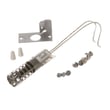
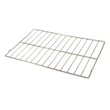
- Use that model number to match parts like an igniter WB2X9154 or oven rack WB48T10095.
What the label usually includes
| Label item | What it’s used for |
|---|---|
| Model number | Matching the correct parts list and diagrams |
| Serial number | Identifying production run details |
| Gas type and ratings | Confirming fuel type and electrical requirements |
Why it matters
Kenmore ranges often have similar-looking designs across multiple model series. Using the exact model number helps us match the correct replacement parts (igniter, sensor, gas valve, racks) and avoid ordering a part that will not fit.
Last updated: February 2026
How to change Kenmore spark electrode igniter?
To change a spark electrode igniter on your Kenmore gas range model 3627361193, we shut off power and gas, remove the burner parts to access the electrode, transfer the wire to the new electrode, then reassemble and test for reliable sparking and normal burner ignition.
Before you start (safety and prep)
- Turn off power at the breaker or unplug the range.
- Shut off the gas supply valve.
- Let the cooktop cool completely.
- Work in good light so you can see the electrode tip and wire routing.
- Take a quick photo of the wire path and electrode position for reassembly.
Steps to replace the spark electrode
- Remove the burner grate and burner cap/head for the burner you are servicing.
- Lift off the burner base (if applicable) to expose the electrode and mounting screw.
- Remove the mounting screw holding the electrode.
- Pull the electrode up enough to access the wire connector.
- Transfer the wire to the new electrode:
- Push the connector fully onto the electrode terminal.
- If your connector is a crimp style, crimp it snugly so it cannot wiggle loose.
- Reinstall the electrode into the orifice holder and secure it with the screw.
- Reassemble the burner base, head, cap, and grate.
- Restore gas and power, then test ignition.
What “good” looks like after replacement
| Check | Normal result | If not normal |
|---|---|---|
| Spark | Strong, steady clicking spark at the tip | Recheck wire connection and electrode alignment |
| Flame | Even blue flame around burner | Clean burner ports, confirm cap is seated |
| Ignition time | Lights within a few seconds | Inspect for moisture, debris, or weak spark |
Why it matters
A loose connector, misaligned electrode tip, or dirty burner ports can cause delayed ignition, repeated clicking, or no spark. Replacing the electrode and securing the connection restores consistent lighting and safer operation.
Parts that may be involved
If you are troubleshooting ignition issues (especially on the oven side), these model-matched parts are commonly checked:
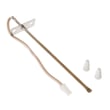
- Surface igniter burner WB29K27 (surface burner ignition)
- Igniter WB2X9154 (oven burner ignition)
Last updated: February 2026
How long should a Kenmore gas stove last?
A Kenmore gas range like model 3627361193 typically lasts 15 years with normal household use. Regular cleaning, proper burner ignition, and prompt repair of heating or gas-flow problems help you reach that lifespan and keep baking performance consistent.
Typical lifespan and what affects it
Most gas ranges land in the same general range, but these factors move the needle:
- How often you bake and broil (heavy use shortens life)
- Keeping burner ports and the oven bottom area clean
- Avoiding spills that clog igniters or burner tubes
- Fixing weak ignition early (before it stresses other components)
- Good ventilation to reduce grease and heat buildup
Quick maintenance checklist (high impact)
- Wipe up boilovers quickly; dried spills can block gas flow and ignition.
- Keep the oven bottom and burner area free of crumbs and grease.
- If the oven takes longer to light, troubleshoot ignition right away.
- Use cookware that fits the burner to reduce excess heat on the cooktop.
- Clean the vent hood filter regularly to reduce grease buildup above the range.
When a “simple part” can extend the life
If the oven burner is slow to ignite, won’t ignite, or heats inconsistently, these model-compatible parts are common fixes:
| Symptom | Common cause | Example part for this model |
|---|---|---|
| Oven won’t light or takes 30 to 90 seconds to light | Weak oven igniter | Igniter WB2X9154 |
| Oven temperature swings or seems inaccurate | Faulty temperature sensor | Sensor WB21X5301 |
| No oven heat even though igniter glows (or gas smell concerns) | Gas valve issue (diagnosis required) | Control valve WB19K14 |
Why it matters
A gas range that is near end-of-life often shows up as slow ignition, uneven baking, or temperature instability. Addressing ignition and temperature-control issues early can prevent repeated no-heat events and reduce wear on related components.
Last updated: February 2026