



How to look up Craftsman model number?
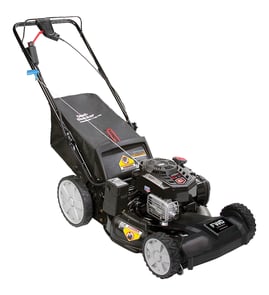
To look up the model number on a Craftsman mower, we check the mower’s ID label (model and serial tag). On walk-behind mowers like Craftsman model 917372284, the label is typically on the mower deck or frame near the rear wheels or handle mounting area.
Where to find the model number on a Craftsman walk-behind mower
Look for a sticker or metal tag on the mower itself. Common spots include:
- On top of the mower deck, near the engine
- On the rear of the deck, behind the bagger opening
- On the side of the deck near a rear wheel
- On the frame near the handle brackets
- Under the grass bag (check the rear housing area)
Wipe off grass and dirt first; the tag is often hard to read when the deck is dusty.
What the model number looks like (and what to write down)
For Craftsman walk-behind mowers, the model number is usually a 9-digit number.
| What to record | Example for this mower | Why you need it |
|---|---|---|
| Model number | 917372284 | Ensures parts diagrams match your exact mower |
| Serial number | (varies) | Helps confirm production run and correct revisions |
How we use the model number to get the right parts
Once you have the model number, match it exactly when selecting parts. For model 917372284, common maintenance and deck-related parts you may see include:
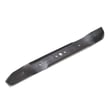
- Lawn mower 22-in deck mulching blade 532406713 (for cutting performance issues)
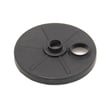
- Lawn mower blade adapter 581547901 (if the blade won’t stay tight or wobbles)
- Deflector 532413160 (for side discharge control and safety)
Why it matters
Craftsman mowers can look similar across multiple model series, but small differences in the deck, blade mount, and drive system change which parts fit. Using the exact model number prevents ordering the wrong blade, adapter, or hardware.
Last updated: February 2026
How old is my mower by serial number?
You can estimate the age of your Craftsman walk-behind mower model 917372284 by finding the model and serial number label on the mower, then using the serial number (and sometimes the engine numbers) to determine the manufacturing date range for that unit.
Where to find the serial number on a Craftsman walk-behind mower
On model 917372284, the ID label is typically on the mower deck or near the rear of the deck by the height adjusters. Look for a sticker or metal tag that lists the model and serial.
Common places to check:
- Top of the mower deck, near the engine mounting area
- Rear of the deck, behind the engine
- Side of the deck near a rear wheel
- Under the rear discharge door area (if equipped)
- Handle support area (less common)
How to use the serial number to estimate age
Craftsman mower serial numbers are used to identify production runs. The exact date coding varies by manufacturer and production era, so the most reliable approach is to match your serial number to the parts listing and diagrams for 917372284.
Use this process:
- Write down the full model number (917372284) and the full serial number exactly as shown
- Compare your mower’s configuration to the parts diagrams (deck, wheels, drive system, discharge setup)
- If your mower has a separate engine ID plate, record the engine model and type numbers too
- Use the parts list to confirm you are in the correct production series for your mower
Quick checks that help confirm you have the right production series
If your mower’s parts match what’s shown for 917372284, you are working from the correct build family.
| What you check | What it tells you |
|---|---|
| Blade style and mounting | Confirms deck and blade adapter style |
| Discharge deflector shape | Confirms deck/discharge configuration |
| Drive control setup | Confirms self-propelled vs push configuration |
Examples of model-matching parts on this page:
- Lawn mower 22-in deck mulching blade 532406713
- Lawn mower blade adapter 581547901
- Deflector 532413160
Why it matters
Knowing the mower’s age helps you choose the correct replacement parts (blade, blade adapter, drive control, wheels) and plan maintenance like blade sharpening, tune-ups, and winter storage.
If you’re servicing the cutting system while you’re identifying the mower, our guide on how to sharpen a lawn mower blade helps you decide whether to sharpen or replace.
Last updated: February 2026
What is the life expectancy of a gas-powered lawn mower?
Most gas-powered walk-behind lawn mowers, including the Craftsman 917372284, typically last 8 to 10 years with normal residential use and basic maintenance. With consistent tune-ups, clean fuel practices, and timely blade and drive upkeep, many owners get 10 to 15 years of service.
Typical lifespan ranges (what to expect)
Lifespan depends most on hours of use, storage, and maintenance.
| Use pattern | Typical lifespan | What usually ends it |
|---|---|---|
| Light (small yard, seasonal) | 10 to 15 years | Rusted deck, neglected fuel system |
| Average (weekly mowing) | 8 to 12 years | Drive wear, engine starting issues |
| Heavy (large yard, long season) | 5 to 8 years | Engine wear, repeated impact damage |
Maintenance that extends mower life
These actions prevent the most common “early failure” problems on gas mowers.
- Keep fresh fuel in the tank; don’t store old gas over the off-season.
- Clean grass buildup from the underside of the deck after mowing.
- Sharpen or replace the blade when cuts look ragged.
- Check and tighten hardware periodically (especially around wheels and the blade area).
- Store the mower dry and covered to reduce corrosion.
Helpful DIY guidance: how to winterize a lawn mower.
Parts that commonly affect performance as the mower ages
On a 22-inch walk-behind mower like this Craftsman model, these parts often make the biggest difference in cut quality and drive performance.
- Blade and blade mounting components (adapter, fasteners)
- Discharge deflector and bagging components
- Drive control components (if self-propelled)
If your cut quality drops, start with the blade system: lawn mower 22-in deck mulching blade 532406713 and the lawn mower blade adapter 581547901.
Why it matters
A mower near the end of its expected lifespan can still be reliable, but small issues (dull blade, worn adapter, loose fasteners, old fuel) stack up and make it feel “worn out” long before the engine is truly done.
Last updated: February 2026
Is it cheaper to repair or replace a lawnmower?
For a Craftsman walk-behind mower like model 917372284, repairing is cheaper when the fix is a common wear item (blade, wheel-drive parts, fasteners) and you do the work yourself. Replacing is usually cheaper when the engine or deck is badly damaged, or when labor costs exceed the mower’s value.
Quick decision checklist
- Repair if the mower still starts, runs smoothly, and cuts evenly.
- Repair if the issue is limited to the blade, wheels, or self-propel drive.
- Replace if the deck is cracked/rusted through or the crankshaft is bent.
- Replace if the engine has low compression, heavy smoke, or metal noise.
- Replace if you need multiple major assemblies at once (engine + drive + deck work).
Typical cost comparison (walk-behind gas mower)
| Scenario | DIY repair cost | Shop repair cost | Usually best choice |
|---|---|---|---|
| Blade is dull/bent | Low | Low to moderate | Repair |
| Self-propel won’t pull | Low to moderate | Moderate | Repair |
| Won’t start (tune-up type issue) | Low | Moderate | Repair |
| Bent crankshaft or major engine failure | High | High | Replace |
| Deck damage (structural) | Moderate to high | High | Replace |
Parts that commonly make repair worthwhile
If your mower’s problem matches one of these, repair is typically the better value because the parts are straightforward and relatively affordable:
- Lawn mower 22-in deck mulching blade 532406713 (poor cut, vibration, scalping)
- Lawn mower blade adapter 581547901 (blade won’t stay tight, wobble at the blade)
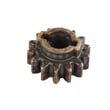
- Pinion 532403849 (self-propel drive issues on some wheel-drive setups)
- Deflector 532413160 (missing or damaged discharge chute)
Why it matters
A walk-behind mower’s “replace vs. repair” decision usually comes down to labor and risk. Wear parts restore performance cheaply; engine and deck failures often turn into high-cost repairs with uncertain results.
Last updated: February 2026
What are the common problems with Craftsman lawn mowers?
Common problems on the Craftsman 917372284 gas walk-behind mower are no-start conditions (fuel, spark, air), rough running (dirty carburetor or stale gas), poor cutting (dull or bent blade), and self-propel issues (worn drive components or cable/control problems). Most fixes start with basic maintenance and a quick safety check.
Most common symptoms and what usually causes them
- Won’t start or starts then dies: old fuel, clogged carburetor jet, dirty air filter, fouled spark plug
- Hard to pull starter rope: blade obstruction, debris packed under the deck, engine hydro-locked from overfilled oil
- Runs rough or surges: stale fuel, partially clogged carburetor, air leak at intake
- Cuts uneven or leaves strips: dull blade, blade installed upside down, deck packed with wet grass
- Vibrates badly: bent blade, loose blade hardware, damaged blade adapter
- Won’t self-propel (if equipped): worn drive control/cable, worn gears, slipping belt (varies by configuration)
Quick checks we recommend first (10 minutes)
- Drain old gas and refill with fresh fuel.
- Confirm the blade control bar is fully held against the handle (safety brake released).
- Check oil level; correct if overfilled.
- Inspect and clean the underside of the deck (engine off, spark plug wire removed).
- Check the blade for damage and sharpness.
Parts that commonly solve cutting and vibration complaints
If your mower is cutting poorly or shaking, these model-matched parts are frequent fixes:
| Symptom | What to inspect | Model-matched part option |
|---|---|---|
| Poor cut, ragged grass tips | Blade edge, bends, cracks | Lawn mower 22-in deck mulching blade 532406713 |
| Vibration, blade won’t stay tight | Blade adapter wear, rounded drive flats | Lawn mower blade adapter 581547901 |
| Side discharge not working right | Chute/deflector damage | Deflector 532413160 |
Why it matters
Ignoring rough running, vibration, or a dull blade makes the engine work harder, increases fuel use, and can damage the crankshaft or deck over time. Regular blade care and clean fuel prevent most “mower won’t start” and “mower cuts bad” complaints.
Helpful DIY guides
- How to sharpen a lawn mower blade
- Lawn mower wont start troubleshooting video fuel ignition and compression
- Lawn mower wont move troubleshooting video motion drive failure
Last updated: February 2026