 Installation guide
 Owner’s manual
 Error Codes




What is the average lifespan of a GE dishwasher?
A GE dishwasher typically lasts 10 to 12 years. For your specific GE model GSD2100V70WW, lifespan depends most on water quality, how often you run it, and routine care like keeping filters and spray arms clear (see the GSD2100V70WW owner's manual).
- Average: 10 to 12 years
- Shorter life: heavy daily use, hard water scale, frequent clogs, poor drying ventilation
- Longer life: regular cleaning, correct detergent, proper loading, good water temperature
| Dishwasher use pattern | Typical lifespan | Notes |
|---|---|---|
| Light (a few loads/week) | 12 to 15 years | Less wear on pump, motor, and door components |
| Average (most households) | 10 to 12 years | Most common range |
| Heavy (multiple loads/day) | 7 to 10 years | More wear on circulation and drain systems |
We recommend focusing on the items that most directly affect wash performance and component wear:
- Keep incoming water around 120°F for cleaning performance
- Use automatic dishwasher detergent (not hand dish soap)
- Use rinse aid to reduce spotting and improve drying
- Load so dishes do not block the spray arms or detergent cup
- Clean the interior periodically to reduce mineral buildup and odors
When a dishwasher starts needing major repairs, these are often involved:
- Circulation system (pump and motor)
- Drain system (drain solenoid, drain hose)
- Heating and drying system
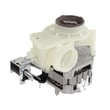
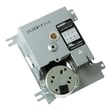
If your dishwasher is not cleaning well, is noisy, or is struggling to drain, checking the GE dishwasher pump and motor assembly WD26X10051 is a common next step for this model.
Knowing the typical lifespan helps you decide whether to invest in a repair (like a pump/motor or drain component) versus planning for replacement, especially once the unit is past the 10-year mark.
Last updated: January 2026
What is the most common problem with a GE dishwasher?
For the GE GSD2100V70WW dishwasher, the most common real-world complaint we see is drain-related trouble (water left in the tub) caused by a clog in the drain path or a drain component that is not operating. Starting issues and leaks are also common, but drainage is usually the first place to check using the GSD2100V70WW owner's manual.
These are the top problem areas that most often cause symptoms like “won’t drain,” “won’t start,” or “not cleaning well”:
- Drain path restriction: air gap (if used), disposer inlet plug, sink drain, or drain hose blockage
- Drain components not actuating: drain solenoid or drain valve linkage not moving
- Low fill or no fill: water supply valve off, low water pressure, stuck float
- Poor wash performance: spray arm blockage, loading issues, low water temperature
- Door not fully latched: unit may power up but not run a cycle
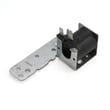
If your main symptom is standing water, a common repair part for this model is the GE dishwasher drain solenoid assembly WD21X10268.
| Symptom | Most likely category | Typical first check |
|---|---|---|
| Water standing in bottom | Drainage | Air gap/disposer, drain hose routing, drain solenoid action |
| Won’t start or stops | Start/controls/door | Door latch engagement, power switch/breaker |
| Dishes not clean | Wash performance | Water temp (target 120°F), spray arm holes, loading |
| Leaks | Seals/installation | Door seal condition, level, hose connections |
Drain problems can look like a “bad dishwasher,” but they are often caused by a simple clog or a drain component that is not moving. Fixing the drain issue early helps prevent odors, poor cleaning, and repeat cycle failures.
- Confirm the sink is draining normally (a slow sink often means a shared clog)
- Check that the drain hose is not kinked and is routed correctly (high loop or air gap)
- If the unit has a disposer connection, confirm the disposer inlet plug was removed
- Listen for draining near the end of the cycle; no drain sound can point to the solenoid/valve
- Use the troubleshooting section in the GSD2100V70WW owner's manual to match symptoms to checks
Last updated: January 2026
Does a GE dishwasher have a filter that needs to be cleaned?
Yes. For the GE GSD2100V70WW dishwasher, routine cleaning focuses on the sump area at the bottom of the tub (under the lower rack) where food soil collects; keeping that area clear helps prevent odors and draining or wash-performance issues. For model-specific care steps, use the GSD2100V70WW owner’s manual.
Start with the easiest access points inside the tub:
- Remove the lower rack and look for debris around the sump opening at the tub bottom.
- Wipe out any visible food particles (paper towel or soft cloth).
- If your model uses a removable fine filter, clean it with warm water and a soft brush.
- Check the lower spray arm holes for clogs and rinse if needed.
- If you have an air gap at the sink, clean it when the dishwasher is not draining well.
This model has a compatible fine filter available. If the filter is cracked, warped, or won’t rinse clean, replacement is often the better fix.
- Part to consider: dishwasher fine filter WD12X10357
| Situation | What we recommend |
|---|---|
| Light debris, no odors | Rinse and reinstall the filter/sump components |
| Grit on dishes or recurring odor | Clean sump area and spray arm; run a cleaner cycle |
| Filter damaged or won’t come clean | Replace the fine filter |
A restricted filter or dirty sump area can reduce water flow through the wash system, which can leave soil on dishes, create odors, and contribute to poor draining symptoms.
Last updated: January 2026
Is it worth repairing a GE dishwasher?
Yes, repairing a GE dishwasher is usually worth it when the issue is a common wear part (like a door latch, drain hose, or heating element) and the total repair cost is well below the price of a comparable replacement. For the GE GSD2100V70WW, it often makes sense to repair unless multiple major components are failing.
- Repair if the problem is isolated (leak, no drain, won’t start, poor drying) and the tub is in good shape.
- Repair if you can fix it with a single part and basic tools.
- Repair if the dishwasher is cleaning well after maintenance (filters, spray arms, proper detergent).
- Replace if you have repeated leaks, heavy rust/corrosion, or multiple failures in a short time.
- Replace if the repair requires several high-cost parts at once (for example, motor plus timer plus wiring issues).
For the GSD2100V70WW, these are typical fixes that can restore performance without replacing the whole dishwasher:
- Drain problems: check the drain path and consider a replacement dishwasher drain hose WD24X10014.
- Won’t start or stops: door latch and door switch issues are common.
- Poor drying: verify options and water temperature; a failed heater can be a factor.
- Not cleaning well: loading, spray arm blockage, and pump circulation issues.
For operating tips, cycle selection, and troubleshooting steps specific to this dishwasher, use the GSD2100V70WW owner’s manual.
| Situation | Usually best choice | Why |
|---|---|---|
| One clear symptom, one likely part | Repair | Lowest cost, fastest return to service |
| Multiple symptoms across different systems | Replace (often) | Costs add up quickly |
| Unit is otherwise reliable and quiet | Repair | Extends life with minimal investment |
| Frequent service history | Replace (often) | Reliability and downtime become the issue |
A dishwasher repair is most cost-effective when it restores safe draining, proper heating, and reliable door sealing. Fixing a single failed component can give you years of additional use, while chasing multiple intermittent problems can become more expensive than replacing the unit.
Last updated: January 2026





