Owner’s manual
 Error Codes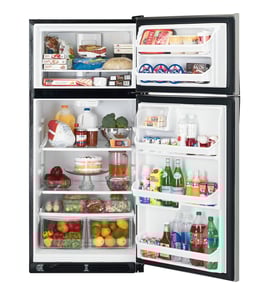


What are the disadvantages of a top mount fridge?
Top-mount refrigerators like the LG LTC24380ST are reliable and efficient, but the main disadvantages are less convenient fresh-food access (you bend more), fewer premium organization features, and fewer built-in dispenser options compared with many bottom-freezer or French-door designs.
Common disadvantages (what most owners notice)
- Fresh-food items sit lower: you bend more often for produce, drinks, and leftovers.
- Freezer is at eye level: great for frozen foods, but it pushes the refrigerator section down.
- Less “premium” storage flexibility: fewer adjustable zones and specialty drawers on many top-mount designs.
- Fewer exterior features: many top-mount models skip through-the-door water and ice.
- Smaller door storage feel: tall bottles and bulky items can be harder to organize depending on bin layout.
Top-mount vs. bottom-freezer: quick comparison
| Feature | Top-mount refrigerator | Bottom-freezer refrigerator |
|---|---|---|
| Fresh-food access | Lower, more bending | Higher, more convenient |
| Freezer access | Higher, easy reach | Lower drawer, more bending |
| Organization features | Often simpler | Often more flexible |
| Dispenser options | Less common | More common |
| Typical cost to buy/repair | Often lower | Often higher |
When a top-mount is still the better choice
- You want a simpler layout with fewer features to maintain.
- You use the freezer frequently and want it at a comfortable height.
- You prefer lower upfront cost and typically lower part complexity.
Why it matters
Choosing a refrigerator style affects daily ergonomics and food organization. If you are constantly in the fresh-food section, a bottom-freezer layout usually feels easier; if you rely on frozen foods, a top-mount can be more convenient.
For model-specific features and storage configuration details, check the LTC24380ST owner’s manual.
Last updated: January 2026
Which is better, top mount or bottom mount refrigerator?
A “better” choice depends on how you use your kitchen. A top-mount refrigerator like the LG LTC24380ST typically costs less and can be more energy-efficient, while a bottom-mount usually puts fresh food at eye level for easier daily access and organization.
Quick comparison
| Feature | Top-mount (freezer on top) | Bottom-mount (freezer on bottom) |
|---|---|---|
| Everyday access | Freezer is easiest to reach | Fresh food is easiest to reach |
| Typical cost | Lower | Higher |
| Energy use | Often lower | Often slightly higher |
| Freezer storage | Wide shelf space | Deep drawers, better separation |
| Best for | Budget, simple layout | Frequent fresh-food use |
When a top-mount is the better fit
- You want a straightforward layout with fewer features to maintain
- You use the freezer often (it is at a comfortable height)
- You want strong value for the price
- You prefer simpler door storage and shelving
- You want a design that is typically easier to place in tighter kitchens
When a bottom-mount is the better fit
- You use fresh food more than frozen food
- You want less bending for produce, dairy, and leftovers
- You like freezer drawers that separate items (meat, ice cream, bulk bags)
- You want a more “organized” freezer layout
Why it matters
Choosing the right configuration reduces door-open time and improves temperature stability. That helps food stay fresher and can reduce wear on key cooling components like the evaporator fan and electronic control.
Model-specific tip for LG LTC24380ST owners
For the best performance from your top-mount refrigerator, follow the temperature and airflow guidance in the LTC24380ST owner’s manual. Also, if you have water or ice features, staying on top of filter changes helps protect the water system and valve.
- Use how to change the water filter in an LG refrigerator for step-by-step filter guidance
Last updated: January 2026
What is the most common problem with an LG refrigerator?
For LG refrigerators like model LTC24380ST, the most common customer-reported issue is cooling trouble (fresh food or freezer not staying cold). In many cases, the root cause is airflow, defrost, or control-related problems; checking basics first prevents unnecessary part replacement.
What we see most often (and what to check first)
- Warm refrigerator or freezer: verify temperature settings and that vents are not blocked by food.
- Frost buildup on the back wall of the freezer: points to a defrost system issue (heater, sensor, or airflow restriction).
- Noisy operation: a fan blade rubbing ice or a failing fan can cause buzzing or scraping.
- Water leaking or puddles: often a clogged defrost drain or a water supply issue.
- Ice maker not working: commonly water supply, inlet valve, or freezer temperature related.
For model-specific operating checks and temperature recommendations, use the LTC24380ST owner's manual.
Quick symptom-to-likely-cause guide
| Symptom | Most likely area | Common next step |
|---|---|---|
| Fridge warm, freezer OK | Airflow/damper | Check for blocked vents; listen for damper movement |
| Freezer warm, fridge warm | Sealed system or controls | Confirm fans run; check condenser cleanliness |
| Frost blanket in freezer | Defrost system | Inspect for iced-over evaporator area |
| Ice maker slow/no ice | Water supply/inlet valve | Verify water pressure; test fill cycle |
Parts that commonly relate to these symptoms on LTC24380ST
If troubleshooting points to a specific failure, these model-matched parts are commonly involved:
- Refrigerator air damper motor 4681JB1027N for poor fresh food cooling with a cold freezer
- Refrigerator defrost heater 5300JK1003M for heavy frost buildup and warming
- Refrigerator electronic control board EBR74799502 for erratic temperatures or non-responsive controls
- Refrigerator water inlet valve assembly AJU55759303 for ice maker fill problems or water supply issues
Why it matters
Cooling problems can spoil food quickly and can also force the compressor and fans to run longer than normal. Catching airflow restrictions, frost buildup, or a weak water supply early helps restore normal temperatures and reduces wear on major components.
Last updated: January 2026