 Owner’s manual
 Error Codes




What is the average lifespan of a Frigidaire dishwasher?
A Frigidaire dishwasher typically lasts 10 years. With normal household use and basic care (good loading, correct detergent, and hot water at the right temperature), many units reach that mark before needing major repairs; heavy use and hard water shorten life.
- Water quality: hard water causes mineral buildup and can reduce cleaning performance over time
- Incoming water temperature: best results start with water entering at 120°F (49°C) or higher
- Water pressure: the dishwasher needs 20 to 120 psi for proper fill and wash action
- Loading habits: blocking spray arms and nesting dishes forces longer, harder cycles
- Maintenance: cleaning and addressing small leaks early prevents bigger failures
Use these habits on Frigidaire model FDB345LBS1 to reduce wear on the pump, heater, and seals:
- Run hot water at the sink before starting a cycle so the unit fills with hot water
- Use fresh detergent and keep the dispenser area clean
- Keep items from blocking spray arms and the top-rack funnel area
- Use rinse aid correctly; avoid overfilling to prevent oversudsing
- Check for small door leaks and replace worn seals when needed
| Usage pattern | Typical lifespan | What usually wears first |
|---|---|---|
| Light (few loads/week) | 10 to 12 years | door seals, rack parts |
| Average (daily) | about 10 years | pump seals, heater, valves |
| Heavy (multiple loads/day) | 7 to 9 years | motor/pump, wash system |
If you are seeing leaks or poor drying/cleaning, these are common wear items for FDB345LBS1:
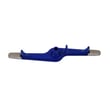
- Gasket 809006501 (lower door seal area)
- Heater 154665201 (helps drying performance)
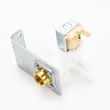
- Valve 154637401 (fill issues and slow filling)
Knowing the expected lifespan helps you decide when a repair (like a heater, inlet valve, or door gasket) makes sense versus planning for replacement. It also helps you prevent performance issues that make cycles longer and harder on the motor and pump.
For model-specific operating and care steps, follow the FDB345LBS1 owner’s manual.
Last updated: February 2026
How to find a Frigidaire dishwasher part number?
For your Frigidaire FDB345LBS1 dishwasher, we find the correct part number by matching the appliance model number first, then using the parts diagram to identify the exact component name and its manufacturer part number. This prevents ordering a look-alike part that will not fit.
Your dishwasher’s serial label is typically located on the right side of the tub (inside the door opening). Use the model number on that label (FDB345LBS1) when searching parts and diagrams in the FDB345LBS1 owner’s manual.
- Open the door and look along the right inner tub wall
- Write down the model number and serial number exactly as shown
- If the label is hard to read, take a photo and zoom in
- Use the model number to pull the correct parts list for your exact unit
Once the model is confirmed, identify the part by its functional name (for example: door seal, drain hose, water inlet valve). Many dishwashers have similar-looking parts, so the diagram callout is the safest way to match.
Common FDB345LBS1 part names you might see:
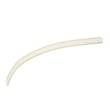
- Door seal or tub gasket
- Drain hose
- Water inlet valve
- Float switch
- Heating element
After you locate the part name in the diagram/list, match it to the manufacturer part number. For example, if you are fixing a leak at the bottom of the door, the correct item is often the lower door seal, such as the gasket 809006501 (part number 154297603) for this model.
| What you have | What to look up | What you order |
|---|---|---|
| Model/serial label | Model number (FDB345LBS1) | Parts list for the exact model |
| Diagram callout | Part name/location | Correct part ID and part number |
| Old part in hand | Stamped numbers (if any) | Confirmed match to the diagram |
Dishwasher parts are frequently revised by production run. Starting with the model number and serial label location helps ensure the door latch, pump seals, hoses, and electrical parts you choose are the correct fit for your Frigidaire dishwasher.
Last updated: February 2026
Can I replace dishwasher parts myself?
Yes, for the Frigidaire FDB345LBS1 dishwasher, we can replace many common wear parts ourselves if we shut off power and water first and follow the safety steps in the FDB345LBS1 owner's manual. For electrical, heating, or leak-related repairs, we use extra caution and keep all panels installed before testing.
Many repairs are straightforward, especially when the symptom points to a single accessible part.
- Door leaks at the bottom: inspect and replace the gasket 809006501
- Not draining: check the drain path and consider the drain hose
- Not filling: verify water supply, then test the inlet valve
- Poor drying or water not heating: heating circuit checks and element replacement
- Overfilling: clean the overfill protector (float) so it moves freely
The manual calls out key safety requirements (grounding, correct circuit protection, and disconnecting power before service). Use this checklist every time:
- Turn off power at the breaker (dishwasher must be grounded; use the correct 120 V circuit)
- Shut off the water supply valve under the sink
- Let the heating element cool before touching or cleaning inside the tub
- Do not run the dishwasher with enclosure panels removed
- If the hot water system has not been used for 2+ weeks, run hot water at the faucet for several minutes before starting the dishwasher
| Repair type | Typical DIY? | Why |
|---|---|---|
| Door seal and minor leak checks | Yes | Low electrical risk; mostly mechanical access |
| Drain hose and clogs | Yes | Usually under-sink access and simple clamps |
| Water inlet valve | Sometimes | Involves water connections and electrical testing |
| Heating element and wiring | Sometimes | Burn risk, electrical checks, and leak-proof sealing |
| Motor or complex electrical faults | No | Higher shock risk and more diagnostic steps |
Doing the right repair yourself can save time and restore cleaning performance, but dishwashers combine water and electricity. Following the manual’s grounding and “disconnect power before servicing” guidance helps prevent shocks, burns, and repeat leaks.
Last updated: February 2026
What is the most common problem with a Frigidaire dishwasher?
The most common issue we see with Frigidaire dishwashers like model FDB345LBS1 is poor wash performance (food left on dishes) caused by loading problems, low water temperature, low water pressure, or spray arms being blocked and unable to rotate. The troubleshooting checklist in the FDB345LBS1 owner's manual covers these causes.
- Reload to prevent nesting; keep bowls and plates from shielding each other.
- Confirm nothing blocks the spray arms; they must spin freely.
- Run hot water at the sink until it is hot before starting the cycle.
- Use fresh detergent and make sure water action can reach the dispenser.
- Verify the cycle you chose is long enough for the soil level.
The manual calls out these performance basics:
| Item to check | What “good” looks like | What it causes when off |
|---|---|---|
| Incoming water temperature | At least 120°F (49°C) | Food soils left, poor cleaning |
| Home water pressure | 20 to 120 psi | Weak spray, poor cleaning |
| Spray arm clearance | Arms rotate without hitting dishes | Dirty spots, detergent left in cup |
| Detergent freshness | New, dry detergent | Detergent left in cups, poor results |
If the basics above check out and performance is still poor, we focus on water movement and sealing points that affect wash action and leaks.
- A worn door seal can let water escape and reduce wash pressure; see gasket 809006501.
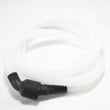
- A restricted drain path can leave dirty water behind; inspect the drain hose routing and consider hose 807117001 if it is damaged or collapsing.
- If the dishwasher is not filling correctly, the fill system is a common suspect; check the water supply and consider valve 154637401 if the valve is failing.
Dishwashers clean by combining correct fill level, strong spray, and proper heat. When water is not hot enough, pressure is low, or spray arms are blocked by loading, the unit can run normally but still leave food soils and detergent behind.
Last updated: February 2026





