Owner’s manual
 Error Codes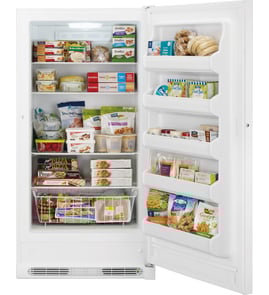


How many cubic feet is a Kenmore model 25344733108 freezer?
Kenmore Elite model 25344733108 is a 20.5 cubic foot upright freezer. Use the capacity to plan food loading and to confirm the unit size when ordering shelves, baskets, or door parts; the 25344733108 owner's manual also includes safe loading guidance.
How to confirm you are looking at the right freezer
Match the model number on the rating label to your paperwork.
- Look for the model/serial tag on the upper left wall inside the freezer
- Confirm the model number is 25344733108 (not a similar 253.4473xxxxx variant)
- Use the manual’s identification section to verify you have the correct Use & Care Guide
- Keep the serial number handy if you are troubleshooting cooling or defrost issues
Capacity and practical loading guidance
The manual’s rule of thumb is to freeze about 3 lb of fresh food per cubic foot at one time, after the freezer is fully cold.
| Item | Value for 25344733108 | Why it matters |
|---|---|---|
| Total capacity | 20.5 cu ft | Helps compare freezer sizes and storage needs |
| Fresh food to freeze at one time | ~61.5 lb (20.5 x 3) | Prevents long run times and uneven freezing |
| Cool-down time before loading unfrozen food | 4 hours | Supports safe food storage temperatures |
If the freezer struggles after a big load
Overloading can look like a cooling problem. Check these basics first:
- Allow the full 4-hour cool-down before adding unfrozen food
- Spread packages out so air can circulate around them
- Verify the temperature control setting per the 25344733108 owner's manual
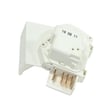
- If you see heavy frost or warming, a defrost problem is likely; a common component in the defrost circuit is the defrost timer 5304518034
Why it matters
Knowing the 20.5 cu ft capacity helps you load food safely, avoid temperature swings, and reduce the chance of frost buildup or extended compressor run time that can mimic a parts failure.
Last updated: February 2026
Is there a reset button on a Kenmore upright freezer?
Kenmore upright freezers such as model 25344733108 typically do not have a dedicated “reset” button. Most “reset” situations are handled by restoring power (unplugging briefly, then plugging back in) and re-setting the temperature control as described in the 25344733108 owner's manual.
What to try first (safe reset steps)
- Make sure the temperature control is not set to OFF.
- Unplug the freezer for 5 minutes, then plug it back in.
- Confirm the outlet has power (try a lamp or small appliance).
- If the freezer is on a GFCI outlet, reset the outlet and test again.
- Keep the door closed and allow 4 hours for the freezer to cool completely after power is restored.
If it still will not run
The troubleshooting guidance for this Kenmore Elite freezer points to a few common causes: power supply issues, a loose plug, a tripped breaker, or the control being set to OFF.
| Symptom | Most common cause | What we do next |
|---|---|---|
| No lights, no sound | No power at outlet | Check breaker, outlet, cord connection |
| Runs but not cold enough | Door not sealing, warm air leaks | Inspect and clean the door gasket |
| Runs constantly | Door opened often, warm room, control too cold | Reduce door openings, adjust control warmer |
Why it matters
A “reset” that is really a power interruption or control setting issue can look like a failed part. Doing the quick checks above prevents unnecessary parts replacement and helps you pinpoint whether the problem is electrical, airflow, or temperature-control related.
If you find the door gasket is torn, hardened, or not sealing, replacing it can restore proper temperatures and reduce run time. For this model, a common replacement is the refrigerator door gasket (black) 5304507206.
Last updated: February 2026
What are the common problems with Kenmore Elite refrigerators?
Kenmore Elite refrigerators and freezers commonly have cooling and frost-related problems caused by airflow restrictions, dirty coils, door seal leaks, or a defrost system issue. For Kenmore Elite model 25344733108, our 25344733108 owner's manual troubleshooting chart focuses on power, temperature control settings, door sealing, and warm-air entry as the most frequent causes.
Most common symptoms and what they usually mean
- Not cooling or running constantly: warm air entering through a door that is slightly open or not sealing
- Too warm inside: door opened too often, warm food load, or temperature control set too warm
- Too cold inside: temperature control set too cold
- Frost buildup: door not sealing, frequent openings, or a defrost system component problem
- Noisy operation: normal compressor and fan sounds can seem louder during long run times
Quick checks we recommend first (fast, no parts)
- Confirm the freezer is plugged in firmly and the circuit is good.
- Verify the temperature control is not set to OFF.
- Reduce door openings and make sure vents and shelves are not blocking airflow.
- Check the door closes easily and seals all the way around.
- Let temperatures stabilize after changes; most units need several hours.
Parts that commonly fix cooling and frost problems
If basic checks do not solve it, these model-compatible parts are often involved:
| Problem pattern | Common part to inspect | What it affects |
|---|---|---|
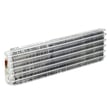
| Heavy frost, warming, poor airflow | Defrost heater 216730700 | Melts frost off the evaporator so air can circulate |
| Frost returns quickly after defrost | Refrigeration appliance defrost bi-metal thermostat 297216600 | Senses coil temperature and helps control defrost |
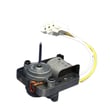
| Warm temps with weak airflow | Freezer evaporator fan motor 297309000 | Moves cold air through the cabinet |
| Door sweating, frost near door | Refrigerator door gasket (black) 5304507206 | Prevents warm, moist air leaks |
Why it matters
Most “not cold enough” complaints trace back to warm air leaks or restricted airflow. When warm air enters, the compressor runs longer, temperatures rise, and frost can build up, which makes cooling even worse.
Last updated: February 2026
What is the average lifespan of a Kenmore Elite refrigerator?
Most Kenmore Elite refrigerators last 10 to 15 years with normal use and basic upkeep. For Kenmore Elite model 25344733108 (an upright freezer), that same 10 to 15 year range is the typical life expectancy for the refrigeration system and major components when the unit is installed, operated, and maintained as described in the 25344733108 owner's manual.
Typical lifespan ranges (what to expect)
These ranges help set realistic expectations for a Kenmore Elite refrigerator or freezer in a home kitchen or garage.
- Average lifespan: 10 to 15 years
- Common “good run” with maintenance: 12 to 16 years
- Long life (best-case conditions): up to about 20 years
- Shortened lifespan drivers: poor airflow, dirty condenser area, frequent door openings, warm location
- Most common age-related issues: defrost problems, fan motor wear, door seal leaks
What affects lifespan the most
A refrigerator or upright freezer usually fails early for a few predictable reasons.
| Factor | What it does | What we recommend |
|---|---|---|
| Door seal condition | Warm air leaks in, frost builds up, run time increases | Inspect and replace a torn gasket such as the refrigerator door gasket (black) 5304507206 if it is not sealing |
| Defrost system health | Prevents heavy frost that blocks airflow | If you see heavy frost, test the defrost circuit (timer, heater, thermostat) |
| Airflow around the cabinet | High heat load stresses the compressor | Keep vents clear and allow space around the unit |
| Electrical stability | Low voltage can stress motors and controls | Use a properly grounded outlet and avoid extension cords |
Quick maintenance checklist (adds years)
- Keep the door closed as much as possible; avoid “browsing” with the door open.
- Make sure the freezer is level so the door closes and seals consistently.
- Defrost safely; always unplug the unit first before defrosting.
- Watch for early warning signs: louder fan noise, warmer temps, recurring frost.
- If cooling is weak and run time is long, check for airflow issues and frost buildup.
Why it matters
Lifespan is mostly about run time and heat load. When a Kenmore Elite unit runs longer to overcome warm air leaks or restricted airflow, components like the compressor, evaporator fan, and defrost parts wear faster, and energy use increases.
Last updated: February 2026
What model is my Kenmore Elite refrigerator?
For Kenmore Elite model 25344733108 (this is an upright freezer, not a refrigerator), the model and serial number are printed on the serial plate inside the cabinet. On this model, the serial plate is on the upper left wall inside the freezer; confirm the exact spot in the 25344733108 owner's manual.
Where to find the model and serial tag
On Kenmore Elite upright freezers like 25344733108, we check these locations first:
- Upper left wall inside the freezer compartment (most common for this model)
- Side wall just inside the door opening
- Ceiling area inside the cabinet near the control housing
- Behind or beside the lower basket area
What you should write down
Copy the information exactly as shown on the tag.
- Full model number (all digits)
- Full serial number
- Any revision or manufacturing codes listed
| Label item | What it’s used for | Example for this unit |
|---|---|---|
| Model number | Matches the correct parts diagrams and replacements | 25344733108 |
| Serial number | Identifies your specific production run | Varies |
Why it matters
We use the model number to ensure parts fit and wire correctly on your Kenmore Elite upright freezer, especially for items like the defrost system and airflow components (for example, a defrost timer 5304518034 or freezer evaporator fan motor 297309000).
Last updated: February 2026
Why is my Kenmore Elite freezer display not working?
If the display on your Kenmore Elite freezer model 25344733108 is blank or unresponsive, the most common causes are a power issue (loose plug, tripped breaker/GFCI, outage) or a control reset need. Start by confirming steady power, then do a safe reset by unplugging the freezer.
Quick checks first (fastest fixes)
- Make sure the power cord is fully seated in the outlet (a loose plug can kill the display).
- Check the house breaker or fuse; reset the breaker if it tripped.
- If the freezer is on a GFCI outlet, reset the GFCI.
- Confirm the temperature control is not set to OFF.
- If there was a recent outage, keep the door closed while you troubleshoot to protect food.
Safe reset steps
- Unplug the freezer (always pull the plug, not the cord).
- Wait 5 to 10 minutes.
- Plug it back in and listen for normal operation (fan/compressor sounds may start after a short delay).
- Recheck the display.
For model-specific electrical and safety guidance, follow the 25344733108 owner’s manual.
If the display is still blank
At that point, the issue is typically in the user interface connection or the main control electronics.
- Inspect the display area for signs of moisture intrusion or physical damage.
- If you are comfortable with basic electrical checks, use a multimeter to confirm the outlet has correct voltage.
- If the freezer runs but the display stays dead, a control or wiring issue is likely.
If you need to test electrical parts correctly, use our how to use a multimeter to test electrical parts video.
What to check and what it means
| What you observe | Most likely cause | What to do next |
|---|---|---|
| Display off and freezer not running | No power, loose plug, breaker/GFCI, control set to OFF | Restore power, set control correctly, then reset |
| Freezer runs but display is blank | Control/display connection or control failure | Inspect connections; plan for control diagnosis |
| Display flickers or resets | Intermittent power or loose connection | Check outlet fit, cord, and breaker stability |
Why it matters
A non-working display can hide temperature problems. Restoring reliable power and control operation helps prevent thawing, excessive run time, and food loss.
Last updated: February 2026
Why is my Kenmore Elite freezer not freezing?
If your Kenmore Elite upright freezer 25344733108 is running but not freezing, the most common causes are restricted airflow (blocked toe grille or poor clearances), a door that is not sealing, or a defrost system problem that lets frost choke the evaporator. Use the checks below, then confirm settings and specs in the 25344733108 owner's manual.
Quick checks that fix many “not freezing” complaints
- Make sure the temperature control is not set to OFF.
- Confirm the freezer is fully plugged in and the outlet has power (reset a tripped breaker if needed).
- Verify the toe grille is not blocked; airflow at the lower front is required for proper operation.
- Check installation clearances: 3/8 in. at the sides and 1 in. at the back and top.
- Limit door openings and avoid loading large amounts of warm food all at once.
- Look for a door left slightly open or items preventing the door from closing.
Door seal and leveling (very common on upright freezers)
A weak seal lets warm, moist air in; temperatures rise and frost builds up.
- Inspect the gasket for dirt, cracks, or gaps.
- Clean the gasket and mating surface with mild soap and warm water; dry fully.
- Level the cabinet so the door closes easily when left halfway open.
| What you notice | Likely issue | What to do next |
|---|---|---|
| Frost or moisture around the door | Door not sealing | Clean gasket, check for gaps, level the freezer |
| Door won’t close smoothly | Freezer not level or floor uneven | Adjust leveling feet; shim if needed |
| Runs a lot but still warm | Airflow restriction or seal leak | Clear toe grille, confirm clearances, check gasket |
When to suspect a defrost system problem
If the evaporator area is packed with frost, cold air cannot circulate.
Common parts involved include:
- Defrost timer
- Defrost heater
- Defrost bi-metal thermostat
If you are diagnosing with a meter, follow safe testing steps and replace only the failed component. For example, a failed defrost timer 5304518034 can prevent the unit from cycling through defrost properly.
Why it matters
A freezer that cannot move air, cannot seal, or cannot defrost will run longer, waste energy, and still fail to reach safe food-storage temperatures.
Last updated: February 2026