Installation guide
 Owner’s manual
 Error Codes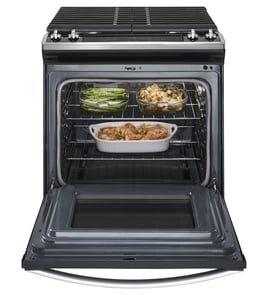
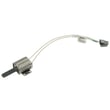





What size gas line for GE gas range?
For the GE JGB660FEJ1DS gas freestanding range, the installation instructions allow a 1/2-inch or 3/4-inch gas supply pipe, and they call for using a 1/2-inch I.D. flexible metal appliance connector to hook the range up safely. See the JGB660FEJ1DS installation guide for the approved hookup options.
Recommended hookup sizes (what we use most often)
- Gas supply pipe: 1/2-inch NPT is common; 3/4-inch is also acceptable (especially for longer runs)
- Flexible connector to the range: 1/2-inch I.D. metal appliance connector (new, not reused)
- Shut-off valve: Install an accessible gas shut-off valve in the supply line
- Adapters: Flare union adapters are typically used to transition between NPT and the flexible connector
Quick size guide
| Connection point | Typical size you’ll see | Notes |
|---|---|---|
| House gas supply pipe | 1/2-inch or 3/4-inch NPT | Both are listed as acceptable in the install instructions |
| Flexible connector | 1/2-inch I.D. | A 5-foot length is recommended for easier installation |
| Range regulator inlet | 1/2-inch NPT (via adapter) | Use the regulator supplied with the range |
Why line size matters
Correct gas line sizing helps the burners get steady fuel flow so the oven and surface burners ignite reliably and maintain heat. Undersized piping or the wrong connector setup can lead to weak flames, slow preheat, or ignition problems.
Important installation notes for this model
- Use the gas pressure regulator supplied with the range.
- Do not use a flame to check for leaks; use a leak detector solution.
- If you’re converting to propane (LP) or installing at high altitude, follow the conversion instructions in the JGB660FEJ1DS installation guide.
Last updated: January 2026
What is the life expectancy of a GE gas stove?
A GE gas stove typically lasts 13 to 15 years with normal household use and basic maintenance. For your GE JGB660FEJ1DS gas freestanding range, following the care, cleaning, and safety guidance in the JGB660FEJ1DS owner's manual helps you get the longest service life.
Typical life expectancy (what to plan for)
Most freestanding gas ranges fall into a similar lifespan range; the difference usually comes down to burner cleanliness, ignition health, and how often the oven runs at high heat.
- Typical lifespan: 13 to 15 years
- Heavy use (daily baking, high-heat cooking): closer to 10 to 12 years
- Light use and good maintenance: 15 years or longer
What usually ends a range’s service life
These are the most common wear items and failure points we see on gas ranges like the GE JGB660FEJ1DS:
- Oven ignition problems (slow or no ignition)
- Surface burner ignition issues (clicking, weak spark)
- Gas valve wear or sticking
- Control board or keypad failures
- Door seal and insulation wear that causes heat loss
Quick symptom-to-part map
| Symptom | Most likely area | What it affects |
|---|---|---|
| Oven takes a long time to light or won’t heat | Ignition system | Bake/broil performance |
| Burners click but won’t light | Spark system | Cooktop lighting |
| Smell of gas when off | Gas valve/regulator | Safety and operation |
| Oven light doesn’t work | Light bulb/socket | Visibility only |
Maintenance that adds years (and prevents common failures)
These habits reduce stress on burners, igniters, and controls:
- Keep burner caps and ports clean and dry after boil-overs.
- Avoid lining the oven bottom with foil; it can trap heat and damage components.
- Use gentle cleaning around igniters; don’t soak or spray them directly.
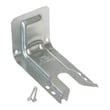
- Verify the range is stable and properly secured; the anti-tip bracket matters for safe long-term use.
- If you live above 6,000 ft, use the correct high-altitude setup so combustion stays efficient.
Why it matters
Planning around a 13 to 15 year lifespan helps you decide whether to repair or replace. If the range is near end-of-life and needs a major repair (gas valve/regulator or control board), comparing repair cost to replacement value usually leads to a clearer decision.
Last updated: January 2026
What is a common problem with a gas stove?
A very common problem on a gas stove like the GE JGB660FEJ1DS is a burner that clicks but will not light, or flames that burn unevenly. Most of the time, the cause is a dirty or misassembled burner cap or clogged burner ports, which you can fix with careful cleaning and correct reassembly (see the JGB660FEJ1DS owner’s manual).
Most common symptoms and what they usually mean
- Clicking but no flame: moisture, food residue, or a clogged burner port is preventing ignition
- Uneven flame pattern: burner cap is not seated correctly or burner slots are clogged
- Very large or yellow flames: air-to-gas ratio issue; if the range is on Propane (LP), the conversion/setup may need to be checked
- Surface burners work but bake/broil do not: oven gas flow may be shut off at the regulator lever behind the drawer area
Quick checks you can do safely
- Turn the burner knob to OFF and let the burner cool.
- Remove the grate and burner cap; clean residue from the cap and burner head.
- Make sure the burner cap sits flat and centered before trying again.
- If flames are yellow or oversized, verify the correct gas type (Natural Gas vs LP) and have the installation checked.
Cleaning tips (what works best)
| Area | What to do | What to avoid |
|---|---|---|
| Burner cap and burner head | Wash, dry fully, and reinstall correctly | Reinstalling while wet (can cause clicking/no-ignite) |
| Burner slots/ports | Clear debris gently (soft brush) | Enlarging ports with hard tools |
| Cooktop surface | Wipe spills promptly | Covering grates with foil (airflow and safety issue) |
When it points to a part problem
If cleaning and correct cap placement do not help, ignition components can be involved. For this model, common ignition-related parts include the range spark module WB13X24741.
Why it matters
A burner that does not light can allow unburned gas to flow briefly, and yellow flames can indicate incomplete combustion. Keeping burners clean and correctly assembled helps the range light reliably and burn efficiently.
Last updated: January 2026
Why is my GE gas stove not igniting?
If your GE JGB660FEJ1DS gas range burners are not igniting, the most common causes are a dirty or mis-seated burner cap, moisture or debris at the igniter electrode, or an ignition power issue (spark module or wiring). Start with cleaning and correct burner assembly, then check for consistent sparking.
Quick checks (most fixes)
- Confirm the burner cap is seated correctly and centered on the burner base.
- Dry the burner head and cap completely if you recently cleaned the cooktop.
- Listen and look for a steady clicking spark at the electrode when you turn the knob to LITE.
- Make sure the burner ports (slots/holes) are not clogged with food spillover.
- Verify the gas supply is on and other burners can light.
What to do based on what you see
| What happens when you turn to LITE | Likely cause | What to try next |
|---|---|---|
| No clicking spark on any burner | Spark module not sending spark, power issue | Check power to the range; then inspect/replace the range spark module WB13X24741 |
| Clicking spark but no flame | Gas not reaching burner, clogged ports, cap misaligned | Clean burner ports and reseat the cap; try lighting another burner |
| Spark and flame starts but goes out | Wet/dirty electrode, poor flame pattern | Dry and clean around the electrode and burner head |
| Some burners ignite, one does not | Dirty cap/head, damaged electrode lead | Swap caps (if same size) and clean; inspect wiring to that burner |
Parts that commonly solve ignition problems
If cleaning and reseating do not restore ignition, these parts are frequent fixes on gas ranges like the JGB660FEJ1DS:
- Range spark module WB13X24741 (when multiple burners stop sparking)
- Range surface burner cap WB28K10222 (when the cap is warped, cracked, or not seating)
- Range extra large surface burner, 18,000-btu WB16X24722 (when the burner head is damaged or heavily corroded)
Why it matters
A burner that will not ignite can leave unburned gas in the air if the knob is left on. Correct burner assembly and clean burner ports help the igniter spark light the gas quickly and keep the flame stable.
Model-specific tips from GE documentation
GE troubleshooting guidance for this style of range points to burner assembly and clogged burner slots as top causes of uneven or poor burner operation. For diagrams and cleaning steps specific to your JGB660FEJ1DS, use the JGB660FEJ1DS owner’s manual.
Last updated: January 2026