 View engine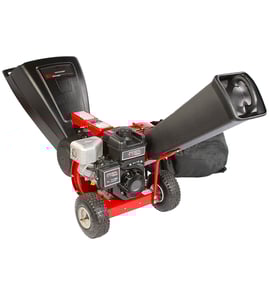




Do wood chippers also mulch leaves?
Yes. A Craftsman chipper/shredder like model 247796892 is designed to process more than just branches; it can also shred dry leaves into smaller pieces that work well as mulch or as “brown” material for compost.
- Dry leaves shred best; damp leaves tend to clump and can plug the chute.
- Output is usually leaf confetti, not a fine powder; it still works well for mulching beds.
- Leaves often reduce faster when you mix in small twigs to help keep material moving.
- If you want finer mulch, run the output through a second time (when your unit design allows safe re-feeding).
- Feed small handfuls steadily instead of packing the hopper.
- Avoid long, stringy yard debris (vines) that can wrap around internal cutters.
- Keep the discharge area clear; an overfilled bag can back up material.
- Stop the engine and let all moving parts stop before clearing jams.
| Material | Typical performance | Common issue | Best practice |
|---|---|---|---|
| Dry leaves | Shreds easily | Dust, blowback | Feed slowly, wear eye protection |
| Wet leaves | Can bog down | Clogging | Mix with twigs or dry first |
| Small twigs | Chips/shreds well | Kickback if overloaded | Feed butt-end first |
Shredded leaves break down faster in compost and make a better mulch layer because smaller pieces mat less, hold moisture more evenly, and are easier to spread.
If your leaf bagging setup is torn or won’t stay attached, replacing the collection bag can restore airflow and reduce clogging; see the bag 664P04022A.
Last updated: January 2026
What is the difference between a chipper shredder and a chipper shredder?
On the Craftsman 247796892 5-hp chipper/shredder, the practical difference is usually between a chipper, a shredder, and a chipper/shredder combo: chippers handle thicker woody branches into coarse chips, shredders break down lighter yard debris into finer mulch, and combo units do both using different cutting areas and feed openings.
- Chipper: Designed for branches and woody material; output is larger, chunkier chips.
- Shredder: Designed for leaves, small twigs, and garden waste; output is finer mulch.
- Chipper/shredder: Combines both functions so you can process mixed yard waste with one machine.
Most chipper/shredder designs use different cutter styles for different debris types.
- Chippers commonly use a knife or blade against an anvil or bed knife.
- Shredders commonly use flails or hammers to pulverize lighter material.
- Combo units often have separate feed chutes/openings to match the material.
| Feature | Chipper | Shredder | Chipper/shredder combo (like 247796892) |
|---|---|---|---|
| Best for | Branches | Leaves, soft debris | Mixed yard waste |
| Output | Coarse chips | Fine mulch | Both, depending on feed |
| Typical cutter | Knife/blade | Flails/hammers | Knife plus flails/hammers |
Using the right function for the material reduces clogs, improves throughput, and helps protect wear parts like blades and flails. If your output suddenly looks stringy or performance drops, worn cutters are a common cause.
If your Craftsman 247796892 is shredding poorly, inspect for bent, cracked, or worn cutting components and loose hardware.
- Check the shredder cutter condition, especially the flail 91459B.
- Verify fasteners are tight and not missing (bolts, lock washers, cotter pins).
- Clear packed debris from the housing and discharge area before testing.
Last updated: January 2026
How do I find the model number on my 247796892?
The model number for your Craftsman 5-hp chipper/shredder is printed on the model and serial tag attached to the machine frame. On model 247796892, the tag is typically on the rear or side of the main housing near the engine mount or hopper support.
Check these common tag locations first:
- Rear of the chipper/shredder housing (near the discharge or bag area)
- Side panel of the main frame, close to the engine
- Near the hopper or chute support brackets
- On the base frame rail, behind the wheels
- On or near the handle mounting area
Most tags include multiple identifiers. Record them exactly as shown:
- Model number (for parts lookup): 247796892
- Serial number (helps confirm production run)
- Engine model/type/code (useful for engine-specific parts)
If the tag is dirty or faded, wipe it with a damp rag and use a flashlight at an angle to make stamped characters easier to read.
You can still narrow it down using the parts diagrams and a few visible features.
| What to compare | What to note | Why it helps |
|---|---|---|
| Hopper/chute style | Shape, mounting points | Matches diagram assemblies |
| Discharge/bag setup | Bag ring, clamp style | Identifies the correct collection parts |
| Hardware sizes | Bolt/washer types | Confirms frame and housing match |
A quick cross-check is to compare your collection setup to the bag 664P04022A listing and diagram callouts.
Using the exact model number prevents ordering the wrong flail, bag, fasteners, or spacers; even small changes between close models can affect fit and safety shields.
Last updated: March 2026