


Is Kenmore Elite high end?
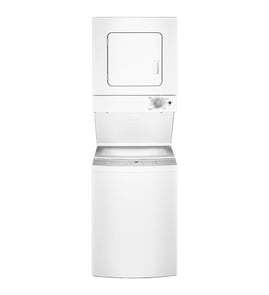
Yes. Kenmore Elite is positioned as Kenmore’s higher-end line, typically offering upgraded performance, more premium styling, and more advanced features than standard Kenmore models. Your Kenmore stacked laundry center model 41798802891 is a separate model line, so “Elite” features vary by the exact model.
What “high end” usually means for Kenmore Elite
Kenmore Elite appliances are generally built to deliver stronger performance and convenience features compared with entry and mid-tier models.
Common upgrades include:
- More cycle and option choices (better fabric care and flexibility)
- Quieter operation and improved vibration control
- Higher-capacity designs (varies by product type)
- More advanced controls and sensors (for example, moisture sensing on dryers)
- More premium finishes and trim details
How to tell if your laundry center is an Elite model
For Kenmore laundry centers, the most reliable way is the model identification on the unit’s rating label and the way the model is marketed.
Check these quick indicators:
- The model label shows “Elite” branding (not all do)
- The feature set includes more advanced options than basic models
- The model is sold and listed as “Kenmore Elite” in product descriptions
| Line name | Typical positioning | What you usually get |
|---|---|---|
| Kenmore | Mid-range | Core cycles and standard features |
| Kenmore Elite | High end | More features, upgraded performance, premium styling |
| Kenmore PRO | Pro-style | Pro-inspired design and higher-end feature sets |
Why it matters
Knowing whether a unit is Kenmore Elite helps set expectations for features, noise level, and performance. It also helps when troubleshooting and ordering parts for a specific configuration like the 41798802891 stacked laundry center.
If you’re diagnosing a washer issue on a Kenmore 417-series laundry center, use our Kenmore 417 laundry center -washer error codes reference to match symptoms to the right repair path.
Last updated: February 2026
Where to find the model number on a Kenmore laundry center?
On a Kenmore stacked laundry center like model 41798802891, the model number is typically on a data tag around the washer lid opening (top rim/underside of the lid) or on the dryer door opening (door jamb). If your unit is a stacked set, you can have two separate model numbers, one for the washer and one for the dryer.
Common places to check
- Washer section: under the washer lid, along the top rim of the tub opening
- Washer section: inside the front panel area near the door/lid opening (depending on design)
- Dryer section: on the dryer door jamb (open the dryer door and look around the opening)
- Dryer section: just inside the front panel near the lint screen housing (some versions)
- Back of unit: a rating plate on the rear panel (less common, but worth a quick look)
What the tag looks like (and what to write down)
The data tag usually includes more than one identifier. We recommend recording these items:
| Item on tag | Why it matters | Example format |
|---|---|---|
| Model number | Ensures correct parts diagrams and fit | 41798802891 |
| Serial number | Helps confirm production run and revisions | Letters and numbers |
| Electrical rating | Useful for diagnosing power and heating issues | Volts/amps |
Why it matters
Using the exact model number prevents ordering the wrong Kenmore parts, especially on laundry centers where the washer and dryer sections can use different components (timers, motors, thermostats, door switches).
If you cannot find it quickly
If the tag is worn or missing, the next best step is to identify the washer and dryer sections by symptoms or parts you can see, then match using diagrams and common service items. For example, if you are working on a no-drain problem, the washer drain pump is a frequent match point: pump 137221600.
Last updated: February 2026
How many cubic feet is a Kenmore 300 series washer?
Kenmore “300 series” washers come in multiple designs, so the cubic-foot capacity depends on the exact model number. Most Kenmore 300-series top-load washers are commonly around 3.8 to 4.3 cu. ft., while compact or older units can be smaller.
How to get the exact capacity for your washer
Use the model number from the rating plate (not just “300 series”). Common places to check:
- Under the washer lid or along the lid opening
- On the back panel
- Inside the door area (for front-load models)
- On the laundry center frame (for stacked units)
If you are working with a stacked unit like Kenmore 41798802891, the washer capacity is specific to that laundry center configuration, not the broader “300 series” label.
Typical capacities by washer type (quick reference)
| Washer type | Typical capacity range | What it’s best for |
|---|---|---|
| Top-load (standard) | 3.8 to 4.3 cu. ft. | Everyday mixed loads |
| Top-load (high-capacity) | 4.5 to 5.5 cu. ft. | Bulky items, large families |
| Front-load | 4.2 to 5.0 cu. ft. | Efficient cleaning, larger loads |
| Compact | 1.5 to 2.8 cu. ft. | Small spaces, light loads |
Why it matters
Capacity affects how much you can wash per load, how well items circulate, and how often you should run cycles. Overloading a smaller tub can lead to poor cleaning, out-of-balance spinning, and extra wear on drive components.
Related repair and troubleshooting help
If you are diagnosing performance issues (slow drain, no spin, error codes), these resources help narrow it down:
And if your Kenmore 41798802891 washer is not draining well, a failing drain pump is a common cause; the correct replacement for this model is the pump 137221600.
Last updated: February 2026
How to remove front panel from Kenmore stackable washer?
On the Kenmore 41798802891 stacked laundry center, the washer front panel comes off after you remove the top, take out the screws securing the console and front panel, then lift the panel up to unhook it from the lower retaining tabs.
Before you start
- Unplug the unit or switch off the breaker.
- Turn off both water supply valves.
- Keep a towel handy for small drips.
- Use a magnetic tray for screws.
- Wear cut-resistant gloves; cabinet edges are sharp.
Front panel removal steps (typical for this style)
- Remove the top panel: take out rear screws, slide the top back, lift off.
- Pull out the dispenser drawer: press the locking tab and remove the drawer.
- Remove screws behind the dispenser opening (these often secure the console).
- Release the control console if it blocks the front panel screws; tilt it forward and support it.
- Remove any lower toe/access panel screws along the bottom edge (if equipped).
- Remove the front panel mounting screws along the top edge and any bottom corner screws.
- Lift the front panel slightly to unhook it from the lower tabs, then pull it forward.
What to watch for
- Door lock wiring may be attached to the front panel; support the panel before disconnecting.
- Don’t pry hard on plastic tabs; lift to unhook instead.
- If a screw is stripped, switch to the correct driver size and apply firm inward pressure.
Quick fastener map
| Area | What you remove | What it frees |
|---|---|---|
| Rear of top | 2 to 3 screws | Top panel |
| Dispenser opening | 1 to 3 screws | Console/front alignment |
| Top of front panel | Several screws | Front panel release |
Why it matters
Removing the panel in the right order prevents broken tabs, pinched wiring, and cabinet misalignment that can cause vibration or leaks after reassembly.
If you need replacement fasteners during reassembly, use the correct model-matched hardware such as the laundry appliance screw, #8-18 x 31/100-in 131168200.
Last updated: February 2026