Installation guide
 Owner’s manual
 Error Codes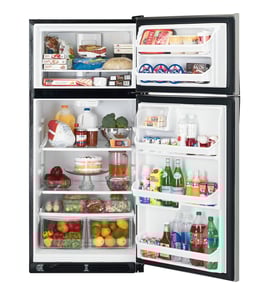


What is the upper part of a fridge called?
On the Frigidaire FRT18L4JM1 top-mount refrigerator, the upper section is the freezer compartment. It’s the coldest area of the appliance and is designed to keep foods frozen; some models also use this area to support an automatic ice maker.
What the freezer compartment does
- Maintains temperatures low enough to keep food frozen long-term
- Helps freeze fresh foods quickly when set correctly
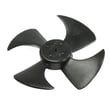
- Often houses airflow components that circulate cold air to the refrigerator section
- May include ice trays or an optional automatic ice maker (model dependent)
Common names you may see
These terms are often used interchangeably in manuals and parts diagrams:
| Term | What it usually means | Where it is |
|---|---|---|
| Freezer compartment | The frozen-food storage area | Top section on a top-mount unit |
| Freezer section | Same as freezer compartment | Top section |
| Freezer door | The door that seals the freezer | Upper door |
Why it matters
Knowing the correct name helps when you’re looking up troubleshooting steps (like temperature issues, frost buildup, or unusual noises) and when you’re identifying the right door, gasket, or internal storage parts for your refrigerator.
Helpful references for this model
- For operating basics, temperature guidance, and safety information, use the FRT18L4JM1 owner’s manual.
Last updated: January 2026
What is the most common problem with a Frigidaire refrigerator?
Cooling complaints are the most common issue we see with Frigidaire refrigerators like model FRT18L4JM1, especially warm fresh-food temperatures, weak airflow, or temperature swings. Many “not cooling” calls trace back to basic maintenance (airflow and cleanliness), door sealing, or a defrost-related problem; use the FRT18L4JM1 owner’s manual to match symptoms to checks.
Most common symptoms customers report
- Refrigerator section is warm but freezer seems OK
- Freezer is warming up or ice cream is soft
- Loud humming, buzzing, or fan noise during operation
- Frost buildup on the freezer back wall (defrost issue)
- Water collecting under the refrigerator (defrost drain issue)
Quick checks that fix many cooling problems
Start with these no-parts steps before testing components:
- Confirm the temperature control is not set to “0” (off) and allow 24 hours for temperatures to stabilize after changes.
- Make sure the power plug is fully seated; check the breaker or a 15-amp time-delay fuse.
- Verify doors close fully and nothing is holding the gasket open.
- Improve airflow: do not block vents with food packages.
- If your unit runs in a dusty or greasy area, clean the condenser area as needed for efficiency (some versions use a “Never Clean” condenser, but heavy dust can still reduce performance).
Common causes and what they usually look like
| What’s happening | Likely cause | What you’ll notice |
|---|---|---|
| Fridge warm, freezer OK | Evaporator airflow problem | Weak air movement, possible fan noise |
| Frost on freezer back wall | Defrost system problem | Frost blanket, temps slowly rise |
| Temps drift, doors sweat | Door seal not sealing | Gaps, moisture, longer run times |
| No interior light | Burned-out bulb or door switch issue | Light out when door opens |
If the interior light is out, replace the bulb safely: unplug the refrigerator first, remove the light shield, and install an appliance bulb of the same wattage. If you need the correct replacement, match it to the refrigerator light bulb 316538904.
Why it matters
Cooling problems can lead to food spoilage and can force the compressor to run longer than normal. Keeping airflow clear, doors sealing, and the unit clean helps the refrigerator cool efficiently and reduces wear.
Last updated: January 2026
What are the disadvantages of a top mount fridge?
A top-mount refrigerator like the Frigidaire FRT18L4JM1 puts the freezer on top and the fresh-food section below, so the main tradeoff is convenience: you bend more to reach everyday items, and you typically get fewer premium organization and dispenser features than many bottom-freezer designs.
Common disadvantages you may notice day to day
- More bending to access fresh food (produce drawers, deli items, beverages)
- Less “eye-level” organization for the refrigerator section compared with bottom-freezer models
- Fewer built-in convenience features on many top-mount units (water dispenser, in-door ice)
- Freezer can feel more crowded if you store bulky frozen items
- Door swing and placement can be less flexible in tight kitchens (door reversal varies by door style)
Top-mount vs. bottom-freezer: quick comparison
| Feature | Top-mount (FRT18L4JM1 style) | Bottom-freezer (typical) |
|---|---|---|
| Fresh-food access | Lower, more bending | Higher, easier access |
| Freezer access | Eye-level | Lower drawer or door |
| Organization features | Often simpler | Often more flexible |
| Dispenser options | Less common | More common |
What to check on your FRT18L4JM1 before deciding
We recommend confirming how your kitchen layout and habits fit this model’s setup:
- Door swing direction and whether it can be reversed for your space (some door styles are not reversible)
- Installation clearances for airflow and fit (typical guidance is small side/top clearance and about 1 inch at the back)
- Leveling and door alignment; a unit that is not level can make access feel worse and can affect sealing
For model-specific setup details, use the FRT18L4JM1 owner’s manual and the FRT18L4JM1 installation guide.
Why it matters
Choosing a refrigerator layout is mostly about ergonomics and daily use. If you access fresh food far more than frozen food, a top-mount design can feel less convenient over time even when cooling performance is solid.
Last updated: January 2026
Why is my Frigidaire top mount freezer not freezing?
If your Frigidaire FRT18L4JM1 top-mount freezer is not freezing, the most common causes are incorrect control settings, blocked airflow, a door that is not sealing, or a fan/defrost issue. Start by adjusting temperatures in small steps and giving the unit time to stabilize.
Quick checks we recommend first
- Confirm the refrigerator control is not set to 0 (off).
- Adjust temperatures gradually; move the knob slightly toward Colder and wait for temperatures to stabilize.
- Keep food packages from blocking the cold air vents; airflow is required for both compartments.
- Allow a full cool-down period after changes or after plugging in; run with doors closed for 8 to 12 hours before loading food.
- If the refrigerator seems to stop and start, allow about 20 minutes in case it is in a defrost cycle.
Temperature settings and what they affect
On this style of Frigidaire top-mount refrigerator, the refrigerator control can affect both compartments, while the freezer control (on some models) affects only the freezer. Use the temperature adjustment guidance in the FRT18L4JM1 owner's manual.
| Symptom | What to adjust | What to expect |
|---|---|---|
| Freezer too warm | Turn freezer control slightly toward Colder (if equipped) | Freezer temp improves without overcooling fresh food |
| Fresh food too warm | Turn refrigerator control slightly toward Colder | Both sections trend colder |
| Freezer too cold | Turn freezer control slightly toward Cold | Freezer warms slightly |
When it is likely a parts or airflow problem
If settings are correct and the freezer still will not freeze, focus on airflow and sealing.
- Heavy frost on the back wall of the freezer often points to a defrost problem; a common part involved is the refrigerator defrost bi-metal thermostat 5303918202.
- Warm air leaks can prevent freezing; inspect the freezer door gasket for gaps, tears, or a door that will not close fully.
- If you hear the compressor running but airflow is weak, the evaporator fan area may need inspection (ice buildup, obstruction, or a fan issue).
Why it matters
A freezer that cannot reach proper temperature can lead to unsafe food storage and can force the compressor to run longer, increasing energy use and wear on cooling components.
Last updated: January 2026