Owner’s manual
 Error Codes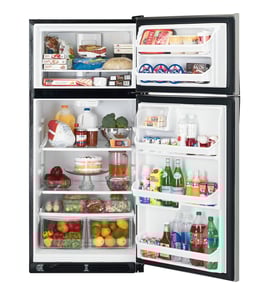



How to read a GE refrigerator model number?
GE refrigerator model numbers (including GTE18CCHMRSA) are a structured code that identifies the refrigerator’s series, size class, and configuration so we can match the correct parts and documentation. For your GE top-mount refrigerator, the most reliable way to confirm what each character means for your exact unit is to reference the model tag location and the model listing in the GTE18CCHMRSA owner's manual.
Where to find the model number (so you read the right code)
The model number you need is printed on the appliance data label. On this GE top-freezer style refrigerator, the label is located:
- Inside the fresh food (refrigerator) compartment
- On the left side
- Near the middle of the compartment
- Next to the serial number (write both down before ordering parts)
How GE model numbers are typically structured
GE model numbers are usually read left to right in groups. While the exact meaning of each character can vary by product line, the pattern generally works like this:
- Leading letters: product family and configuration (refrigerator type)
- Number group: size class or capacity family (often tied to cubic-foot class)
- Middle letters: feature package or design series
- Ending letters: finish/color and revision identifiers
Quick example using your model
| Segment | Example from GTE18CCHMRSA | What it generally indicates |
|---|---|---|
| Prefix | GT | Refrigerator family/configuration |
| Size class | E18 | 18-class top-freezer platform |
| Feature/series | CCHM | Feature package/design series |
| Suffix | RSA | Finish/revision code |
Why it matters when ordering parts
Reading the full model number correctly prevents common fit and compatibility issues, especially for parts that change by revision or feature package.
- Door parts (gaskets, handles, shelves) can vary by finish and revision
- Cooling system parts must match the exact platform
- Optional accessories (like an ice maker) must match the model’s wiring and water line setup
If you are adding or replacing an ice maker, use a model-matched kit such as the GE refrigerator ice maker kit WR30X10093 when it applies to your configuration.
Last updated: February 2026
What is the top part of a refrigerator called?
On a GE GTE18CCHMRSA top-mount refrigerator, the top compartment is the freezer compartment (often just called the freezer). It is the section designed to keep food frozen, and on many models it also supports an automatic ice maker setup; see the owner's manual for your exact features.
What the “top part” does
In a top-freezer design like the GTE18CCHMRSA, the freezer compartment is built to maintain freezing temperatures and support frozen-food storage.
Common freezer functions include:
- Freezing and long-term storage of food
- Providing cold air that helps cool the fresh food section
- Holding freezer shelves and bins for organization
- Supporting ice production (manual ice trays or an optional ice maker on some setups)
Freezer vs. refrigerator compartment (quick comparison)
| Compartment | Typical location | Primary purpose | Common components |
|---|---|---|---|
| Freezer compartment | Top | Keeps food frozen | Freezer shelves, ice maker (optional) |
| Fresh food compartment | Bottom | Keeps food cold (not frozen) | Shelves, drawers/crispers, light |
Related parts customers often ask about
If you are asking because something in the top section is not working (warm freezer, no ice, unusual noise), these model-compatible parts are commonly involved:
- GE refrigerator ice maker kit WR30X10093 (ice production issues)
- Refrigerator evaporator fan motor WR60X31522 (poor cooling, warm spots, fan noise)
- Refrigerator defrost heater WR09X21107 (frost buildup, airflow blocked by ice)
Why it matters
Using the right term helps you troubleshoot faster and order the correct GE refrigerator parts. For example, “freezer not cold” points us toward airflow, defrost, or temperature control checks, while “fresh food warm” can point to different causes.
Last updated: February 2026
What is the most common problem with a GE refrigerator?
The most common GE refrigerator problem is a cooling complaint (warm fridge, warm freezer, or temperature swings). On the GE GTE18CCHMRSA top-mount refrigerator, the most frequent causes are restricted airflow from blocked vents or dirty condenser coils, plus failures in key airflow parts like the evaporator fan.
What to check first (fast, no parts)
- Confirm the freezer and fresh food vents are not blocked by food packages; airflow restrictions cause uneven temperatures.
- Avoid overstuffing; leave space around vents so cold air can circulate.
- Make sure all food is covered; uncovered items add moisture and can increase frost load.
- Verify doors close fully and seal all the way around.
- Listen for the evaporator fan running when the compressor is on (a failed fan often causes warm fresh food).
For model-specific operating tips and troubleshooting charts, use the GTE18CCHMRSA owner's manual.
Common symptoms and the most likely causes
| Symptom | Most likely cause | What you can do next |
|---|---|---|
| Fresh food warm, freezer cold | Weak or failed evaporator fan | Inspect/replace the refrigerator evaporator fan motor WR60X31522 and check for ice buildup |
| Both sections warm | Dirty condenser coils, condenser fan issue, sealed system problem | Clean coils; if fan is noisy or not running, inspect the condenser fan motor |
| Frost buildup, poor airflow | Door left ajar, blocked vents, defrost issue | Check door seal; if heavy frost persists, test defrost components |
| Lights do not work when door opens | Door switch or bulb issue | Check the refrigerator door switch WR23X31507 and the GE appliance light bulb, 40-watt 40A15 |
Why it matters
Cooling problems are usually airflow problems first. When vents are blocked or a fan is failing, the refrigerator can run longer, temperatures drift, and food quality drops faster. Fixing airflow early often prevents bigger repairs.
When it points to a specific part
These parts commonly tie directly to “not cooling” or “inconsistent temperature” complaints on top-mount refrigerators:
- Evaporator fan motor and its mounts (air movement through the evaporator)
- Defrost heater (prevents ice from choking airflow)
- Door gaskets (prevents warm, moist air leaks)
- Door switch (can affect lights and sometimes fan behavior depending on design)
Last updated: February 2026