 Installation guide
 Owner’s manual




What is the most common problem with GE dishwashers?
For the GE GDF520PGD0BB dishwasher, the most common issues we see are poor draining (water left in the tub), weak cleaning from clogged filters or spray arms, and “won’t start” symptoms tied to the door not latching or a control problem. Regular filter cleaning prevents many of these.
Most common symptoms and what they usually point to
- Not draining or standing water: clogged filters, blocked drain path, or a failing drain pump
- Not cleaning well or gritty dishes: dirty filters, blocked spray arm holes, or loading issues
- Won’t start or stops mid-cycle: door not fully closed, latch problem, or control issue
- Beeping and Start light flashing: the door was opened or the cycle was interrupted (common user-facing “problem”)
- Leaks at the door: worn or mis-seated gasket
Quick checks we recommend first (no parts needed)
Use these steps before replacing anything; they solve a large share of GE dishwasher complaints.
- Clean the filters as described in the GDF520PGD0BB owner’s manual
- Remove and rinse spray arms; clear clogged jet holes
- Confirm the door closes firmly and the latch engages
- Check the sink drain and air gap (if installed) for blockage
- Cancel and restart the cycle correctly (Start behavior matters on this model)
Common parts that fix the most frequent failures
If cleaning and basic checks do not help, these are the parts most often involved on this model.
| Symptom | Most likely area | Example model-matched part |
|---|---|---|
| Standing water | Drain system | Dishwasher drain pump kit WD49X23779 |
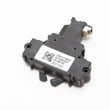
| Won’t start, beeps, or stops | Door closure sensing | GE dishwasher door latch lock WD21X10490 |
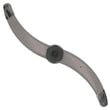
| Poor cleaning | Wash circulation | Dishwasher spray arm, lower WD22X33499 |
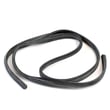
| Leaks at door | Door sealing | Tub gasket WD08X23476 |
Why it matters
Drainage and wash-performance problems usually start with restricted water flow (filters, spray arms, drain path). Keeping those clear helps the heater dry better, reduces odors, and prevents repeat cycle interruptions.
Helpful DIY reference
For display codes and electronic symptoms, use GE electronic dishwasher error codes.
Last updated: February 2026
What is the average lifespan of a GE dishwasher?
A GE dishwasher typically lasts 10 to 12 years with normal household use. For your GE GDF520PGD0BB, consistent cleaning, correct detergent use, and fixing small leaks or draining issues early are the biggest factors that help it reach (or exceed) that average; see the GDF520PGD0BB owner's manual for care and cleaning guidance.
What affects lifespan the most
- Water quality and heat: hard water and low water temperature increase buildup and strain.
- Maintenance habits: cleaning filters, spray arms, and door seals prevents poor washing and leaks.
- Loading and detergent: overloading and incorrect detergent can cause redeposit and wear.
- Early repairs: replacing a worn seal or clogged drain component prevents bigger failures.
- Usage frequency: multiple loads daily typically shortens service life versus light use.
Quick maintenance checklist (high impact)
- Clean the filter area regularly; remove debris that can block circulation.
- Inspect and clear spray arm holes; replace a damaged arm if it wobbles or cracks.
- Wipe the door perimeter and check for drips; a failing gasket can cause slow leaks.
- Run hot water at the sink before starting a cycle to improve wash performance.
- Use dishwasher detergent and rinse aid recommended for dishwashers (per the manual).
Common “wear items” and what they do
| Part | What you’ll notice when it’s failing | Typical impact |
|---|---|---|
| Tub gasket WD08X23476 | Water at the front/sides of the tub opening | Leaks, cabinet damage risk |
| Dishwasher drain hose WD24X10062 | Slow drain, water left in bottom, sink backup | Poor draining, odor |
| Dishwasher spray arm, lower WD22X33499 | Dishes not clean, weak spray, rattling | Poor cleaning, longer cycles |
Why it matters
Knowing the typical 10 to 12 year lifespan helps you decide when a repair (like a drain hose, spray arm, or gasket) is a smart fix versus when repeated issues point to end-of-life wear on major systems such as the control board, heater circuit, or pump.
Last updated: February 2026
How to remove the filter and spinner on GE dishwasher?
On the GE GDF520PGD0BB dishwasher, we remove the filter by pulling out the bottom rack, twisting the large round Ultra-Fine Filter to unlock it, then lifting it out. The spray arm (spinner) typically lifts off after it is unlocked or released, depending on the arm style.
Filter removal steps (GDF520PGD0BB)
- Turn the dishwasher off; let the tub cool if it just ran.
- Pull out and remove the lower rack.
- Twist the large round Ultra-Fine Filter counterclockwise to unlock.
- Lift the Ultra-Fine Filter straight up and out.
- Twist the two retaining spray posts at the back of the tub to release the Fine Filter (mesh plate).
- Lift out the Fine Filter.
For diagrams and the exact lock directions for your filter style, use the GDF520PGD0BB owner's manual.
Cleaning tips (so you do not damage the filter)
- Rinse with warm, soapy water.
- Use a soft sponge; avoid scouring pads.
- For hard-water buildup, use a soft brush gently.
- Reinstall in reverse order; twist to lock everything in place.
Removing the spray arm (spinner)
On this GE dishwasher, the lower spray arm sits on the sump area above the filters. After the filters are out, check the spray arm hub:
- If it has a twist-lock cap, rotate it to unlock, then lift the arm off.
- If it uses a snap-on retainer, release the retainer and lift the arm straight up.
- Rinse spray holes from the underside; clear debris with a toothpick if needed.
If the lower arm is cracked, warped, or the jets are clogged beyond cleaning, replacement is often the fastest fix; match your model to the correct part such as the dishwasher spray arm, lower WD22X33499.
Reinstall checklist
| Item | What “correct” looks like | What happens if it is wrong |
|---|---|---|
| Ultra-Fine Filter | Seated flat; twists to a firm lock | Gritty dishes, poor wash |
| Fine Filter | Fully under retaining posts | Debris recirculates |
| Spray arm | Spins freely by hand | Poor cleaning, noise |
Why it matters
Clean filters and a free-spinning spray arm keep wash pressure high, prevent gritty residue, and reduce drain issues caused by food debris recirculating through the pump.
Last updated: February 2026
How to do a hard reset on a GE dishwasher?
For a GE dishwasher like model GDF520PGD0BB, the most reliable “hard reset” is a power reset: turn the dishwasher’s breaker OFF for 1 minute, then turn it back ON. After power is restored, you can cancel the current cycle by pressing and holding Start/Reset, then restart a cycle.
Hard reset (power reset) steps
- Turn the dishwasher circuit breaker OFF (or unplug if it’s corded).
- Wait at least 1 minute.
- Turn the breaker ON.
- Close the door, then select a cycle.
- Press Start/Reset to start.
Cancel and drain (control reset during a cycle)
If the dishwasher is stuck mid-cycle, canceling forces a drain and clears the current run.
- Press and hold Start for 5 seconds to cancel, then close the door so it can drain.
- Wait for draining to finish.
- Select a new cycle and press Start.
For the exact button timing and indicator behavior on your control panel, follow the GDF520PGD0BB owner’s manual.
What to check if it still will not run
These are the most common “it has power but won’t start” causes after a reset:
- Door not fully latched (a weak latch can prevent starting)
- Control panel not responding (possible user interface issue)
- Cycle not started correctly (Start pressed but door not closed promptly)
- Unit is paused because the door was opened
- Drain problem preventing a new cycle from beginning
Quick symptom guide
| Symptom | Most likely cause | What to do next |
|---|---|---|
| Lights on, won’t start | Door not latched | Inspect latch; consider GE dishwasher door latch lock WD21X10490 if it will not secure consistently |
| Starts then stops | Door opened or not closed in time | Press Start again and close door firmly |
| Cancels but won’t restart | Drain issue | Check for kinks in the drain hose and confirm the sink/disposer connection is clear |
Why it matters
A breaker reset clears a “locked up” control state after a power glitch, while a Start/Reset cancel clears the active cycle logic and drains the tub. Using the right reset method prevents repeated no-starts and helps you pinpoint whether the issue is the door latch, drain path, or controls.
Last updated: February 2026





