Installation guide
 Owner’s manual
 Error Codes



How to reset Whirlpool WDT910SAYM0 dishwasher?
To reset a Whirlpool WDT910SAYM0 dishwasher, we use the control-panel reset sequence that cancels the current cycle and reboots the electronic control. Put the dishwasher in standby (no cycle running), then run the button sequence shown in your WDT910SAYM0 owner's manual.
Quick reset steps (most common)
- Press Heated Dry, then Normal.
- Repeat that same two-button sequence one more time (total of 4 presses).
- Watch for the control panel to light up and the dishwasher to begin a reset.
- If a cycle was running, press Cancel/Drain (if your panel has it) and wait for draining to stop.
- After the reset, reselect your cycle and press Start/Resume.
If the sequence does not work
Different control panels use different key sequences. Use these checks to get the reset to take:
- Confirm the dishwasher is not actively running a cycle.
- Close the door fully; some models will not accept inputs with the door unlatched.
- Press keys firmly; avoid “rolling” your finger across buttons.
- Restore power by turning the breaker off for 1 minute, then back on.
- If the dishwasher still will not respond, inspect for signs of a drain issue (standing water, humming) and address draining first.
What a “reset” actually does
| Action | What it helps with | What it will not fix |
|---|---|---|
| Control reset (button sequence) | Frozen keypad, stuck lights, cycle that will not start | Broken latch, failed pump, wiring damage |
| Power reset (breaker off/on) | Control glitches after a surge | Mechanical failures or leaks |
Why it matters
A proper reset clears a stalled cycle and restores normal communication between the user interface and the electronic control. If the dishwasher is not draining, fixing the drain path first prevents repeat shutdowns and incomplete cycles.
Last updated: February 2026
What is the average lifespan of a whirlpool dishwasher?
A Whirlpool dishwasher typically lasts 10 to 12 years. For your Whirlpool WDT910SAYM0 undercounter dishwasher, lifespan depends most on water quality, how often it runs, and basic upkeep like using rinse aid and keeping the filter area clean (all covered in the WDT910SAYM0 owner's manual).
What affects lifespan the most
- Rinse aid use: helps drying and reduces hard-water deposits that can shorten component life.
- Wash frequency: multiple loads per day wears pumps, seals, and racks faster.
- Water quality: hard water speeds mineral buildup on the heater and in the sump.
- Loading habits: overloading blocks spray and strains the circulation system.
- Drain performance: slow draining makes the drain pump work harder.
Typical lifespan by component (what usually fails first)
| Component | What you notice | Common next step |
|---|---|---|
| Drain system | Standing water, slow drain | Check hose routing; consider dishwasher drain pump WPW10348269 if pump is weak |
| Heating/drying | Poor drying, cooler water | Clean buildup; test heater; replace if failed |
| Racks/rollers | Rack falls, binds, or won’t adjust | Replace worn adjusters or wheels |
| Door balance/hinge | Door drops or won’t stay open | Inspect links/hinges and replace worn parts |
Maintenance that adds years (simple routine)
- Use rinse aid consistently for drying and deposit control.
- Scrape heavy food off dishes; avoid loading that blocks spray arms.
- Run hot water at the sink before starting a cycle so the fill begins warm.
- Clean the filter area regularly; remove debris that can restrict circulation.
- Address draining issues early (kinks, clogs, or a struggling pump).
Why it matters
A dishwasher that is maintained well usually reaches the full 10 to 12 year lifespan; neglect (hard-water scale, poor draining, chronic overloading) shortens life by stressing the motor, heater, and seals.
Last updated: February 2026
What model is the Whirlpool quiet partner 3?
Whirlpool Quiet Partner III is a marketing series name, not one single dishwasher model. For your specific unit, use the complete model number from the rating label on the dishwasher (commonly on the tub frame when you open the door); then match parts to that exact model, such as Whirlpool WDT910SAYM0.
How to identify your exact Quiet Partner III model
Look for the model and serial tag after opening the door and checking the tub frame area.
- Open the door fully and inspect the tub frame near the left or right side
- Write down the full model number exactly as shown (letters and numbers)
- Record the serial number too (helps confirm production details)
- Use the exact model number when ordering parts, racks, or controls
- If the label is worn, check behind the toe panel area for an additional tag
Common Quiet Partner III model number examples
Quiet Partner III models often start with prefixes like GU or WDT, but the label is the only reliable identifier.
| Series name on front | What it means | What you should use for parts |
|---|---|---|
| Quiet Partner III | Product line/series | Exact model number (example: WDT910SAYM0) |
| Quiet Partner 3 | Same series name | Exact model number from the rating label |
Why it matters
Parts like a drain pump, water inlet valve, heater, or control panel can vary by model revision. Using the exact model number prevents ordering a part that fits a different Quiet Partner III version.
If you are working from documentation, the WDT910SAYM0 installation guide helps confirm installation details (leveling, wiring connections, and cabinet opening checks) that can affect performance and noise.
Last updated: February 2026
What's the most common problem with a whirlpool dishwasher?
The most common problem we see with Whirlpool dishwashers like model WDT910SAYM0 is drainage trouble: water left in the bottom because the filter area, drain hose, or drain pump is restricted. The good news is many “won’t drain” complaints are fixed with cleaning and a quick hose and pump check.
Most common symptoms and what they usually mean
- Standing water after the cycle: clogged filter/sump area, kinked hose, or a weak drain pump
- Dirty dishes or grit: filter needs cleaning, spray arms blocked, or low water fill
- Bad odor: food debris trapped in the filter/sump
- No heat or poor drying: heater circuit issue or heating element problem
- Intermittent draining: partial blockage in the drain path or a failing pump
Quick checks we recommend first (WDT910SAYM0)
- Cancel/Drain the cycle and listen for the drain motor running.
- Check the sink/disposer connection for a blockage.
- Inspect the drain hose routing for kinks and confirm it is installed correctly (high loop/air gap as required).
- Clean the filter area and remove any debris from the sump.
- If the dishwasher still will not drain, test/replace the drain pump.
| Problem you notice | Most likely area | Common fix |
|---|---|---|
| Water left in tub | Drain path | Clear hose/connection, clean sump/filter |
| Hums but won’t drain | Drain pump | Replace pump if impeller is jammed or weak |
| Poor cleaning | Water fill or wash circulation | Check inlet valve, spray arms, loading |
| Poor drying | Heating circuit | Check heater and related wiring |
Parts that commonly solve “won’t drain” and “poor wash” complaints
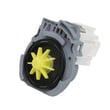
- For a true drain failure, the drain pump is a frequent repair: dishwasher drain pump WPW10348269
- If you find heavy debris buildup, replacing a damaged filter can help restore performance: dishwasher filter W10872845
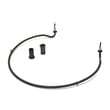
- For drying complaints tied to no heat, the heating circuit is a common focus area: dishwasher heater W10703867
Why it matters
Drainage issues can cause odors, redeposit food soil on dishes, and leave dirty water sitting against seals and components. Fixing the drain path early helps protect the sump, pump, and wash performance.
For model-specific safety steps (disconnect power, shut off water) and correct hose connection guidance, follow the WDT910SAYM0 installation guide.
Last updated: February 2026
Why is my Whirlpool dishwasher leaking at the bottom of the door?
A Whirlpool WDT910SAYM0 dishwasher usually leaks at the bottom of the door when the unit is not level or not secured in the cabinet, the door is not closing evenly, or water is being forced forward by spray or a restriction. Start by confirming installation alignment using the WDT910SAYM0 installation guide.
Quick checks that fix most bottom-of-door leaks
- Verify the dishwasher is level front-to-back and side-to-side.
- Confirm the tub is centered in the cabinet opening so the door closes evenly.
- Make sure the dishwasher is secured so it cannot tip forward when you open the door.
- Check that the lower access panel is installed correctly and its bottom edge touches the floor.
- Look for items blocking the door (tall pans, utensils, or a rack that is off track).
Installation issues that commonly cause door leaks
The installation steps for this model call out several alignment points that directly affect door sealing:
| What to check | What “good” looks like | What happens if it’s off |
|---|---|---|
| Leveling | Level in both directions | Door seal can gap at one corner and leak |
| Cabinet spacing | Equal spacing between tub and cabinet on both sides | Door can twist slightly and leak at the bottom |
| Secured to counter | Brackets fastened; unit does not shift | Door can pull the tub forward and break the seal |
| Door clearance | Door top does not hit screws/brackets/countertop | Door may not fully close, causing leaks |
Water being pushed out the front (not a bad seal)
Even with a good door seal, water can “overpower” the front if wash action is abnormal.
- Reduce oversudsing: use dishwasher detergent only; avoid hand-soap contamination.
- Check spray path: don’t block the lower spray arm with large sheets, cutting boards, or tall items.
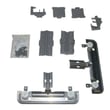
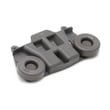
- Confirm racks roll smoothly and sit square; a broken adjuster can leave the rack crooked. If the upper rack is sagging or uneven, consider the dishrack adjuster kit - dishwasher rack component by Whirlpool W10712395.
- Clean the filter area so water circulates normally; a clogged filter can change flow patterns. For this model, the filter cup is the dishwasher filter W10872845.
Why it matters
A bottom-of-door leak can quickly wet the floor and cabinet base, and repeated leaking often leads to corrosion, odors, and damage to nearby flooring. Correcting leveling, centering, and rack alignment prevents repeat leaks.
Last updated: February 2026