Installation guide
 Owner’s manual
 Error Codes



Can a stove be both gas and electric?
Yes. A stove can combine a gas cooktop with an electric oven; this setup is commonly called a dual fuel range. Your GE JBS60DK6WW is an electric range (electric cooktop and electric oven), so it is not a dual fuel model.
What “dual fuel” means (and what it is not)
A dual fuel range uses two energy sources:
- Gas burners on top for fast, adjustable heat
- Electric oven for steady, even baking temperatures
- One appliance chassis designed and certified for both fuel types
- Not a conversion of an electric range by swapping parts
How to tell what you have on the GE JBS60DK6WW
We use the installation requirements to confirm fuel type. The GE JBS60DK6WW installation instructions specify an electric supply (120/208 or 120/240 VAC) and a dedicated 40-amp (minimum) branch circuit, which matches an electric range installation.
- Check the rating plate and electrical requirements in the installation guide.
- If your range has a power cord and no gas line connection, it is electric.
- If your range has a gas shutoff valve and flexible gas connector, it is gas or dual fuel.
Why you should not “convert” an electric range to dual fuel
Converting an electric range to use gas is not a safe or practical repair. Dual fuel models are built with different:
- Gas manifold and burner system
- Ignition and gas safety controls
- Venting and heat shielding
- Wiring and control logic
Quick comparison
| Feature | Electric range (like JBS60DK6WW) | Dual fuel range |
|---|---|---|
| Cooktop heat source | Electric elements | Gas burners |
| Oven heat source | Electric | Electric |
| Typical hookups | 240V circuit | 240V circuit + gas line |
Parts note for this model
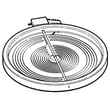
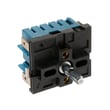
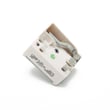
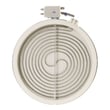
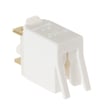
If you are troubleshooting cooktop heat on this electric range, common related parts include the range radiant surface element, 8-in WB30T10132 and the GE range surface element control switch WB24X25013. You can order model-specific replacement parts from the parts list for GE JBS60DK6WW, or search by model number on Sears PartsDirect.
Last updated: February 2026
Do electric stoves use a lot of electricity?
Electric stoves can use a noticeable amount of electricity, but the real cost depends on how long you cook and which heating elements you use. For a GE JBS60DK6WW electric range, the cooktop and oven draw high wattage while actively heating, then cycle on and off to hold temperature (which reduces average use).
Typical electricity use (what to expect)
Most electric ranges fall into these common power ranges:
- Cooktop element: about 1,000 to 3,000 watts per burner, depending on size and setting
- Oven bake/broil: about 2,000 to 5,000 watts while heating
- Actual energy use: lower than the watt rating because elements cycle once preheated
- Big drivers: long bake times, frequent door opening, and using multiple surface elements at once
Quick estimate table (watts to cost)
Use this to translate wattage into approximate operating cost.
| Appliance function | Typical watts | Energy used in 1 hour | Cost per hour at $0.15/kWh |
|---|---|---|---|
| Small/medium surface element | 1,500 W | 1.5 kWh | $0.23 |
| Large surface element | 2,500 W | 2.5 kWh | $0.38 |
| Oven heating (average) | 3,000 W | 3.0 kWh | $0.45 |
Ways to reduce electric range power use
These habits cut run time without changing how you cook:
- Match pan size to the element; oversized elements waste heat
- Keep lids on pots to boil faster
- Preheat only when needed (many casseroles do not require a full preheat)
- Avoid opening the oven door; heat loss forces longer element run time
- Use residual heat (turn off a few minutes early for some foods)
Why it matters
Electric ranges pull a lot of power in short bursts. That is normal, but long cook times can add up on your utility bill. Also, your installation must be on the correct dedicated circuit; the electrical requirements and grounding guidance are listed in the installation guide.
Ordering parts for your range
If you are troubleshooting heating performance (slow preheat, uneven cooking, or a burner not heating), we stock common electrical parts for this model, including the kenmore range oven temperature sensor WB21X22134. You can also search by model number on Sears PartsDirect.
Last updated: February 2026
How many amps is a GE electric range?
For the GE JBS60DK6WW electric range, we install it on an individual, properly grounded 40 amp (minimum) 120/240V (or 120/208V) branch circuit; a 40-amp UL-listed range cord is required. See the electrical requirements in the installation guide.
What to use for the power connection
A 40-amp circuit is the standard requirement for this model; it supports normal oven and radiant cooktop operation without nuisance tripping.
- Use a dedicated 40 amp (minimum) breaker or time-delay fuse
- Use a 3-wire or 4-wire UL-listed range cord (as allowed by your installation)
- Use a cord rated 40 amps and 125/250V minimum
- A 50-amp cord is not recommended for this installation
- Turn power off at the service panel before wiring the terminal block
Quick reference table
| Item | What we recommend for GE JBS60DK6WW |
|---|---|
| Branch circuit | 40 amp minimum, dedicated, properly grounded |
| Cord type | UL-listed 3-conductor or 4-conductor range cord |
| Cord rating | 40 amps, 125/250V minimum |
| Where to confirm | Rating plate on oven frame or drawer frame |
Why it matters
Correct amperage and cord rating help prevent overheating at the terminal block, reduce breaker trips during preheat or broil, and protect sensitive electronics such as the control board.
Related parts and checks if you have power symptoms
If the range seems dead, heats inconsistently, or trips the breaker, these checks help narrow it down:
- Confirm the breaker is a 2-pole 40A and fully reset
- Verify the cord and terminal block connections are tight (power off first)
- If a surface element will not regulate heat, a failed infinite switch is common; see GE range surface element control switch WB24X25013
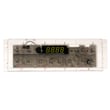
- If the display is blank or functions are erratic after power is confirmed, the control board can be involved; see oven control to9 white led WB27X45466
You can order replacement parts for your GE JBS60DK6WW from the parts list for this model, or search by model number on Sears PartsDirect.
Last updated: February 2026
What are the disadvantages of an electric stove?
Electric stoves like the GE JBS60DK6WW typically heat and cool more slowly than gas, stop working during a power outage, and can be easier to scratch or damage (especially glass cooktops). They also require you to be extra careful after a power loss because surface units can come back on when power is restored (see the JBS60DK6WW owner's manual).
Common disadvantages (what you’ll notice day to day)
- Slower temperature changes: burners and the oven can take longer to respond when you turn heat up or down.
- No cooking during outages: if the power is out, the cooktop and oven will not operate.
- Cooktop surface damage risk: glass tops can scratch from rough cookware, grit (salt or sand), or sliding pans.
- Potentially higher operating cost: your electric rate and cooking habits can make operating costs higher than gas in some areas.
- Residual heat: elements stay hot longer after you turn them off, which can affect timing and safety.
Safety and performance drawbacks that matter for this model
The GE JBS60DK6WW manual highlights two important realities of electric cooking:
- Power-loss behavior: if a surface unit knob is left ON during a power outage, the element can turn back on automatically when power returns. Always turn all knobs to OFF after any outage.
- Cookware sensitivity: for faster boiling and steadier cooking, use flat-bottom pans that match the surface element size; mismatched or warped cookware can slow cooking.
Quick comparison: electric vs gas (typical)
| Feature | Electric range | Gas range |
|---|---|---|
| Heat response | Slower to change | Faster to change |
| Outage use | No | Sometimes usable (varies by model) |
| Surface durability | Glass can scratch | Grates can chip, generally more rugged |
| Cleaning | Smooth tops wipe easier but scratch | More parts to clean |
Why it matters
Knowing these disadvantages helps you choose the right cookware, avoid cooktop damage, and prevent unsafe situations after a power interruption. If you’re shopping for replacement parts for your GE JBS60DK6WW (like a surface element switch or radiant element), you can order from the parts list for this model or search by model number on Sears PartsDirect.
Last updated: February 2026