Error Codes



How can I tell how many cubic feet my freezer is?
To find the cubic feet (capacity) of your Kenmore chest freezer model 25319531994, we measure the usable inside space and convert cubic inches to cubic feet. Multiply inside length × width × depth (in inches), then divide by 1,728.
How to measure it (quick steps)
- Unplug the freezer for safety.
- Empty enough items to measure the interior walls accurately.
- Measure the inside:
- Length: left wall to right wall
- Width: front opening to back wall
- Depth/height: bottom floor to the underside of the lid opening (not the outside cabinet)
- Multiply the three numbers to get cubic inches.
- Divide by 1,728 to get cubic feet.
Capacity calculation example
If the inside measures 36 in (L) × 18 in (W) × 24 in (D):
| Measurement | Inches |
|---|---|
| Length | 36 |
| Width | 18 |
| Depth | 24 |
| Volume (cubic inches) | 15,552 |
| Volume (cubic feet) | 15,552 ÷ 1,728 = 9.0 cu ft |
Tips to get a more accurate number
- Measure to the interior liner, not the outer cabinet.
- If there is a compressor “hump” or interior step, measure the main box and subtract the hump volume (or measure the open rectangular space above it).
- Don’t include baskets or shelves in your measurements.
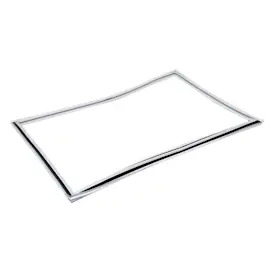
- If your lid seal is torn or flattened, cold air loss can make the freezer seem “smaller” in real use; replacing the freezer lid gasket 216481211 helps maintain consistent freezing.
Why it matters
Knowing cubic feet helps us match the right storage needs, estimate energy use, and compare replacement freezers accurately. It also helps when planning organization bins and bulk food storage.
Last updated: January 2026
What are the common chest freezer problems?
Common problems on a Kenmore chest freezer model 25319531994 are warming temperatures, heavy frost, constant running, water leaks, and unusual noises. Most causes are simple (lid not sealing, dirty condenser area, airflow issues), but sealed-system or electrical failures need advanced service.
Most common symptoms and what they usually mean
- Freezer too warm: lid not sealing, thermostat setting, blocked vents, low refrigerant, weak compressor
- Too much frost: lid left open, torn gasket, humid room air leaking in, frequent openings
- Runs all the time: warm room, overloading with unfrozen food, dirty condenser, failing start components
- Water on the floor: defrost meltwater, drain/plug issue, high humidity condensation
- Clicking, buzzing, rattling: loose panels, items vibrating, compressor start device issues
Quick checks we recommend first (10 to 20 minutes)
- Confirm the lid closes firmly all the way around; remove any packages that prevent closure.
- Set the control colder and wait 24 hours to judge temperature change.
- Clean dust from the condenser area (unplug first); restricted heat release can cause warm temps and long run times.
- Defrost if frost is thicker than 1/4 inch; heavy frost acts like insulation and reduces cooling.
- Listen for a repeating click every few minutes; that often points to a start or compressor problem.
Parts that commonly relate to these problems
| Symptom | Part that may be involved | What it affects |
|---|---|---|
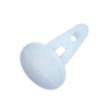
| Interior light stays on or won’t turn on | Light plunger 297243800 | Lid switch function and light circuit |
| Light flickers or won’t work | Light socket 216684000 | Bulb connection and power to the light |
| Warm temps with sealed-system repair needed | Filter drier 5303305677 | Moisture/contaminant control in the refrigerant system |
Why it matters
A chest freezer that runs warm or builds heavy frost can waste energy and shorten compressor life. Catching a lid-seal or airflow issue early helps protect food and prevents bigger repairs.
Last updated: January 2026
How much does a deep freeze typically cost?
A “deep freeze” (chest freezer) typically costs $200 to $1,300+ depending on capacity (cubic feet), efficiency features, and whether it is a basic manual-defrost unit or a feature-rich model. For a Kenmore chest freezer like 25319531994, most owners shop in the mid-range.
Typical price ranges (what most shoppers see)
- Compact (3 to 7 cu. ft.): about $150 to $350
- Mid-size (7 to 14 cu. ft.): about $300 to $700
- Large (14+ cu. ft.): about $600 to $1,300+
| Freezer type | Common use | Typical cost range |
|---|---|---|
| Chest freezer | Best value per cubic foot, long cold-hold time | $200 to $1,300+ |
| Upright freezer | Easier organization, smaller footprint | $450 to $1,100+ |
What changes the price the most
- Capacity: more cubic feet usually means a higher price
- Defrost style: manual defrost is usually cheaper than frost-free
- Energy efficiency: higher-efficiency models can cost more upfront
- Storage features: baskets, dividers, interior lighting, locks
- Delivery and haul-away: can add meaningful cost beyond the unit price
Why it matters
Choosing the right size and feature set helps you avoid paying for capacity you will not use, while still keeping food safely frozen. It also helps you compare repair cost versus replacement cost when a major sealed-system or electrical issue comes up.
If you are comparing repair vs. replace
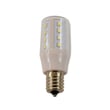
Use the part cost as a reality check for bigger repairs. For example, sealed-system parts like a filter drier 5303305677 can be part of a larger service job, while smaller items like a light bulb 5304517886 are usually simple, low-risk fixes.
Last updated: January 2026