Installation guide
 Owner’s manual
 Error Codes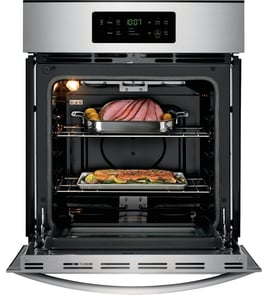


What is the best brand for electric wall ovens?
GE is one of the best brands for electric wall ovens because it offers strong reliability, widely available replacement parts, and clear installation requirements for built-in units like the GE PT956SR1SS. The “best” choice still depends on your priorities: cooking features, service support, and fit in your cabinet cutout.
How we recommend choosing the “best” wall oven brand
We focus on the factors that affect day-to-day ownership and long-term repairability.
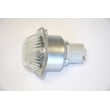
- Service and parts availability: easier repairs and less downtime (for example, common items like an oven lamp 40A15).
- Fit and installation requirements: built-in ovens must match cabinet cutout and electrical needs.
- Cooking performance: preheat time, temperature stability, convection performance.
- Controls and usability: touch panel layout, timer/clock, self-clean features.
- Total cost of ownership: purchase price plus typical maintenance parts over time.
Brand comparison (what matters most)
| What you care about most | What to look for | Why it points you to a “best” brand |
|---|---|---|
| Easy repairs later | Common parts stocked, clear diagrams | Faster fixes, fewer special-order delays |
| Smooth installation | Hard-wire requirements, junction box location guidance | Fewer install surprises in the cabinet |
| Consistent baking | Stable temperature sensing and heating | Better results for baking and roasting |
| Quiet operation | Cooling fan and convection fan design | Less noise during and after cooking |
Installation and electrical considerations (important for any brand)
For electric wall ovens like the GE PT956SR1SS, installation details can be the deciding factor even more than brand.
- Built-in electric wall ovens are typically hard-wired (direct-wired) to a junction box, not plugged in.
- Plan for the correct electrical system (commonly 120/208V or 120/240V, 60 Hz).
- Cabinet and surrounding materials must tolerate oven heat.
- Use a qualified installer or electrician for safe wiring and code compliance.
For the exact cutout and wiring guidance for this model, use the PT956SR1SS installation guide.
Why it matters
A wall oven is a long-term built-in appliance; the “best brand” is the one that fits your cabinet correctly, installs safely, and stays repairable years later with parts like thermostats, sensors, and heating elements.
Last updated: February 2026
What is the difference between GE and GE Profile wall ovens?
GE and GE Profile wall ovens are both made by GE, but GE Profile models typically include more premium features and design upgrades, while standard GE models focus on core cooking functions at a lower price point. For your GE PT956SR1SS wall oven, the exact feature set is defined in the PT956SR1SS owner's manual.
Typical differences you’ll see
GE Profile is generally positioned as an “upgraded” line within GE cooking. Common differences include:
- More advanced controls (touch controls, expanded programming)
- More cooking modes (convection options, specialty modes)
- More sensors and automation (temperature sensing, cooking algorithms)
- More premium styling and trim options
- More convenience features (enhanced self-clean options, better lighting, glide racks on some models)
How to confirm what your PT956SR1SS includes
Because features vary by model and year, we recommend verifying by model-specific documentation and the rating plate.
- Check the cooking modes and special features list in the manual
- Compare control panel options (convection, self-clean, delay start, probe settings)
- Look for sensor-driven features (for example, temperature sensor behavior)
- Use the rating plate on the oven frame to confirm electrical rating details
Quick comparison (high-level)
| Line | Usual positioning | What you’re paying for |
|---|---|---|
| GE | Core lineup | Essential bake and broil performance, straightforward controls |
| GE Profile | Premium lineup | More automation, more modes, upgraded design and convenience |
Why it matters
Knowing whether you have a GE or GE Profile feature set helps when you are troubleshooting performance, matching parts, and following correct operating steps (especially for convection cooking and self-clean settings). If you’re diagnosing heating issues, the oven wont heat troubleshooting electric range problems video can help you narrow down common causes.
Last updated: February 2026
How to reset a GE wall oven?
To reset your GE PT956SR1SS wall oven, turn OFF the oven’s circuit breaker (or remove the fuse) for 1 minute, then restore power. This power-cycle resets the electronic control and clears many temporary glitches after a power surge or control lockup.
Safe reset steps (recommended)
- Set all oven controls to OFF.
- At your home electrical panel, switch the oven breaker OFF (or remove the fuse).
- Wait 60 seconds.
- Switch the breaker ON (or reinstall the fuse).
- Confirm the display comes back on, then test Bake and Broil.
- If the oven was in a self-clean or lock cycle, allow a few minutes for the door lock to respond.
For model-specific operating checks and control settings, follow the PT956SR1SS owner’s manual.
What a reset fixes (and what it does not)
A reset is best for control-related issues, not failed heating parts.
| Symptom | Reset likely helps? | What to check next |
|---|---|---|
| Blank display after a brief outage | Yes | Breaker fully seated, then retry reset |
| Error code or beeping after surge | Yes | Note code, then troubleshoot per manual |
| Oven will not heat but display works | Sometimes | Heating circuit, sensor, element |
| Tripping breaker repeatedly | No | Stop using; wiring, shorted component, or installer issue |
If it still will not heat after resetting
These checks narrow down whether you have a heating or temperature-sensing problem:
- Verify you are selecting a cooking mode (Bake, Broil, Convection) and setting a temperature.
- Listen for the cooling fan or relays clicking when you start Bake.
- If the oven heats unevenly or not at all, inspect the range bake element WB44T10110 for visible damage (blisters, cracks, burn spots).
- If temperatures seem far off, the oven temperature sensor circuit may need diagnosis (wiring, sensor, control).
- If the breaker trips, stop and follow electrical safety guidance in the PT956SR1SS installation guide (wall ovens are hard-wired to a junction box).
Why it matters
A proper reset restores normal control operation without replacing parts, and it is the first step before deeper troubleshooting of the bake element, sensor assembly, thermostats, or wiring.
Last updated: February 2026
How long do GE wall ovens last?
Most GE wall ovens, including model PT956SR1SS, last about 12 years with normal household use. With consistent cleaning, proper ventilation, and prompt repair of heating or control issues, it’s common to reach 15 years.
Typical lifespan and what affects it
A wall oven’s life is mostly driven by heat stress on components (elements, sensors, controls) and how often it runs at high temperatures.
- Heavy use (daily baking/roasting) shortens lifespan
- Self-clean cycles add extra heat load and can accelerate wear
- Poor cabinet ventilation can overheat electronics
- Power surges can damage the touch control or control board
- Delayed repairs (running with weak heat) strains other parts
Parts that commonly determine “end of life”
If the oven stops heating, overheats, or won’t regulate temperature, these are frequent repair points on electric wall ovens:
| Symptom | Common part area | Example part for PT956SR1SS |
|---|---|---|
| Oven won’t heat or heats unevenly | Bake circuit | Range bake element WB44T10110 |
| Temperature swings, long preheat | Temperature sensing | Sensor assembly WB21T10018 |
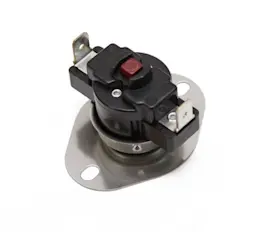
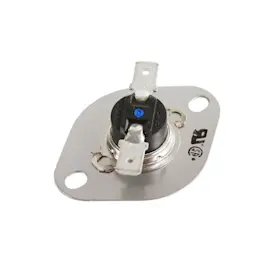
| Shuts down or trips on high heat | Safety/high-limit protection | Wall oven high-limit thermostat WB24T10150 |
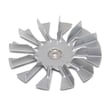
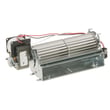
| Cooling fan noisy or not running | Cooling/blower system | Oven blower assembly WB26T10049 |
Maintenance that helps you reach 15 years
We recommend these habits for GE electric wall ovens:
- Keep the door gasket area clean so heat stays in the cavity
- Avoid slamming the door; it stresses hinges and glass
- Use cookware that fits; oversized pans can block airflow
- Run the cooling fan unobstructed (do not block cabinet vents)
- Replace a weak element early to prevent extended run times
Why it matters
Knowing the typical lifespan helps you decide whether to repair or replace. If your PT956SR1SS is under 12 years old, repairs like an element, sensor, or thermostat are often cost-effective; beyond 15 years, multiple failures can add up.
For model-specific operating and care guidance, follow the PT956SR1SS owner’s manual.
Last updated: February 2026