Error Codes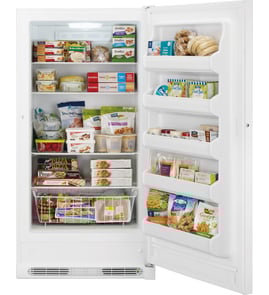

What is the disadvantage of an upright freezer?
The main disadvantage of an upright freezer (including the Wc F17NAC) is that it typically uses more energy and warms up faster when the door is opened because cold air spills out. Uprights also rely heavily on good door gaskets and can be less forgiving during long power outages than chest freezers.
Common disadvantages (and what you will notice)
- Higher energy use: more air exchange happens every time you open the door.
- More temperature swing: frequent openings can cause short warm-ups and refreezing.
- Less outage protection: cold air does not stay “pooled” the way it does in a chest freezer.
- Shelf and bin limits: fixed shelves can make bulky items harder to fit.
- More seal sensitivity: a slightly warped door or worn gasket can cause frost and longer run times.
Upright vs. chest freezer: quick comparison
| Feature | Upright freezer | Chest freezer |
|---|---|---|
| Organization | Easier (shelves, bins) | Harder (stacking) |
| Energy efficiency | Typically lower | Typically higher |
| Power outage hold time | Typically shorter | Typically longer |
| Floor space | Smaller footprint | Larger footprint |
| Bulky item storage | Limited by shelves | Easier for large items |
Why it matters for food quality and operating cost
When warm, moist air enters an upright freezer, the unit has to run longer to pull temperatures back down. That can mean higher electric cost, more frost buildup, and more wear on components like the compressor and evaporator fan over time.
Practical ways we reduce the downside
- Open the door less often; plan what you need before opening.
- Keep the freezer reasonably full (use water jugs or ice packs to fill empty space).
- Check that the door closes squarely and seals all the way around.
- Keep vents clear so air can circulate around shelves and packages.
- Defrost and clean if frost buildup starts reducing airflow.
Parts and model identification
To match the right replacement parts to your Wc F17NAC upright freezer, confirm the model number from the rating label and then search by model on Sears PartsDirect. For help locating the label, use how to find your appliance model number (and what it means for parts).
Last updated: February 2026
How big is a 16 cu ft upright freezer?
A 16 cu ft upright freezer is typically about 60 to 73 inches tall, 23 to 30 inches wide, and 27 to 30 inches deep. For your Wc F17NAC upright freezer, use these ranges for planning clearance, then confirm the exact fit by measuring your unit.
Typical size and clearance planning
Most freestanding upright freezers in the 16 cu ft class fit within these common ranges:
- Height: 60 to 73 in
- Width: 23 to 30 in
- Depth: 27 to 30 in (often deeper if you include the handle)
- Door swing: plan extra space on the hinge side so drawers and baskets clear
- Airflow: leave space behind and above for heat to dissipate
Quick reference table
| What you are measuring | Typical 16 cu ft range | What to do at home |
|---|---|---|
| Height | 60 to 73 in | Measure floor to top (include hinges/covers) |
| Width | 23 to 30 in | Measure widest point (often the cabinet) |
| Depth | 27 to 30 in | Measure cabinet depth and then depth including handle |
How to measure your upright freezer accurately
- Measure height at the tallest point (top hinge cover can be the high spot).
- Measure width across the cabinet, not just the door.
- Measure depth two ways: cabinet only, then cabinet plus handle.
- Check door swing clearance by opening the door fully and measuring the footprint.
Why it matters
Correct dimensions help prevent installation problems like blocked airflow (warm running and poor freezing), doors that cannot open fully, and a freezer that will not fit through doorways or into a tight alcove.
If you need replacement parts after confirming your measurements, start with the parts list for model F17NAC, or search by model number on Sears PartsDirect.
Last updated: February 2026
What's the average lifespan of an upright freezer?
Most upright freezers, including the Wc F17NAC upright freezer, typically last 12 to 15 years with normal household use. Good airflow, steady temperatures, and routine cleaning help the sealed system, compressor, and door gasket last longer.
Typical lifespan ranges
Here’s what we see most often for freestanding upright freezers:
| Condition | Typical lifespan | What usually limits life |
|---|---|---|
| Normal use, basic care | 12 to 15 years | Wear on compressor, fans, defrost system |
| Excellent care, ideal location | 15 to 20 years | Age-related sealed system wear |
| Harsh conditions (hot garage, poor airflow) | 8 to 12 years | Overheating, heavy run time, icing |
What helps your freezer last longer
- Keep 2 to 3 inches of clearance around the cabinet for ventilation.
- Clean dust from the condenser area (rear or bottom) a few times per year.
- Keep the temperature steady (most households target 0°F for frozen food).
- Limit long door openings; warm air adds frost and increases run time.
- Make sure the door closes and seals fully; replace a worn door gasket if it leaks.
Signs it may be nearing end of life
- Runs almost constantly or struggles to hold temperature.
- Heavy frost returns quickly after defrosting.
- Loud clicking, buzzing, or repeated start attempts.
- Water leaks inside the cabinet (often tied to defrost drain icing).
- Hot exterior sidewalls plus weak cooling (often points to airflow or sealed system strain).
Why it matters
A freezer that is running longer than normal uses more electricity and can put extra stress on the compressor and defrost components. Catching airflow, frost, and sealing problems early often extends the usable life of an upright freezer.
For model-specific replacement parts and diagrams for your Wc F17NAC, start with the parts list for this model; you can also search by model number on Sears PartsDirect.
Last updated: February 2026