Get free shipping on your order, with any water filter subscription. Find my filter

Open Hamburger Menu
Sears Parts Direct
Tips to find your model number

GE GTW680BSJ6WS washer Parts

Here are the diagrams and repair parts for GE GTW680BSJ6WS washer, as well as links to manuals and error code tables, if available.

GE GTW680BSJ6WS washer
By Schematic
By Part
SELECT DIAGRAM
?

This is the number corresponding to the part on the diagram / schematic

Browse Parts for GTW680BSJ6WS Washer

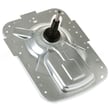
  • Washer Gear Case for GE GTW680BSJ6WS - Part WH03X33731

    Tub & motor diagram

    Washer Gear Case

    In Stock
    $286.20
    $12.00 OFF Phone Price : $298.20Info Icon
    Minus Item
    Qty
    Plus Item
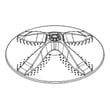
  • Washer Washplate for GE GTW680BSJ6WS - Part WH43X32857

    Tub & motor diagram

    Washer Washplate

    Part #WH43X24152

    Replaced by #WH43X32857

    Info Icon
    Manufacturer substitution
    This part replaces WH43X24152. Substitute parts can look different from the original.
    In Stock
    $40.52
    14% OFF Was : $46.99Info Icon
    Minus Item
    Qty
    Plus Item
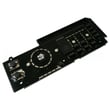
  • G.e. Washer User Interface Assembly for GE GTW680BSJ6WS - Part WH22X35757

    Controls & backsplash diagram

    Ui-mc Board Assembly D_service

    Part #WH18X26795

    Replaced by #WH22X35757

    Info Icon
    Manufacturer substitution
    This part replaces WH18X26795. Substitute parts can look different from the original.
    In Stock
    $167.76
    16% OFF Was : $200.34Info Icon
    Minus Item
    Qty
    Plus Item
  • Washing Machine Belleville Washer for GE GTW680BSJ6WS - Part WH01X26190

    Tub & motor diagram

    Washing Machine Belleville Washer

    Part #WH01X26190
    This item is not returnable
    In Stock
    $5.14
    16% OFF Phone Price : $6.14Info Icon
    Minus Item
    Qty
    Plus Item
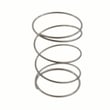
  • Washer Shifter Spring for GE GTW680BSJ6WS - Part WH01X24434

    Tub & motor diagram

    Washer Shifter Spring

    Part #WH01X24434
    This item is not returnable
    In Stock
    $9.56
    9% OFF Phone Price : $10.56Info Icon
    Minus Item
    Qty
    Plus Item
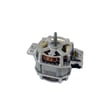
  • Washer Drive Motor for GE GTW680BSJ6WS - Part WH49X25375

    Tub & motor diagram

    Washer Drive Motor

    In Stock
    $215.98
    5% OFF Phone Price : $227.98Info Icon
    Minus Item
    Qty
    Plus Item
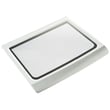
  • G.e. Washer Lid for GE GTW680BSJ6WS - Part WH44X26695

    Top panel & lid diagram

    G.e. Washer Lid

    In Stock
    $201.57
    6% OFF Phone Price : $213.57Info Icon
    Minus Item
    Qty
    Plus Item
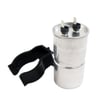
  • Washer Start Capacitor for GE GTW680BSJ6WS - Part WH12X27614

    Controls & backsplash diagram

    Capacitor

    Part #WH12X29017

    Replaced by #WH12X27614

    Info Icon
    Manufacturer substitution
    This part replaces WH12X29017. Substitute parts can look different from the original.
    In Stock
    $97.14
    18% OFF Was : $119.11Info Icon
    Minus Item
    Qty
    Plus Item
  • Washer Start Capacitor for GE GTW680BSJ6WS - Part WH12X27614

    Controls & backsplash diagram

    Kit Bracket

    Part #WH13X28838

    Replaced by #WH12X27614

    Info Icon
    Manufacturer substitution
    This part replaces WH13X28838. Substitute parts can look different from the original.
    In Stock
    $97.14
    18% OFF Was : $119.11Info Icon
    Minus Item
    Qty
    Plus Item
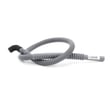
  • Washer Drain Hose for GE GTW680BSJ6WS - Part WH41X32477

    Cabinet diagram

    Washer Drain Hose

    Part #WH41X26191

    Replaced by #WH41X32477

    Info Icon
    Manufacturer substitution
    This part replaces WH41X26191. Substitute parts can look different from the original.
    In Stock
    $109.36
    Minus Item
    Qty
    Plus Item

GE Washer GTW680BSJ6WS FAQs

A GE washing machine typically lasts 10 to 14 years with normal household use. For the GE GTW680BSJ6WS top-load washer, regular cleaning, correct loading, and fixing small issues early are the biggest factors that help it reach (or beat) that range; see the maintenance guidance in the GTW680BSJ6WS owner's manual.

What affects lifespan the most

  • Load habits: Overloading strains the drive system and suspension.
  • Detergent use: Too much detergent can cause residue buildup and extra wear.
  • Monthly cleaning: Running the washer’s basket-clean routine helps prevent odor and buildup.
  • Water supply care: Replacing fill hoses about every 5 years helps prevent leaks and water damage.
  • Early repairs: Addressing draining, spinning, or vibration problems early prevents secondary damage.

Typical lifespan by use pattern

Use pattern What we typically see What helps most
Light (1 to 3 loads/week) Often closer to the high end Monthly cleaning, avoid long idle water
Average (4 to 7 loads/week) Usually in the 10 to 14 year range Correct load size, HE detergent
Heavy (multiple loads/day) Often shorter Preventive maintenance, fast repair of symptoms

Signs your washer is nearing end-of-life

  • Frequent out-of-balance events or excessive vibration
  • Slow draining or repeated drain errors (often tied to the drain system)
  • Loud grinding, squealing, or repeated spin failures
  • Water leaks that return after hose and clamp checks

Why it matters

Knowing the expected lifespan helps you decide whether to maintain, repair, or plan a replacement. On a top-load model like the GTW680BSJ6WS, staying ahead of cleaning and vibration issues can prevent expensive wear to the drive and suspension components.

Last updated: January 2026

The GE GTW680BSJ6WS washer has a 4.6 cu. ft. capacity. For cycle details and loading guidance that help you get the most out of that capacity, use the GTW680BSJ6WS owner’s manual.

What “4.6 cu. ft.” means for everyday loads

Capacity is the size of the wash basket; it affects how much laundry you can wash at once and how well the washer can circulate water and detergent.

  • Load items loosely; don’t pack them down.
  • Distribute items evenly around the basket to reduce out-of-balance spinning.
  • For bulky items (like comforters), use the Bulky Items cycle when available.
  • If clothes seem too dry during wash, use the Deep Fill option for special-case loads.

Quick capacity reference

Capacity Typical use Notes
4.6 cu. ft. Family-size loads High-efficiency design may use lower visible water levels

Why it matters

Using the right load size helps prevent poor cleaning, excess vibration, and longer cycle times. It also helps protect key components like the drive system and suspension.

Last updated: January 2026

For the GE GTW680BSJ6WS washer, the most common customer complaints we help troubleshoot are “won’t drain,” “won’t spin,” and “clothes too wet at end.” That reflects the most frequent symptom paths covered in the model’s troubleshooting guidance, not a guarantee of the most common failure across all GE washers (see the GTW680BSJ6WS owner’s manual).

What we see most often on GTW680BSJ6WS

These are the issues that typically show up first in real-world troubleshooting because they stop the cycle from finishing normally:

  • Water left in the tub (drain problem)
  • Spin won’t start or stops early (spin problem)
  • Clothes still wet after the cycle (spin speed, balance, or drain issue)
  • Excessive vibration or banging during spin (balance, leveling, suspension)
  • Washer won’t start (lid not closed/locked, power, or control issue)

Quick checks before replacing parts

Start with the simplest, most common causes:

  • Confirm the lid is fully closed and the lid lock engages
  • Run a Drain & Spin cycle and listen for the drain pump running
  • Check the drain hose for kinks and confirm the standpipe setup is correct
  • Redistribute the load if the Spin light blinks (out-of-balance)
  • Verify the washer is level and stable on the floor

Parts that often relate to drain/spin symptoms

If basic checks don’t resolve the issue, these model-compatible parts are commonly involved:

Symptom-to-system guide (GTW680BSJ6WS)

Symptom Most likely system to inspect Typical next step
Won’t drain Drain hose, drain pump, drain path Check hose routing, then inspect pump
Won’t spin Lid lock, balance, drive system Rebalance load, confirm lid lock
Loud banging/walking Leveling legs, suspension Level washer, inspect suspension rods

Why it matters

Drain and spin symptoms can overlap; a simple load-balance or hose-routing fix can look like a failed pump or lid lock. Following the GTW680BSJ6WS troubleshooting steps helps you avoid replacing good parts.

Last updated: January 2026
Most common symptoms to help you fix your washers

Choose a symptom to see related washer repairs.

Main causes: clogged drain hose, house drain clogged, bad drain pump, water-level pressure switch failure, bad control b…

Main causes: broken lid switch or lid lock, bad pressure switch, broken shifter assembly, faulty control system…

Main causes: worn agitator dogs, bad clutch, broken motor coupler, shifter assembly failure, broken door lock, suspensio…

Main causes: water heater failure, bad water temperature switch, faulty control board, bad water valve, faulty water tem…

Main causes: lack of electrical power, wiring failure, bad power cord, electronic control board failure, bad user interf…

Main causes: no water supply, bad water valves, water-level pressure switch failure, control system failure, bad door lo…

Main causes: unbalanced load, loose spanner nut, worn drive block, broken shock absorber or suspension spring, debris in…

Main causes: leaky water inlet valve, faulty water-level pressure switch, bad electronic control board…

Main causes: bad lid switch or door lock, bad timer or electronic control board, wiring failure, bad water inlet valve a…

Repair guides for rear-engine riding mowers

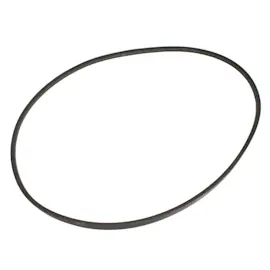
How to replace the ground drive belt on a zero-turn riding mower

How to replace the ground drive belt on a zero-turn riding mower

The ground drive belt connects the engine crankshaft to the transmission pulleys to drive the rear wheels.…

Repair time and Difficulty

 90 minutes or less
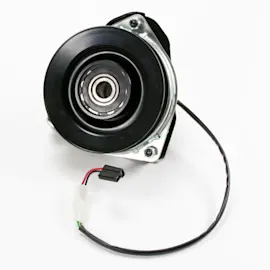
How to replace the electric clutch on a zero-turn riding mower

How to replace the electric clutch on a zero-turn riding mower

The electric clutch mounts on the engine crankshaft and controls the cutting blades. This step-by-step guide explains ho…

Repair time and Difficulty

 45 minutes or less
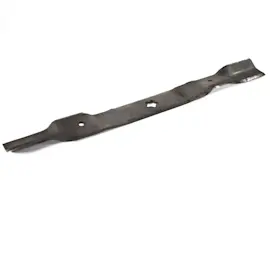
How to replace a cutting blade on a zero-turn riding mower

How to replace a cutting blade on a zero-turn riding mower

Replace a bent or dull cutting blade in 30 minutes or less. …

Repair time and Difficulty

 15 minutes or less

Effective articles & videos to help repair your washers

Use the advice and tips in these articles and videos to get the most out of your washer.

How auto-load sensing washers work (and when they don't)

How auto-load sensing washers work (and when they don't)

Your washer barely fills or seems stuck in sensing mode? Find out how auto-load sensing and Precise Fill features work, …

How to remove the main control board and user interface from a Maytag Epic Z front-load washer

How to remove the main control board and user interface from a Maytag Epic Z front-load washer

Get step-by-step instructions for removing the main electronic control board and the control panel from a Maytage Epic Z…

Using a wiring schematic to trace a current video

Using a wiring schematic to trace a current video

Find out what’s wrong with your appliance by following a circuit.…

Parts & More

Air Compressor
Bottom-Mount Refrigerator
Chest Freezer
Dishwasher
Electric Walk-Behind Mower
Front-Engine Lawn Tractor
Gas Walk-Behind Mower
Lawn & Garden Engine
Parts
Power Grinder
Radial Arm Saw
Range
Rear-Engine Riding Mower
Router
Upright Vacuum
Washer
Wet/Dry Vacuum