Owner’s manual
 Error Codes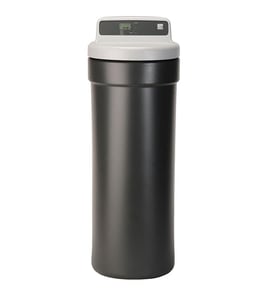






What is the life expectancy of a GE water softener?
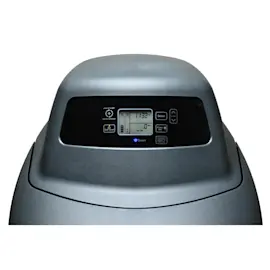
A GE water softener like model GXSF30H02 typically lasts 10 to 15 years with normal use and routine maintenance. Lifespan depends most on water hardness, iron content, salt quality, and keeping the unit clean and properly programmed (see the GXSF30H02 owner's manual).
Most water softeners fail gradually, not all at once. These factors have the biggest impact:
- Water hardness level (higher hardness means more frequent recharges)
- Iron in the water supply (iron can foul resin and internal seals)
- Salt type and purity (high-purity pellet, nugget, or solar salt reduces buildup)
- Maintenance habits (cleaning, keeping salt bridged-free, correcting settings)
- Wear parts inside the valve (seals, rotor/disc, nozzle and venturi)
If your GXSF30H02 is in the 10 to 15 year range, these symptoms usually show up first:
- Water feels hard again shortly after a recharge
- Salt use becomes unusually high or unusually low
- Unit seems “stuck” during recharge or runs recharges too often
- Leaks around the valve area or drain
- Error codes or inconsistent display behavior (see GE error codes)
| What you’re seeing | Common cause | Best next step |
|---|---|---|
| Hard water but unit runs | Resin fouling, venturi restriction, settings | Clean/check venturi; verify hardness setting |
| Leaks at valve | Worn seals or O-rings | Consider a seal kit repair |
| Recharge problems | Valve wear or position sensing issue | Inspect valve components and switch |
| Cabinet or brine tank failure | Structural wear | Replacement is usually more practical |
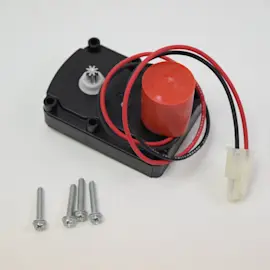
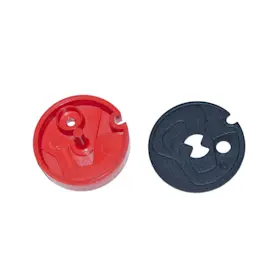
If you’re chasing leaks or weak softening, a valve rebuild is often the most cost-effective first repair. For this model, common wear items include the seal kit 7129716 and the rotor position switch 7030713.
A softener that’s past its typical lifespan can waste salt and water during recharge, allow scale buildup in plumbing and water heaters, and create intermittent “hard water” complaints that are hard to diagnose.
Last updated: January 2026
How long does a 40 lb bag of water softener salt last?
On the GE GXSF30H02 water softener, a 40 lb bag of salt typically lasts about 4 to 8 weeks in an average home. Actual usage depends most on your water hardness, household water use, and how efficiently the unit regenerates; check the refill guidance in the GXSF30H02 owner's manual.
Salt use is driven by how often the softener recharges (regenerates) and how much brine it needs each time.
- Water hardness setting: higher hardness usually means more frequent recharges
- Household size and water use: more showers, laundry, and dishwashing uses more capacity
- Humidity around the brine tank: damp areas can cause salt bridging, which affects performance and refilling habits
- Salt type and purity: use clean salt at 99.5% purity or higher (pellet, nugget, or coarse solar)
- Keeping the tank from running low: refilling before it drops too far helps maintain consistent soft water
The manual recommends checking salt a few weeks after installation and periodically after that, refilling when the tank is less than 1/3 full.
| Household / conditions | Typical 40 lb bag life | What to do |
|---|---|---|
| 1 to 2 people, moderate hardness | 6 to 10 weeks | Check monthly; refill before 1/3 full |
| 3 to 4 people, moderate to hard water | 4 to 8 weeks | Check every 2 to 4 weeks |
| Very hard water or high usage | 3 to 6 weeks | Check every 1 to 2 weeks |
Salt is required to make brine for every recharge cycle. If the brine tank runs out of salt, you will quickly start getting hard water again, and you may notice scale buildup on fixtures and reduced water-softening performance.
- Keep the salt level above 1/3 full
- Use pellet, nugget, or coarse solar salt (avoid rock, block, and granulated)
- In humid areas, add less salt more often to reduce salt bridging
- If you suspect bridging, break up the crust and refill with recommended salt
- If you are troubleshooting soft water issues, review the checks in the GXSF30H02 owner's manual
Last updated: January 2026
What water softeners do plumbers recommend?
Plumbers typically recommend water softeners built around proven control valves and easy-to-service parts, then size the unit to your household’s water hardness and flow needs. If you already own the GE GXSF30H02, the best “recommended” choice is keeping it correctly installed, programmed, and maintained using the GXSF30H02 owner's manual.
Most plumbers recommend brands and models that are reliable, widely supported, and straightforward to repair.
- Correct sizing for your grains-per-gallon (GPG) hardness and household demand
- A dependable metered control valve (regenerates based on water use, not just time)
- Readily available replacement parts (seals, rotor/disc, nozzle and venturi)
- Clear diagnostics and error codes for faster troubleshooting
- Installation that follows local plumbing code and manufacturer limits (pressure, temperature)
A “best” recommendation depends on your water and plumbing, not just the brand name.
| What to match | What to measure | Why it matters |
|---|---|---|
| Capacity | Water hardness (GPG) and household size | Prevents running out of soft water between recharges |
| Flow rate | Peak demand (showers, laundry, irrigation) | Avoids pressure drop and hard-water bleed-through |
| Water conditions | Iron level, sediment, chlorine | Determines if you need pre-filtration or iron treatment |
| Installation limits | Pressure and temperature | Protects the valve and resin bed from damage |
Plumbers also recommend keeping the existing softener working correctly before replacing it.
- Use clean water softening salt that is at least 99.5% pure (nugget, pellet, or coarse solar)
- Keep the unit on cold water only; do not run hot water through the softener
- Confirm inlet pressure stays within typical residential limits; add a pressure-reducing valve if needed
- If you have “no soft water,” check for a salt bridge and run a manual recharge
- If the softener shows a fault, use the GE error codes reference to narrow the cause
If your symptoms point to valve sealing or brine draw issues, these model-compatible parts are common fixes:
- Seal kit 7129716 (WS35X10005): helps stop internal bypass and leakage in the valve
- Gasket nozzle 7187772 (WS08X10005): supports proper brine draw through the nozzle and venturi
- Switch 7030713 (WS21X10003): helps the control track rotor position during regeneration
A plumber’s recommendation is really a reliability and serviceability recommendation. Correct sizing plus correct installation and routine salt and cleaning habits usually matter more than the logo on the cover.
Last updated: January 2026