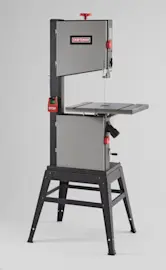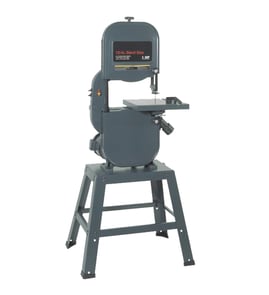


How do I know the size of my bandsaw blade?
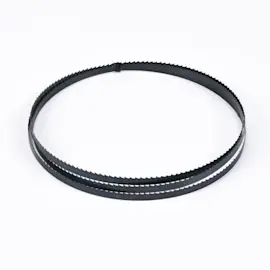
For your Craftsman 113243410 12-inch band saw, blade “size” means length, width, and tooth count (TPI). The most reliable way to know what you have is to measure the blade you’re using now (or the blade that fits the wheels correctly) and record those three specs.
Measure the blade length (circumference)
- Unplug the band saw and open the wheel covers.
- Release blade tension and carefully remove the blade.
- Coil the blade and lay it flat on the floor.
- Mark a starting point (the weld is easiest to spot).
- Use a tape measure along the blade’s back edge; roll or walk the blade around until the mark returns.
- The total distance is the blade length.
Safety tips while measuring:
- Wear gloves; band saw teeth are sharp even when the saw is off.
- Keep the blade coiled under control so it does not spring open.
- Measure twice; a small error can cause tracking and tension problems.
Measure width and TPI (tooth count)
- Blade width: measure from the tooth tip to the back edge of the blade.
- TPI: count how many teeth are in 1 inch (or count 1/2 inch and double it).
- Thickness (optional): most woodworking band saw blades are commonly around 0.020 to 0.035 inches thick; use calipers if you want to record it.
Quick guide: choosing a blade once you know the size
| What you’re cutting | Typical blade width | Typical TPI range |
|---|---|---|
| Tight curves | 1/8 to 1/4 inch | 10 to 18 TPI |
| General woodworking | 3/8 inch | 6 to 10 TPI |
| Resawing thicker stock | 1/2 inch (or wider if your saw allows) | 2 to 4 TPI |
Why it matters
Using the correct blade length lets you tension the blade properly and keep it tracking on the wheels. Matching blade width and TPI to the cut improves cut quality, reduces burning, and helps protect parts like the tires, guides, and bearings.
Helpful next step
If you’re ordering parts or accessories, confirm the model number 113243410 from the ID plate first so you’re shopping the correct Craftsman band saw listing on Sears PartsDirect.
Last updated: February 2026
What is the specs of the Craftsman 12 inch bandsaw 113243410?
For the Craftsman 12-inch band saw model 113243410, the core “12-inch” spec refers to the saw’s cutting capacity (throat). Many other specs (motor HP, table size, max cut height, blade length) vary by exact configuration, so we recommend confirming the key measurements on your saw before ordering parts through Sears PartsDirect.
Common specs to verify on a 12-inch Craftsman band saw
Check these items on your 113243410 so you match blades, tires, guides, and drive parts correctly:
- Throat (capacity): typically about 12 inches
- Max cut height (resaw): commonly around 6 inches on many 12-inch saws
- Table size: varies; measure front-to-back and left-to-right
- Table tilt: often 0 to 45 degrees (verify your trunnion scale)
- Blade length: varies by model; measure or reference the blade currently installed
- Motor and electrical: confirm voltage, amps, and whether it is belt-drive
Quick measurement checklist (what we use in the shop)
Use a tape measure and note these before you shop:
- Blade length (circumference)
- Wheel diameter
- Tire width
- Guide style (blocks vs. bearings)
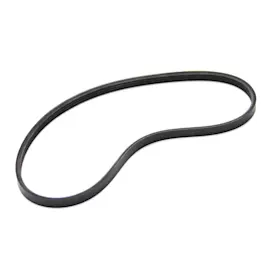
- Belt size (if belt-driven)
Spec guide (typical ranges)
| Spec item | What you may see | Why it matters |
|---|---|---|
| Throat | 12 in. | Determines max width of cut from blade to frame |
| Resaw height | ~6 in. | Determines max thickness you can cut |
| Table tilt | 0 to 45° | Impacts bevel cuts and trunnion parts |
| Blade length | varies | Ensures correct blade fit and tracking |
Why it matters
Band saw parts are highly spec-dependent. A blade, tire, guide, or belt that is “close” can cause poor tracking, vibration, burning, or premature wear. Confirming your measurements first helps you get the right Craftsman parts the first time.
Last updated: February 2026
What is the 3-tooth rule for bandsaws?
The 3-tooth rule for a band saw (including the Craftsman 113243410 12-inch band saw) means you choose a blade tooth pitch (TPI) so at least 3 teeth are in the cut at all times. This prevents tooth snagging and stripping, improves chip clearance, and helps you get a smoother, safer cut.
How to apply the 3-tooth rule (quick method)
- Measure the material thickness at the cut.
- Pick a blade TPI that keeps 3 or more teeth engaged.
- If you are between sizes, choose the finer TPI for thin stock and the coarser TPI for thick stock (as long as you still keep 3 teeth in the cut).
Practical checkpoints
- Too few teeth in the cut (TPI too coarse): the blade can grab, chatter, and strip teeth.
- Too many teeth in the cut (TPI too fine): gullets pack with sawdust or chips, the blade heats up, and the cut wanders.
- For curves and tight radii, blade width matters too; narrower blades turn tighter but can deflect more.
Simple TPI selection table (rule-of-thumb)
Use this as a starting point; adjust for wood species, feed rate, and whether you are ripping, resawing, or cutting curves.
| Material thickness at cut | Typical blade choice | What you will notice |
|---|---|---|
| 1/8 to 1/4 inch | 14 to 24 TPI | Cleaner cut on thin stock, less snagging |
| 1/4 to 3/4 inch | 6 to 10 TPI | Good general-purpose cutting |
| 3/4 to 2 inches | 3 to 6 TPI | Faster cutting, better chip clearing |
| 2 inches and thicker (resaw) | 2 to 3 TPI | Efficient resawing with proper tension and guides |
Why it matters
Matching blade TPI to thickness spreads cutting load across multiple teeth, keeps gullets from overfilling, and reduces heat. That directly improves cut quality and extends blade life on your 12-inch band saw.
Related tip for safer troubleshooting
If your band saw is stalling, tripping a breaker, or you suspect an electrical issue, test safely with a meter and inspect cords and connections before replacing components. Our guide how to use a multimeter to test electrical parts video covers the basics.
Last updated: February 2026