Owner’s manual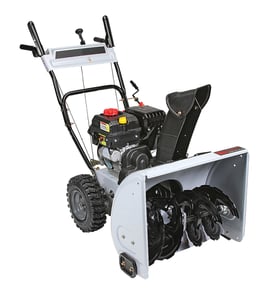



Can I use 10w30 instead of 5W30 in a snowblower?
Yes. For the Craftsman snow thrower model 536884821, we recommend SAE 10W-30 or SAE 5W-30 engine oil; 5W-30 is the better choice for easier cold starts when temperatures are 20°F or lower, while 10W-30 works well in milder winter conditions (follow the oil capacity and service intervals in the owner's manual).
What to use and when
Oil viscosity affects how easily the engine cranks and how quickly oil circulates at startup.
- Use SAE 5W-30 when you expect 20°F or below for easier starting.
- Use SAE 10W-30 for typical winter use when temperatures are higher.
- Check the oil level before starting and after every 5 hours of continuous use.
- Change oil after the first 2 hours, then every 25 hours or at least once per year.
- Always shut the engine off and let hot parts cool before servicing.
Quick comparison
| Oil grade | Best for | What you will notice |
|---|---|---|
| 5W-30 | Colder weather (20°F and below) | Easier pull-starting, faster lubrication on startup |
| 10W-30 | Milder winter temps | Normal starting and protection in moderate cold |
Why it matters
Snowblower engines often start in very cold air. Using the right viscosity helps reduce hard starting, improves initial lubrication, and supports long-term engine life, especially when you are clearing heavy snow and running the machine for extended periods.
Tips for a smoother cold start
- Store fresh fuel and keep the tank clean.
- Verify spark plug condition and gap during seasonal maintenance.
- Keep the machine maintained so the drive and auger systems are not adding extra load at startup.
For step-by-step maintenance intervals and oil fill guidance, use the owner's manual.
Last updated: February 2026
How to tell if a snowblower auger belt is bad?
On a Craftsman snow thrower model 536884821, a bad (or badly adjusted) auger drive belt shows up as poor snow discharge: the auger/impeller does not spin strongly under load, or it slips. Our manual also notes that if the control cable adjustment is correct and it still will not discharge snow, the auger belt is likely loose or damaged. See the owner's manual.
Quick symptoms you can notice
- Snowblower runs, but it will not discharge snow consistently
- Auger turns slowly, stops in heavy snow, or surges (belt slipping)
- Squealing noise when you engage the auger control
- Burning rubber smell after auger use
- Auger engagement lever feels normal, but performance is weak
What to look for during a belt inspection
Before inspecting, stop the engine, let moving parts stop, and disconnect the spark plug wire (per the manual).
Check the auger belt for:
- Cracks, fraying, or missing chunks
- Glazing or shiny spots (heat and slip)
- Oil contamination (soft, swollen, or slick belt)
- A belt that sits deep in the pulley groove or looks stretched
Belt tension check (model 536884821)
The manual gives a simple deflection check for the auger drive belt:
| Check | What “good” looks like | What suggests a problem |
|---|---|---|
| Belt deflection (with auger lever pressed) | About 1/2 inch deflection with moderate pressure | Much more deflection (too loose) or obvious slip under load |
If it is loose, the manual procedure is to loosen the idler pulley nut and move the pulley toward the belt about 1/8 inch, then recheck deflection and repeat as needed. Use the owner's manual for the full steps and diagrams.
Why it matters
A slipping auger belt reduces throwing distance and can overheat, which accelerates belt wear and can lead to sudden loss of auger drive in the middle of a storm.
Last updated: February 2026
How to tell year of Craftsman snowblower by serial number?
On a Craftsman snow thrower like model 536884821, the most reliable way to determine the build year is to decode the serial number format used on your specific unit (the format varies by manufacturer). Start by locating the serial number tag, then match its character pattern to the decoding method shown in the owner's manual.
Where to find the serial number
Check these common locations on Craftsman snowblowers:
- Rear of the frame near the wheels or track assembly
- Side of the auger housing
- Near the engine mounting area
- Under the belt cover area (after removing the cover, if needed)
Write the serial number exactly as shown, including letters.
How to decode the year (most common Craftsman formats)
Craftsman snowblowers were built by different manufacturers over the years, so the serial number pattern determines the decoding method.
- Format A (character-based date code): a specific character in the serial number represents the year within a decade
- Format B (MTD-style date code): the first 5 characters often represent month, day, and year within a decade
- Engine date code (separate from snowblower date): the engine itself may have its own manufacture date code that helps confirm the timeframe
Quick decoding reference (typical)
| Serial number clue | What it usually means | Example outcome |
|---|---|---|
| A single digit used as a “year in decade” | Could map to 2001 vs 2011, etc. | “1” = year ending in 1 |
| A letter used for month (A through L) | Month code | A = Jan, L = Dec |
| Separate engine code on the blower housing/engine | Engine build date | Confirms approximate year |
Step-by-step: get the correct year without guessing
- Find the full serial number on the snowblower frame
- Identify the pattern (all digits vs mix of letters and digits)
- Decode the date portion using the matching format
- Cross-check the engine date code (if present) to confirm the decade
- If the decade is still ambiguous, use purchase timeframe and design cues (controls, decals, engine family) to narrow it down
Why it matters
Knowing the correct manufacture year helps us match the right parts and specs for your Craftsman 536884821 snow thrower, especially for wear items like belts, friction wheel parts, and carburetor components.
Last updated: February 2026
Is it worth fixing a snowblower?
Yes, it’s worth fixing a Craftsman snow thrower like model 536884821 when the problem is a normal wear item or adjustment (belt, skid shoes, cable, spark plug, oil service) and the machine is otherwise solid; it’s usually not worth it when the engine or drive system needs repeated major repairs.
Quick way to decide (repair vs. replace)
We use these practical checkpoints:
- Repair it if it starts reliably, throws snow well at full throttle, and needs routine service (oil change, spark plug check, belt replacement, skid shoe adjustment).
- Repair it if the issue is a single failure after storage (stale fuel, frozen starter rope, minor cable adjustment).
- Consider replacing if it has ongoing drive/traction problems (won’t move, slips under load) after you’ve already repaired or adjusted it more than once.
- Consider replacing if the engine has low power even at full throttle, burns oil, or is hard to start every storm.
- Consider replacing if the auger or impeller area has repeated damage from impacts or frequent jams.
For model-specific maintenance intervals, adjustments, and troubleshooting steps, follow the 536884821 owner’s manual.
What “worth fixing” usually looks like on this model
The manual emphasizes operating at full throttle for best performance and adjusting ground speed instead of throttle in deep or wet snow. If your snowblower performs well when used that way, repairs are typically cost-effective. It also outlines common service areas like belts, cables, friction wheel, carburetor, spark plug, and oil changes.
Common fixes vs. bigger repairs
| Issue type | Typical examples | Usually worth fixing? |
|---|---|---|
| Routine maintenance | Oil change, spark plug, lubrication, skid shoe setup | Yes |
| Wear parts | Belt, cable adjustment, chute control adjustment | Yes |
| Fuel/starting issues | Frozen recoil starter, stale fuel symptoms | Often |
| Major driveline/engine | Repeated traction failures, chronic no-start, major engine wear | Often no |
Why it matters
A well-maintained snowblower can clear snow safely and consistently, but a machine that repeatedly fails during storms costs more in downtime and emergency repairs than it saves.
Safety note before any repair
If something is lodged in the auger or chute: stop the engine, remove the ignition key, disconnect the spark plug wire, and clear the obstruction with a tool (not your hands). The 536884821 owner’s manual covers these precautions.
Last updated: February 2026
What is the best gas-powered snowblower?
The best gas-powered snowblower is the one matched to your snowfall depth, driveway size, and traction needs. If you regularly clear plow-packed berms and deep snow, a two-stage gas snowblower is the best all-around choice; for lighter snow and tight areas, a single-stage is the best fit. For Craftsman model 536884821, use the maintenance and operating details in the 536884821 owner's manual to compare features and upkeep requirements.
How we pick the “best” gas snowblower
- Snow depth and density: wet, heavy snow needs a larger intake and stronger auger/impeller performance.
- Area size: longer driveways benefit from wider clearing width and multiple forward speeds.
- Traction: choose a drive system that fits your terrain (flat vs sloped, paved vs gravel).
- Chute control: easy chute rotation and deflector control reduces stopping and repositioning.
- Serviceability: simple access for belts, skid shoes, and shear pins lowers downtime.
Quick comparison: single-stage vs two-stage vs three-stage
| Type | Best for | Strengths | Tradeoffs |
|---|---|---|---|
| Single-stage | Light snow, small driveways | Lighter, simpler, easier to store | Not ideal for deep or plow berms |
| Two-stage | Most homes, heavier snow | Better for deep snow and end-of-driveway piles | Heavier; more routine maintenance |
| Three-stage | Frequent heavy storms | Fast intake in deep snow | More complexity and cost |
Model-specific notes for Craftsman 536884821
Your Craftsman 536884821 has model-specific specifications and maintenance settings (oil type, fuel capacity, spark plug type and gap, adjustments, and storage steps) listed in the 536884821 owner's manual. Using those specs as your baseline helps you choose a comparable machine that you can maintain confidently.
Why it matters
A snowblower that matches your conditions clears faster, clogs less, and lasts longer because you are not overworking the auger, drive system, or engine.
Helpful DIY guidance
Last updated: February 2026