Installation guide
 Owner’s manual
 Error Codes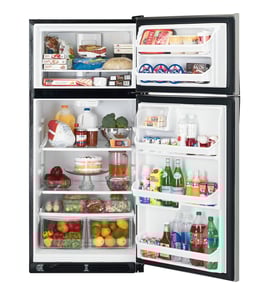



Is top mounted refrigerator better than bottom mounted?
A top-mount refrigerator like the Frigidaire FFTR18G2QS1 is “better” when you want strong energy efficiency, a simpler layout, and easier access to the freezer. A bottom-mount is “better” when you want fresh-food items at eye level and less bending for daily use.
Quick comparison: top-mount vs bottom-mount
| Feature | Top-mount (freezer on top) | Bottom-mount (freezer on bottom) |
|---|---|---|
| Freezer access | Easier (at chest/eye level) | More bending (drawer or door) |
| Fresh-food access | More bending | Easier (most-used section higher) |
| Typical efficiency | Often very good | Varies; can be slightly higher use |
| Complexity | Usually simpler | Often more features and parts |
How to choose for your kitchen and habits
- If you use frozen foods daily, a top-mount keeps the freezer more convenient.
- If you cook with fresh ingredients daily, a bottom-mount keeps the refrigerator section more convenient.
- If you want fewer “extras” to maintain, top-mount designs are typically simpler.
- If you want better organization in the refrigerator section, bottom-mount layouts often feel roomier.
Installation and space notes that matter either way
Even the “best” style will disappoint if it is installed too tight or in a hot spot. For top-mount refrigerators, we follow the clearance guidance in the installation guide:
- Sides and top clearance: about 3/8 inch
- Rear clearance: about 1 inch
- Avoid placing the refrigerator in direct sunlight or near heat sources
- Keep room temperature roughly between 55°F and 110°F for proper cooling performance
Why it matters
The “better” refrigerator is the one that matches how you reach for food every day. Layout affects comfort, organization, and how often doors stay open, which also impacts temperature stability and energy use.
Last updated: January 2026
What are the disadvantages of a top mount fridge?
A top-mount refrigerator like the Frigidaire FFTR18G2QS1 is reliable and efficient, but its main disadvantages are convenience and layout: you bend more to reach fresh-food items, the freezer is at eye level (not the most-used zone for many homes), and premium features like in-door ice and water are less common.
Common disadvantages (what you will notice day to day)
- More bending for fresh food: the refrigerator section sits lower, so produce drawers and lower shelves take more reaching.
- Less flexible organization: many top-mount designs have fewer specialty zones and dividers than some bottom-freezer styles.
- Fewer built-in dispenser options: in-door water and ice are less typical on basic top-mount models.
- Door swing and clearance needs: you still need space for doors to open fully; proper placement helps avoid frustration.
- Temperature swings from frequent freezer use: opening the top freezer often can slightly affect overall airflow and temps.
Setup details that reduce the downsides
Good installation and leveling help doors seal and temperatures stay stable.
- Keep the refrigerator level and slightly tilted back so doors close and seal properly.
- Maintain airflow clearances (typical guidance is 3/8 inch at sides and top and 1 inch at the rear).
- Avoid hot locations and direct sunlight; room temps below 55°F or above 110°F can impair cooling performance.
For model-specific placement and leveling steps, follow the FFTR18G2QS1 installation guide.
Quick comparison: top-mount vs bottom-freezer
| Feature | Top-mount (FFTR18G2QS1 style) | Bottom-freezer style |
|---|---|---|
| Fresh-food access | Lower, more bending | Higher, easier reach |
| Freezer access | Higher, easier reach | Lower, more bending |
| Organization features | Often simpler | Often more configurable |
| Dispensers | Less common | More common |
Why it matters
Most “disadvantages” come down to ergonomics and how your household uses the refrigerator. If you access fresh food many times a day, the lower refrigerator compartment is the biggest tradeoff. If you use the freezer frequently, a top-mount can actually feel more convenient.
For operating tips (temperature settings, crisper use, normal sounds), use the FFTR18G2QS1 owner’s manual.
Last updated: January 2026
What is the upper part of a fridge called?
On the Frigidaire FFTR18G2QS1 top-mount refrigerator, the upper section is the freezer compartment. It’s the insulated area designed to hold frozen foods at the coldest temperatures, and it often houses the ice maker (if equipped) and the freezer air controls.
What you’ll typically find in the upper (freezer) compartment
- Freezer shelves or wire rack(s) for frozen food storage
- Freezer door bins for smaller items
- An air outlet that sends cold air down to the fresh food section
- A freezer temperature control or air damper control (varies by configuration)
- Ice tray or optional automatic ice maker components (on some setups)
Freezer vs. refrigerator section: quick comparison
| Section | Common name | Main purpose | Typical target temperature |
|---|---|---|---|
| Upper section (top-mount) | Freezer compartment | Freeze and store frozen foods | 0°F |
| Lower section | Fresh food compartment | Keep foods cold without freezing | 37°F to 40°F |
Why it matters
Knowing the correct name helps when you’re looking up parts, troubleshooting cooling issues, or following setup steps like leveling and door sealing. For example, proper door alignment and a good seal help both the freezer and fresh food sections hold temperature efficiently.
Where to confirm controls and features for your exact setup
For the exact control locations and feature layout on your FFTR18G2QS1 (including any ice maker notes), use the FFTR18G2QS1 owner's manual.
Last updated: January 2026
What is the most common problem with a Frigidaire refrigerator?
The most common problem we see on Frigidaire refrigerators like model FFTR18G2QS1 is a cooling complaint (warm fridge, warm freezer, or temperature swings). In many cases, the root cause is airflow or heat-transfer related, such as dirty condenser coils, a weak evaporator fan, or a door that is not sealing tightly.
Most common symptoms and what they usually point to
- Refrigerator section warm, freezer still cold: restricted airflow, evaporator fan issue, or frost buildup
- Both sections warm: condenser coils clogged, compressor start issue, or control problem
- Frost on back wall of freezer: defrost system problem (heater, sensor, or airflow blockage)
- Food freezing in fresh-food section: airflow damper setting issue or temperature sensing problem
- Unit seems “off” but lights still work: controls set to 0/OFF or unit in a defrost cycle
For model-specific operating checks and control settings, use the FFTR18G2QS1 owner's manual.
Quick checks we recommend before replacing parts
- Confirm power and controls: Make sure the plug is fully seated; verify the control is not set to 0 (mechanical) or OFF (electronic). The manual notes the refrigerator may also be in a defrost cycle; wait about 20 minutes and recheck.
- Give temperatures time to stabilize: After any adjustment, allow 24 hours for temperatures to level out.
- Check door sealing: Look for gaps, torn gasket areas, or doors that bounce back open.
- Improve airflow: Avoid overpacking; keep vents clear in both compartments.
- Clean safely: Use mild detergent and avoid abrasive pads or petroleum-based cleaners on plastic and gaskets.
Common “problem to part” map (FFTR18G2QS1)
| Problem you notice | Common cause | Example part for this model |
|---|---|---|
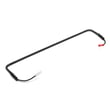
| Frost buildup, warm temps | Defrost system not heating | Refrigerator defrost heater 242044008 |
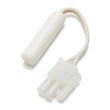
| Temps swing, odd readings | Temperature sensing issue | Refrigerator temperature sensor 240597220 |
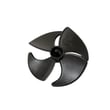
| Poor airflow in freezer | Fan motor or blade issue | Refrigerator motor 242077705 and refrigerator evaporator fan blade 242219302 |
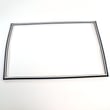
| Moisture, warm spots near door | Door not sealing | Frigidaire refrigerator door gasket (white) 242193206 or Frigidaire refrigerator door gasket (black) 242193212 |
Why it matters
Cooling problems usually get worse over time: food safety, ice buildup, and compressor run time all become bigger issues when airflow is restricted or the refrigerator cannot shed heat efficiently.
Last updated: January 2026