


What is the life expectancy of a Goodman AC unit?
A Goodman central air conditioner like model CE60-1FB typically lasts 15 years. With correct installation, clean airflow, and regular service, many units reach 20 years; poor maintenance and electrical stress can shorten life.
Typical lifespan ranges (what we see most often)
- Average central AC lifespan: 15 years
- Common real-world range: 12 to 20 years
- Shorter lifespan drivers: dirty coils, restricted airflow, low refrigerant from leaks, frequent hard starts
- Longer lifespan drivers: clean condenser coil, correct refrigerant charge, stable voltage, annual tune-up
| Condition | Expected outcome | What to do now |
|---|---|---|
| Regular maintenance, normal climate | 15 to 20 years | Keep coils clean; schedule annual service |
| Heavy run time (hot climate) | 12 to 18 years | Improve airflow; shade unit (without blocking) |
| Repeated hard starts or electrical issues | 10 to 15 years | Test capacitor; check wiring and contactor |
Signs your unit is nearing end of life
- Cooling takes longer or indoor humidity stays high
- Rising electric bills with no thermostat changes
- Frequent breaker trips, buzzing, or hard-start symptoms
- Ice on the refrigerant line or coil (often airflow or charge related)
- Repeated repairs in the same season
Parts that commonly affect longevity
Two of the most failure-prone items in a condensing unit are the run capacitor and the refrigerant filter drier. If your CE60-1FB struggles to start, hums, or the fan and compressor do not run reliably, checking the capacitor is a smart first step.
Why it matters
Knowing the typical life expectancy helps you decide whether to repair or plan a replacement. On older systems, restoring reliable starts and proper refrigerant flow can prevent compressor stress, which is the most expensive failure in a condensing unit.
Last updated: February 2026
What are the parts of a central AC unit?
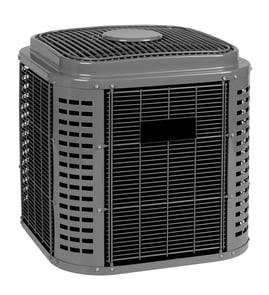
A central AC system is made up of indoor air-moving parts and an outdoor condensing unit. For a Goodman CE60-1FB condensing unit, the key outdoor components include the compressor, condenser coil, condenser fan motor, and electrical controls; common service parts include a run capacitor and filter drier.
Main components you will typically find
- Thermostat: calls for cooling and controls system operation
- Indoor evaporator coil: absorbs heat from indoor air
- Blower (air handler or furnace blower): moves air across the evaporator coil and through ducts
- Refrigerant metering device (TXV or fixed orifice): regulates refrigerant flow into the evaporator
- Outdoor condensing unit (your CE60-1FB): rejects heat outdoors
- Ductwork and registers: distribute conditioned air through the home
What’s inside the outdoor condensing unit (CE60-1FB)
| Component | What it does | Common symptom when it fails |
|---|---|---|
| Compressor | Pumps refrigerant through the system | Unit runs but does not cool, loud humming, trips breaker |
| Condenser coil | Releases heat outdoors | Poor cooling, high head pressure, overheating |
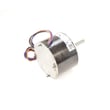
| Condenser fan motor/blade | Pulls air through the coil | Hot air not exhausting, unit overheats and shuts down |
| Run capacitor | Helps start and run motors | Humming, fan will not start, hard starting |
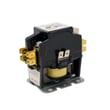
| Contactor/control wiring | Switches power to the unit | Outdoor unit will not run, intermittent operation |
Parts we commonly see replaced on this model
These are model-matched parts that often come up during diagnosis and repair:
- Capacitor 60 CAP050600440RTP: dual-motor run capacitor used for compressor and fan circuits
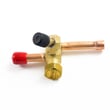
- Filter drier (installed in the refrigerant line): helps remove moisture and contaminants after a sealed-system repair
Why it matters
Knowing which section a part belongs to (indoor vs. outdoor) helps you troubleshoot faster. For example, a weak run capacitor can stop the outdoor fan or compressor even when the thermostat is calling for cooling.
Last updated: February 2026
How to tell the tonnage of a Goodman AC unit?
For a Goodman outdoor condensing unit, we determine tonnage by finding the cooling capacity number embedded in the model number on the data plate and dividing by 12. For your Goodman CE60-1FB, the “60” indicates about 60,000 BTU/hr, which equals 5 tons (60 ÷ 12 = 5).
Where to find the tonnage on the unit
Look for the rating/data plate on the outdoor unit cabinet (usually on the side panel near the electrical compartment). On many Goodman model numbers, the capacity is shown as a two-digit number.
Common capacity codes you may see:
- 18 = 1.5 tons (18,000 BTU/hr)
- 24 = 2 tons (24,000 BTU/hr)
- 30 = 2.5 tons (30,000 BTU/hr)
- 36 = 3 tons (36,000 BTU/hr)
- 48 = 4 tons (48,000 BTU/hr)
- 60 = 5 tons (60,000 BTU/hr)
Quick conversion table (BTU to tons)
| Capacity code | Approx. BTU/hr | Approx. tons |
|---|---|---|
| 24 | 24,000 | 2.0 |
| 30 | 30,000 | 2.5 |
| 36 | 36,000 | 3.0 |
| 48 | 48,000 | 4.0 |
| 60 | 60,000 | 5.0 |
Why it matters
Tonnage affects comfort and efficiency. If the system is mismatched (outdoor condensing unit, indoor coil/air handler, and blower setup), you can see issues like short cycling, poor humidity control, coil freeze-ups, or higher energy use.
Related parts you might see during AC service
If you are diagnosing cooling problems on a CE60-1FB, these common service parts are often involved:
- Capacitor 60 CAP050600440RTP (run capacitor for the compressor and/or condenser fan motor)
- Filter drier (typically replaced during sealed-system repairs)
Last updated: February 2026
What are the common problems with Goodman AC units?
Common problems we see with Goodman central AC units like model CE60-1FB include not cooling well, weak airflow, outdoor unit not starting, and unusual noises. Many issues trace back to airflow restrictions, dirty coils, electrical component wear (especially capacitors), or refrigerant-side problems that require HVAC-safe service.
Most common symptoms and likely causes
- AC runs but doesn’t cool: dirty condenser coil, low refrigerant charge, restricted airflow, failing compressor
- Outdoor unit won’t start: failed run capacitor, contactor/voltage problem, tripped breaker, loose wiring
- Short cycling (on and off quickly): dirty coil, oversized system, thermostat or control issue, refrigerant problem
- Weak airflow indoors: clogged air filter, blocked return/supply vents, blower or duct restriction
- Buzzing, clicking, or humming: failing capacitor, contactor chatter, loose panel, fan motor strain
Parts that commonly fail on outdoor condensing units
Electrical and refrigerant-line components are frequent culprits on condensing units.
| Symptom | Common part involved | What you’ll notice |
|---|---|---|
| Outdoor fan or compressor won’t start | Run capacitor | Humming, hard start, intermittent starts |
| Poor cooling after a sealed-system repair | Filter drier | Restrictions or moisture/contamination concerns |
If your outdoor unit is not starting or is humming, the dual run capacitor is a common first check; for this model, see the capacitor 60 CAP050600440RTP. If you are addressing refrigerant-line contamination or replacing major sealed-system components, the filter drier is often replaced as part of that work.
Quick checks you can do safely
Turn off power at the disconnect and breaker before inspecting anything.
- Confirm the thermostat is set to Cool and the temperature is set lower than room temp
- Replace the indoor air filter and make sure return grilles are not blocked
- Clear debris around the outdoor coil and keep at least 2 feet of clearance
- Look for obvious loose wires or burnt smells (do not touch energized parts)
- If the unit tries to start then stops, plan to test the capacitor with a meter
For electrical testing basics, use our how to use a multimeter to test electrical parts video.
Why it matters
Airflow and electrical health directly affect compressor load. Catching a weak capacitor, dirty coil, or restricted airflow early helps prevent hard starts, overheating, and expensive compressor damage.
Last updated: February 2026
What refrigerant is used in a Goodman AC unit?
For a Goodman central air conditioner condensing unit like model CE60-1FB, the correct refrigerant is the one listed on the unit’s rating plate. Goodman systems commonly use R-410A or R-32 depending on the exact series and production run; always verify on the label before any service.
How to confirm the refrigerant on model CE60-1FB
The refrigerant type and factory charge are printed on the outdoor unit data label (typically on the cabinet or behind the service panel).
- Shut off power at the disconnect and breaker before removing any panel
- Find the rating plate and look for “Refrigerant” (example: R-410A or R-32)
- Note the “Factory charge” amount (often shown in lb-oz)
- Match the full model number CE60-1FB when ordering parts
- Use proper recovery equipment; refrigerant handling is not a DIY task
Common refrigerants you may see on Goodman condensing units
| Refrigerant | Typical application | What it changes for service |
|---|---|---|
| R-410A | Many residential systems for years | Higher operating pressures; requires R-410A-rated tools |
| R-32 | Many newer residential systems | Different charging and safety procedures; verify label |
| R-22 | Older legacy equipment | Not used on modern replacements; service practices differ |
Why it matters
Using the wrong refrigerant or charging method can cause poor cooling, abnormal pressures, and compressor damage. Confirming the refrigerant on the rating plate also helps ensure sealed-system components are compatible.
Parts related to refrigerant flow
If a technician diagnoses a restriction or moisture issue in the sealed system, a common related component is the filter drier B12192-17, which helps remove moisture and contaminants from the refrigerant circuit.
Last updated: February 2026