 Installation guide




What is the average lifespan of a Kenmore washer?
A Kenmore washer typically lasts 10 to 15 years. For a Kenmore commercial washer like model 11041932510, consistent maintenance and correct installation practices (see the 11041932510 installation guide) help you reach the upper end of that range.
Typical lifespan and what affects it
Most washers land in the same general window, but real-world life depends on usage and care.
- Load size: chronic overloading strains the drive system and tub bearings
- Water quality: hard water speeds up scale buildup and valve wear
- Drain performance: slow draining makes the pump work harder each cycle
- Leveling: an unlevel cabinet increases vibration and suspension wear
- Door seal care (front-load style): residue and moisture shorten boot life
Common wear items that can shorten washer life
If you address these early, you usually prevent bigger failures.
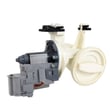
- Drain pump issues (won’t drain, grinding, intermittent draining): consider the washer drain pump assembly WPW10730972
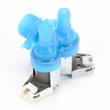
- Fill problems (slow fill, no fill, overfill): the washer water inlet valve WPW10212596 is a common fix
- Leaks at the door opening (front-load style): inspect the washer door boot W11222077 and clamp tension
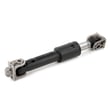
- Excessive vibration: check leveling legs and hardware such as the locking nut and mounting screws
Quick maintenance checklist (monthly)
- Run a hot cleaning cycle (or hot rinse) to reduce detergent and soil buildup
- Wipe the door boot and leave the door ajar between uses
- Check inlet hose screens for sediment; clean if flow is reduced
- Verify the washer is level and stable on the floor
Lifespan at a glance
| Usage pattern | Typical lifespan | What usually fails first |
|---|---|---|
| Light residential use | 12 to 15 years | valves, pump, door seal |
| Heavy family use | 10 to 12 years | pump, bearings, suspension |
| Commercial or high-cycle use | 7 to 12 years | pump, drive components, controls |
Why it matters
Knowing the expected lifespan helps us decide whether to repair or replace. If your 11041932510 is within the typical range, replacing a high-wear part like a drain pump or inlet valve often restores reliable operation for years.
Last updated: February 2026
How to hard reset kenmore washer?
A hard reset on your Kenmore washer model 11041932510 is a simple power reset: disconnect power for 1 minute, then restore power and run a quick cycle. This clears minor control glitches like a frozen keypad or a cycle that will not start.
Hard reset steps (power reset)
- Press Power/Cancel to stop the cycle.
- Unplug the washer (or switch OFF the breaker).
- Wait 60 seconds.
- Plug back in (or switch the breaker ON).
- Press Power and start a Rinse/Spin or short cycle to confirm normal operation.
If the washer still will not run
These checks fix the most common “looks dead” or “won’t start” situations after a reset.
- Confirm the outlet has power (test with a lamp).
- Make sure the door is fully closed and latched.
- Turn both water supply valves fully on.
- Check for a drain problem (standing water, slow drain, or a humming sound).
- If it is stuck mid-cycle, try Cancel/Drain (if available) before restarting.
When a reset points to a drain or fill issue
A reset helps symptoms, but the underlying cause is often water not filling or draining correctly.
| Symptom after reset | Most likely area to check | Common next step |
|---|---|---|
| Water left in tub, won’t spin | Drain path | Inspect pump and drain hose for blockage |
| Won’t fill or fills slowly | Water supply/inlet | Clean inlet screens, verify hot/cold supply |
| Starts then stops quickly | Door lock or control sensing | Reseat connections, retry a short cycle |
If you suspect a drain problem, the Washer drain pump assembly is a common service part for this model: washer drain pump assembly WPW10730972. For fill problems, the inlet valve is the usual suspect: washer water inlet valve WPW10212596.
Why it matters
Resetting the control restores normal operation after a power surge or a stalled cycle, but repeated lockups usually mean a real issue (drain restriction, weak inlet valve, or a failing control). Following the correct reset and quick test cycle helps you avoid unnecessary part replacement.
For model-specific control behavior and any diagnostic or setup steps, follow the 11041932510 installation guide.
Last updated: February 2026
How to identify a Kenmore washer model?
To identify your Kenmore washer model, find the model/serial tag on the machine and copy the full model number exactly as printed (for this unit, it will read 11041932510). On most washers, the tag is on the back of the control panel, inside the door opening, or on the cabinet.
Where to look on model 11041932510
Check these common tag locations first:
- Behind the washer door or on the door jamb (common on front-load designs)
- On the back of the control panel
- On the side of the main cabinet near the bottom edge
- Along the rear panel of the cabinet
If the tag is dirty or faded, wipe it with a damp cloth and use a flashlight to read the characters.
What to write down (and why)
Record the information exactly as shown on the tag.
| What to capture | Example | Why it matters |
|---|---|---|
| Model number | 11041932510 | Ensures parts fit your exact Kenmore commercial washer |
| Serial number | (varies) | Helps match production changes and correct revisions |
| Type/engineering code (if shown) | (varies) | Can affect which control board, pump, or valve is used |
Tips to avoid ordering the wrong part
- Use the full model number, not just “Kenmore 110”
- Match every digit; one wrong number can change the parts list
- If you are replacing a common failure item, confirm it against the model tag first (for example, a drain pump or inlet valve)
- Keep a photo of the tag on your phone for quick reference
Related resources we use for this model
- Use the 11041932510 installation guide to confirm access panels and safe disassembly points before you go looking for labels or internal components.
- If you are troubleshooting a no-drain complaint while identifying the model, the washer drain pump assembly WPW10730972 is a common part involved in draining issues on many Kenmore washers.
Why it matters
Kenmore washers often share similar styling across multiple model numbers, but internal parts like the water inlet valve, electronic control board, and drive belt can differ. Using the exact model number keeps your repair accurate and prevents returns.
Last updated: February 2026
Is it worth repairing a Kenmore washing machine?
Yes, repairing a Kenmore washer is worth it when the fix restores reliable operation for less than the cost of replacing the machine. For the Kenmore 11041932510 commercial washer, repairs are often a smart choice because many common failures are isolated to serviceable parts.
How we decide if repair makes sense
We use a simple cost and condition check:
- Repair cost vs. replacement cost: If the total repair (parts + labor) is under about 50% of a comparable new washer, repair is the better value.
- What failed: Single-part failures (pump, valve, belt) are usually good repair candidates.
- Overall condition: Excessive rust, repeated leaks, or heavy vibration can signal multiple worn components.
- Downtime impact: For a commercial washer, keeping it running often matters more than squeezing maximum age.
- Parts availability: If the needed parts are readily available, repair is typically straightforward.
Common repairs that are usually worth doing on model 11041932510
These are high-impact fixes that often restore normal washing, draining, or spinning:
- Drain problems or standing water: replace the washer drain pump assembly WPW10730972
- No fill or slow fill: replace the washer water inlet valve WPW10212596
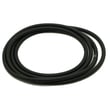
- Burning rubber smell, weak spin, or squeal: replace the washer drive belt WPW10260319
Quick cost-to-benefit guide
| Situation | Typical outcome | Usually worth repairing? |
|---|---|---|
| One failed part (pump, valve, belt) | Predictable fix, good reliability | Yes |
| Multiple symptoms but no leaks | Diagnose, then targeted repair | Often |
| Tub or major structural damage | High parts cost, high labor | Sometimes |
| Repeated leaks plus heavy vibration | Multiple wear points likely | No |
Why it matters
A targeted repair can extend the life of a commercial washer for years, while avoiding the higher upfront cost and installation hassle of replacement. The key is matching the repair to the failure, not replacing parts at random.
What to check before ordering parts
Use the installation guide for Kenmore 11041932510 to confirm access steps, hose routing, and basic setup items that can mimic failures.
- Verify the outlet drains properly (no clogs or slow standpipe)
- Confirm hot and cold supply valves are fully open
- Check inlet screens for sediment
- Look for belt dust or a loose belt path
- Note any error lights or unusual sounds during drain and spin
Last updated: February 2026
How to read a Kenmore model number?
A Kenmore model number is a code that tells us who built the appliance and which design family it belongs to. For Kenmore commercial washer model 11041932510, the first three digits (110) identify the manufacturer, and the remaining digits identify the specific series and configuration.
What each section of a Kenmore model number means
Most Kenmore model numbers follow this pattern:
- Prefix (first 3 digits): manufacturer identifier (for example, 110 is a common washer prefix)
- Middle digits: base design or platform (the “family” of the machine)
- Last digits: feature, color, or production variation details
For model 11041932510, you can read it like this:
| Section | Example | What it tells you |
|---|---|---|
| Manufacturer prefix | 110 | Who built the washer design |
| Model series | 41932 | The washer’s design family |
| Variation | 510 | Specific configuration/version |
Where to find the model number on a washer
On most Kenmore washers, the model/serial tag is typically located in one of these spots:
- Around the door opening (front-load styles)
- Under the lid or on the lid frame (top-load styles)
- On the rear panel
- Inside the service panel area (some commercial units)
Use the full model number exactly as shown when checking parts diagrams or ordering parts; our parts listings are keyed to that full identifier.
Why it matters for parts and troubleshooting
Kenmore uses similar-looking designs across many years, and small model-number differences can change the correct fit for parts like a washer water inlet valve, washer drain pump assembly, or washer drive belt. Using the full model number helps us match the right part the first time.
Quick tips before ordering parts
- Copy the model number character-for-character
- Match any suffix digits (they often matter)
- Confirm the appliance type (washer vs. dryer) even if the prefix looks familiar
- Use the documentation for your exact model when available: 11041932510 installation guide
- If you are unsure, compare the part description and mounting style before purchase
Last updated: February 2026



