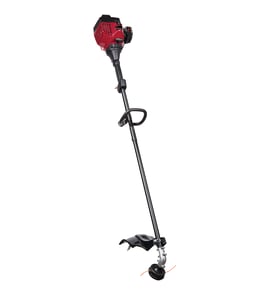



What size line for Homelite trimmer?
Most Homelite ST-385 trimmers run best with 0.080 inch (2.0 mm) trimmer line; if your cutting head is a lighter-duty style, 0.065 inch line is also common. Match the line size to your trimmer head so it feeds smoothly and does not overload the engine.
Quick way to choose the right line size
- Start with 0.080 inch line for general trimming and thicker weeds.
- Use 0.065 inch line if the head jams with thicker line or you mainly trim light grass.
- If the line will not feed, step down one size (for example, from 0.080 to 0.065).
- If the line breaks too easily, step up one size (only if the head accepts it).
- Replace worn head hardware so the line can advance correctly (for example, a missing fastener can let parts shift).
Line size and performance comparison
| Line diameter | Best for | What you may notice |
|---|---|---|
| 0.065 in | Light grass, edging | Easier feeding, faster wear |
| 0.080 in | Most trimming, moderate weeds | Better durability, slightly more load |
Why it matters
Using the correct diameter helps the ST-385 maintain RPM, reduces bogging, and prevents frequent line jams. Oversized line can strain the clutch and engine; undersized line can snap constantly and slow your work.
Related parts that can affect feeding
If the head is loose or misaligned, line feeding problems get worse. Check that fasteners are present and tight; a replacement like the screw 82540 can help restore proper fit if the original is stripped or missing.
Last updated: February 2026
What fuel for a gas trimmer?
For the Homelite ST-385 gas line trimmer, use fresh gasoline mixed with 2-cycle engine oil (a 2-stroke fuel mix). Mix only what you will use soon, and always use the exact gas-to-oil ratio listed for your engine to prevent hard starting, poor power, or engine damage.
What to use (and what to avoid)
- Use fresh, clean unleaded gasoline (stale fuel is a top cause of no-start issues).
- Use 2-cycle oil made for air-cooled small engines.
- Mix fuel in an approved fuel container; do not mix in the trimmer tank.
- Avoid fuel that has been sitting for more than 30 days (unless treated with stabilizer).
- Avoid “straight gas” (no oil) in a 2-cycle trimmer.
Typical 2-cycle mix ratios (quick reference)
Your ST-385 may specify one of these common ratios; use the exact ratio for your engine.
| Mix ratio | Gasoline | 2-cycle oil |
|---|---|---|
| 50:1 | 1 gallon | 2.6 oz |
| 40:1 | 1 gallon | 3.2 oz |
| 32:1 | 1 gallon | 4.0 oz |
Fueling and starting tips that prevent problems
- Shake the fuel can before filling so the oil stays evenly mixed.
- Fill on a cool engine and wipe up spills before starting.
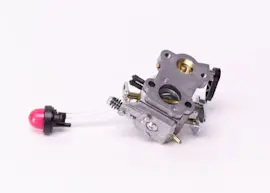
- If the primer bulb is cracked or will not fill with fuel, replace it; see primer bulb UP04802.
- If the trimmer starts then dies, check for restricted fuel flow; a clogged tank filter is common; see filter 49422.
Why it matters
Correct 2-cycle fuel mix lubricates the engine. The wrong ratio (or old fuel) can cause scoring, loss of compression, plug fouling, and repeated no-start or stall complaints.
Last updated: February 2026
What is the ratio of 2 stroke oil to fuel in a Homelite whipper snipper?
For the Homelite ST-385 gas line trimmer, use a 50:1 fuel mix ratio (50 parts gasoline to 1 part 2-cycle oil). Measure accurately and shake the fuel can well before filling the tank so the oil stays evenly mixed.
How to mix 50:1 correctly
- Use fresh, unleaded gasoline in an approved fuel container.
- Use 2-cycle oil made for air-cooled, 2-stroke engines.
- Add some gasoline first, then add the measured oil, then top off with gasoline.
- Cap the container and shake thoroughly.
- Shake again each time before refueling.
Quick mix chart (50:1)
| Gasoline amount | 2-cycle oil needed |
|---|---|
| 1 gallon | 2.6 fl oz |
| 2 gallons | 5.1 fl oz |
| 5 liters | 100 ml |
Why it matters
A correct 50:1 mix protects the piston, piston ring, and crank bearings from overheating and scoring. Too little oil can cause rapid engine wear; too much oil can foul the spark plug and increase smoke and carbon buildup.
If your trimmer runs poorly after mixing fuel
Check these common fuel-related items:
- Old fuel (drain and replace with fresh 50:1 mix)
- Dirty fuel filter (replace the in-tank filter 49422)
- Cracked or stiff primer bulb (replace the primer bulb UP04802)
- Clogged muffler baffle (inspect and clean or replace the baffle muffler 04790)
Last updated: February 2026