Installation guide
 Owner’s manual
 Error Codes



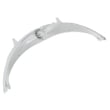
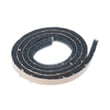
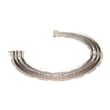
How to replace a GE dryer belt?
To replace the belt on your GE GTD33EASK0WW electric dryer, we unplug the dryer, open the cabinet to access the drum, remove the old belt, then route the new belt around the drum and through the idler pulley and motor pulley before reassembling. Use the GTD33EASK0WW installation guide for cabinet access and safety steps.
Parts and tools we use
- New belt: dryer drum belt WE03X29897
- Putty knife (to release top clips on many GE cabinets)
- 1/4-in. nut driver or socket
- Phillips screwdriver
- Work gloves
Step-by-step belt replacement (GTD33EASK0WW)
- Disconnect power: Unplug the dryer (or switch off the breaker).
- Open the cabinet: Release the top, remove the front panel (and drum support if present).
- Remove the drum: Slip the old belt off the motor and idler, then lift the drum out.
- Install the new belt on the drum: Wrap the belt around the drum with the ribbed side against the drum.
- Route the belt on the pulleys: Reach under the drum and route the belt around the motor pulley and over the idler pulley so the idler applies tension.
- Reinstall drum and panels: Make sure the drum sits on the rear bearing/support, then reassemble.
- Test run: Spin the drum by hand first; then restore power and run a short timed cycle.
Belt routing quick check
| Checkpoint | What “right” looks like | What to fix if not |
|---|---|---|
| Belt position on drum | Centered in the wear path | Re-seat belt before closing cabinet |
| Ribbed side | Ribs against drum | Flip belt over |
| Idler tension | Idler arm pulls belt tight | Re-route belt around idler and motor |
| Drum turns freely | Smooth hand rotation | Check for pinched belt or mis-seated drum |
Why it matters
A correctly routed belt keeps the drum turning at the right speed and prevents squealing, slipping, and premature wear on the idler pulley and motor pulley.
Last updated: January 2026
What is the most common problem with a GE electric dryer?
The most common issue we see with GE electric dryers like model GTD33EASK0WW is a no-heat complaint caused by a failed heating circuit, most often the heating element, a safety thermostat/thermal cutoff opening, or a venting restriction that overheats the heater housing. For model-specific safety and operating guidance, use the GTD33EASK0WW owner’s manual.
Most common symptoms and what they usually point to
- Dryer runs but no heat: heating element, high-limit thermostat, safety thermostat, or power supply issue
- Long dry times: restricted exhaust ducting, lint buildup, weak airflow, or cycling thermostat issues
- Squealing or thumping noise: belt, idler pulley, drum glides/bearings
- Won’t start: door switch, push-to-start switch, timer/control issue
- Stops mid-cycle: overheating from poor airflow, thermostat opening, or motor overload
Parts that commonly fix “no heat” on GTD33EASK0WW
If your GTD33EASK0WW tumbles but won’t heat, these model-matched parts are frequent culprits:
- Dryer heating element WE11M10001
- Dryer high-limit thermostat WE04X26139
- Dryer safety thermostat WE04X25194
- Dryer operating thermostat WE04X25201
Quick comparison: what each part does
| Part | What it controls | Typical symptom when failed |
|---|---|---|
| Heating element | Creates heat | Runs but no heat |
| High-limit thermostat | Prevents overheating | No heat, may trip after overheating |
| Safety thermostat | Backup overheat protection | No heat, often after airflow problems |
| Operating thermostat | Normal temperature cycling | Poor drying, overheating, or inconsistent heat |
Why venting and lint matter (even when a part is bad)
Restricted airflow can overheat the heater housing and repeatedly open safety devices. Before replacing parts, we recommend:
- Cleaning the lint screen every load
- Checking the vent hood flap outside for strong airflow
- Inspecting the duct for kinks, crushing, or heavy lint buildup
- Keeping runs short and using rigid or semi-rigid venting when possible
For step-by-step airflow troubleshooting, use dryer takes a long time to dry.
Why it matters
A GE electric dryer that runs without heat wastes time and energy, and overheating from poor venting can shorten the life of thermostats, wiring, and the heating element.
Last updated: January 2026
When I press the start button on my GE dryer, nothing happens.?
If your GE GTD33EASK0WW electric dryer does nothing when you press Start, the most common causes are a power supply issue, the door not being sensed as closed, or a failed start circuit component (like the push-to-start switch). Use the checks in the GTD33EASK0WW owner’s manual to confirm the correct cycle and control settings.
Quick checks we recommend first
- Make sure the door is fully closed and latched (push firmly until it clicks).
- Confirm the dryer is not set to an “air fluff/no heat” type cycle if you expect heat (it should still run, but settings confusion is common).
- Check the house breaker: many electric dryers use a 2-pole breaker; a half-tripped breaker can leave the dryer appearing dead.
- If the control panel has a power button, try turning it off and back on.
- Unplug the dryer (or switch breaker off) for 2 minutes, then restore power and try again.
Parts that commonly cause a “won’t start” symptom on this model
If power is good and the door is closing properly, these parts are frequent culprits:
- Push-to-start switch: internal contacts wear out; you may feel a weak click or no response.
- Door switch: if it does not close electrically, the dryer will not start.
- Power and start button: if the button assembly is damaged or not making contact.
Compatible parts for GTD33EASK0WW
| Symptom | What it points to | Example compatible part |
|---|---|---|
| No response when Start is pressed | Failed push-to-start switch | Dryer push-to-start switch WE4M416 |
| Dryer thinks door is open | Failed door switch | Dryer door switch WE04X28977 |
| Start button feels broken/loose | Button assembly issue | Dryer power and start button WE04X24719 |
Why it matters
A dryer that will not start is usually being blocked by a safety interlock (door switch) or is not getting the correct electrical supply. Fixing the root cause prevents repeated no-starts and helps avoid overheating or wiring damage from improper resets.
Safety notes before testing or replacing parts
- Disconnect power at the breaker or unplug before removing panels.
- If you smell burning or see arcing at the cord connection, stop and have the power connection inspected.
Last updated: January 2026
Where is the thermal fuse located on a GE electric dryer?
On the GE GTD33EASK0WW electric dryer, the thermal fuse is typically mounted on the blower housing inside the cabinet, near the exhaust air path. You usually access it by unplugging the dryer and removing the rear panel (or front, depending on the cabinet design).
How to access the thermal fuse safely
- Unplug the dryer (or switch off the breaker) before removing any panels.
- Pull the dryer away from the wall and disconnect the vent duct.
- Remove the rear panel screws and lift the panel off.
- Look for a small, flat fuse with two wires on the blower housing near the lint duct.
- Take a photo of wire placement before disconnecting anything.
For model-specific panel removal and screw locations, follow the GTD33EASK0WW installation guide.
What the thermal fuse does (and what to check next)
A thermal fuse is a one-time safety device that opens if the dryer overheats. If it is blown, the dryer may not run or may run with no heat (symptoms vary by design).
Common causes of a blown thermal fuse:
- Clogged lint screen or lint buildup in the lint chute
- Restricted venting (crushed duct, long run, blocked exterior hood)
- Weak airflow from a damaged blower wheel
- Overheating due to a thermostat issue
Quick troubleshooting checklist
- Clean the lint screen and confirm strong airflow at the outside vent.
- Inspect the vent duct for kinks, heavy lint, or long runs.
- Check the blower area for lint buildup.
- Test the fuse for continuity with a multimeter (power disconnected).
| What you find | What it usually means | What to do |
|---|---|---|
| Fuse has continuity | Fuse is likely OK | Check venting and thermostats |
| Fuse is open (no continuity) | Fuse is blown | Replace the fuse and fix airflow restriction |
Why it matters
Finding the thermal fuse location helps you restore safe operation quickly, but replacing a blown fuse without correcting airflow or overheating issues can lead to repeat failures and longer dry times.
Last updated: January 2026
Why is my GE sensor dryer not heating?
If our GE GTD33EASK0WW electric sensor dryer runs but does not heat, the most common causes are a tripped 240V supply issue, restricted airflow, or an open heating circuit (heating element, thermostats, or safety devices). Use the wiring and test steps in the GTD33EASK0WW owner’s manual to confirm the correct checks for this model.
Quick checks first (no disassembly)
- Confirm the dryer is on a dedicated 240V circuit; a tripped breaker can let the motor run on 120V but prevent heat.
- Try a timed dry cycle; some sensor cycles reduce heat if airflow is poor.
- Clean the lint screen and make sure the exhaust hood outside opens fully.
- Check for a crushed, kinked, or excessively long vent run.
- If the drum is hot but clothes stay damp, airflow is the likely issue.
Parts to test on GTD33EASK0WW when there’s no heat
Unplug the dryer (and shut off power at the breaker) before testing continuity.
- Heating element: if open, the dryer will tumble with no heat. Consider dryer heating element WE11M10001.
- High-limit thermostat: opens if the heater area overheats; if stuck open, you get no heat. Consider dryer high-limit thermostat WE04X26139.
- Operating thermostat: regulates normal cycling temperature; if failed open, heat may not run correctly. Consider dryer operating thermostat WE04X25201.
What to test and what “failed” usually looks like
| What you observe | Most likely area | What we typically do next |
|---|---|---|
| Dryer runs, no heat at all | Power supply or open heating circuit | Verify 240V, then test element and thermostats |
| Heat starts then stops quickly | Airflow restriction or high-limit cycling | Clear venting, then test high-limit thermostat |
| Long dry times, weak heat | Venting or lint buildup in ducting | Clean vent path and lint chute |
Why it matters
A no-heat condition on an electric dryer is often tied to airflow and safety controls. Restoring proper venting helps the heater run safely and prevents repeated thermostat trips that can lead to more part failures.
Helpful DIY guidance
For model-specific access panels, wire routing, and test points, follow the GTD33EASK0WW installation guide. For general symptom help, see dryer won’t heat.
Last updated: January 2026