Installation guide
 Owner’s manual
 Error Codes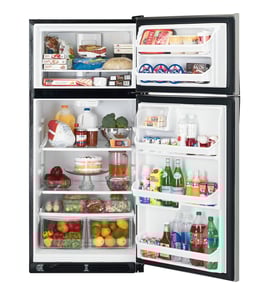

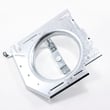
What is the most common problem with a GE refrigerator?
In our experience with GE top-mount models like GTH18GCDDRWW, the most common complaint is not cooling well (fresh food too warm, freezer struggling, or temperatures swinging). The usual causes are dirty condenser coils, airflow problems, or a failing fan motor that cannot move cold air through the cabinet.
Quick checks that fix many cooling complaints
- Set controls to the recommended settings in the GTH18GCDDRWW owner’s manual.
- Make sure air vents inside the fresh food and freezer sections are not blocked by food.
- Clean dust and pet hair from the condenser area (unplug first).
- Confirm the doors close fully and the gaskets seal all the way around.
- Listen for the evaporator fan in the freezer; it should run when the compressor is running.
Common causes and what you’ll notice
| Symptom | Most likely cause | What to do first |
|---|---|---|
| Fresh food warm, freezer OK | Airflow blocked or evaporator fan issue | Clear vents; check fan sound |
| Both sections warm | Dirty condenser coils or condenser fan issue | Clean coils; check fan by compressor |
| Frost buildup, weak cooling | Defrost system problem | Manually defrost, then monitor |
| Moisture or frost near an air vent | Air leak or vent-area condensation | Check door seal; follow vent guidance in the GTH18GCDDRWW installation guide |
Parts that commonly relate to “not cooling” symptoms
If you confirm a fan is not running or is noisy, these model-matched parts are common fixes:
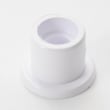
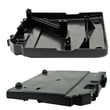
- Refrigerator evaporator fan motor WR60X31522 (moves cold air through the freezer and into fresh food)
- Refrigerator condenser fan blade WR60X10207 (helps remove heat at the condenser)
Why it matters
Poor cooling is more than an inconvenience; it can lead to food spoilage and extra compressor run time. Restoring airflow (clean coils, clear vents, working fans, good door seals) is the fastest path back to stable temperatures.
Last updated: February 2026
What size is an 18 cubic foot refrigerator?
An 18 cu. ft. top-mount (top-freezer) refrigerator like GE model GTH18GCDDRWW is typically about 65 to 68 inches tall, 28 to 30 inches wide, and 30 to 32 inches deep; the exact exterior size depends on door style, hinges, and handle depth, so we recommend confirming the published specs in the GTH18GCDDRWW owner's manual.
Typical dimensions you can plan around
Most 18 cubic foot refrigerators fall into these common ranges:
- Height: 65 to 68 inches (to top of cabinet or hinge cover)
- Width: 28 to 30 inches
- Depth: 30 to 32 inches (cabinet depth is often less than overall depth)
- Door swing clearance: plan extra space on the hinge side
- Ventilation clearance: leave space behind and above per the GTH18GCDDRWW installation guide
Quick sizing table (what to measure)
| Measurement | What it includes | Why it changes |
|---|---|---|
| Height | Floor to top of cabinet or hinge | Leveling legs, hinge cover |
| Width | Side to side of cabinet | Door alignment, trim |
| Depth (overall) | Back to front of doors/handles | Handles, door bins |
| Depth (cabinet) | Back to front of cabinet box | Less affected by handles |
How we recommend measuring your space
- Measure the opening width, height, and depth in at least 3 spots (top, middle, bottom).
- Add clearance for airflow and door swing.
- Confirm the refrigerator can pass through doorways and hallways (often the tightest point).
- If you need more depth clearance, check whether the doors can be removed for moving (steps vary by GE design).
Why it matters
“18 cubic feet” describes interior storage capacity, not the outside footprint. Two 18 cu. ft. refrigerators can fit very differently in a kitchen because hinges, gaskets, and handles change the overall depth and required clearance.
Last updated: February 2026
What is the high end GE refrigerator?
GE’s high-end refrigerator line is Monogram, which is GE’s luxury brand above GE Profile and GE Café. If you’re shopping while owning a GE GTH18GCDDRWW top-mount refrigerator, Monogram is the step-up tier for premium design, features, and built-in configurations.
GE refrigerator brand tiers (quick guide)
Here’s how GE’s main “good, better, best” lineup typically breaks down:
- GE: core, value-focused models (like many top-mount refrigerators)
- GE Profile: upgraded features and styling
- GE Café: premium styling and specialty features (often design-forward)
- Monogram: luxury flagship line with high-end finishes and built-in options
| Line | Typical positioning | Common refrigerator styles |
|---|---|---|
| GE | Everyday reliability | Top-mount, side-by-side |
| GE Profile | Feature upgrades | French door, side-by-side |
| GE Café | Premium design | French door, specialty layouts |
| Monogram | Luxury flagship | Built-in columns, built-in French door |
What “high end” usually means in refrigerators
When customers ask us for “high end,” they usually want one or more of these:
- Built-in or counter-depth fit and finish
- Premium materials and handles
- Advanced temperature management and airflow
- Higher-capacity ice production and storage
- Quieter operation and tighter door sealing
Why it matters
Knowing the tier helps you set expectations for price, installation requirements, and parts support. For example, your GE GTH18GCDDRWW is a practical top-mount design; a luxury built-in Monogram unit often requires different cabinet clearances, water hookups, and installation steps.
For model-specific use and installation details on your current refrigerator, follow the GTH18GCDDRWW installation guide.
Last updated: February 2026
Is the GTH18GCDDRWW garage ready?
The GE GTH18GCDDRWW top-mount refrigerator is not a designated “garage ready” model; for reliable cooling and ice maker performance, we recommend installing it in a temperature-controlled space and following the location and operating limits in the GTH18GCDDRWW owner’s manual.
What “garage ready” means (and why it matters)
A garage-ready refrigerator is designed to keep both compartments at safe temperatures when the room gets very cold or very hot. In a typical garage, wide temperature swings can cause:
- Warm fresh food section when the garage is cold (compressor may not run enough)
- Soft ice or no ice production
- Longer run times and higher energy use when the garage is hot
- Temperature fluctuations that can shorten component life
What we recommend for GTH18GCDDRWW
Use these practical guidelines to avoid food-safety and performance issues:
- Place the refrigerator where ambient temperature stays in a normal indoor range.
- Keep the unit away from direct sun, uninsulated exterior walls, and heat sources.
- Maintain airflow around the cabinet (don’t block rear or lower vents).
- If you must use a garage, monitor temperatures in both sections for several days.
- If ice production is important, consider turning off the ice maker during cold spells.
Quick decision guide
| Installation location | Typical result for a non-garage-ready top-mount | Recommended? |
|---|---|---|
| Heated/air-conditioned room | Stable temps, normal cycling | Yes |
| Insulated garage with mild temps | Usually OK, but monitor | Sometimes |
| Unheated garage with freezing winters | Fresh food can warm, ice maker issues | No |
| Very hot garage (summer heat) | Long run times, poor efficiency | No |
Related installation note from GE documentation
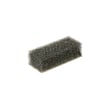
Some GE top-freezer models use a foam control housing kit to address moisture forming around the fresh food air vent; the procedure includes disconnecting power before installation and positioning foam pieces correctly. If you see moisture or frost near the vent area, follow the GTH18GCDDRWW installation guide for model-specific instructions.
Why it matters
Keeping the refrigerator within its intended ambient conditions helps protect food quality, reduces nuisance temperature swings, and prevents avoidable wear on the compressor, evaporator fan, and defrost system.
Last updated: February 2026