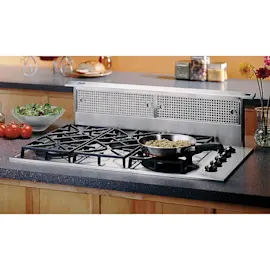
Installation guide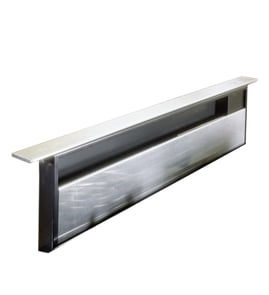



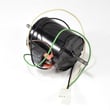
Do downdraft vents need to be vented outside?
Yes. For the Kenmore 23310797 downdraft ventilation system power module, the installation requirements specify that ducted fans must always be vented to the outdoors; this means a true ducted setup cannot terminate in an attic, wall cavity, or other enclosed space. Refer to the installation guide for the approved venting method.
What “vented outside” means for this model
A ducted downdraft system moves cooking smoke, heat, and grease-laden air through metal ductwork and discharges it outdoors.
Common acceptable discharge points include:
- Through an exterior wall
- Through the roof (with proper roof cap)
- Through a rim joist or other exterior termination point
Common unacceptable terminations include:
- Into an attic
- Into a crawlspace
- Into a soffit that is not designed as an exterior termination
- Into a wall cavity
Ducted vs. recirculating: quick comparison
| Setup type | Where air goes | Typical performance | What you need |
|---|---|---|---|
| Ducted (this installation requirement) | Outdoors | Best smoke and odor removal | Metal ductwork, exterior cap, correct routing |
| Recirculating (ductless) | Back into kitchen | Odor reduction only; less effective for heat and moisture | Filter kit designed for the specific unit |
Installation notes that affect venting performance
Even when you vent outdoors, performance depends heavily on the duct run and airflow.
We recommend:
- Use only metal ductwork (helps reduce fire risk)
- Keep the duct run as short and straight as possible
- Seal duct joints to prevent air leaks
- Avoid crushing or kinking ducting
- Confirm the unit is properly grounded
Why it matters
Venting a ducted downdraft outdoors helps remove grease and combustion byproducts from cooking, reduces lingering odors, and helps prevent grease buildup inside cabinets and around the blower housing.
Parts that support airflow (when symptoms point to restriction)
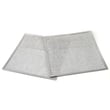
If airflow is weak or the vent seems noisy, check for grease buildup and restrictions first. A clogged filter is a common cause.
Last updated: January 2026
Are downdraft hoods any good?
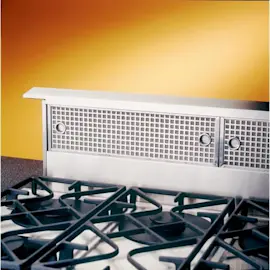
Downdraft ventilation can work well for light to moderate cooking, but it is typically less effective than an overhead range hood at capturing smoke and grease because it pulls air sideways instead of rising heat and vapors. For Kenmore model 23310797, good performance depends heavily on correct ducting, damper operation, and a clean filter.
What “good” looks like for a downdraft system
Downdraft systems are a practical choice when an overhead hood is not possible (for example, an island cooktop or sightline constraints). They perform best when the installation minimizes airflow restrictions.
Common strengths
- Keeps the cooking area visually open (no overhead canopy)
- Can reduce light smoke and odors when used early
- Works best with covered pans and lower-heat cooking
Common limitations
- Harder to capture rising steam, grease, and high-heat smoke
- Performance drops quickly with long ducts, elbows, or small duct size
- Less effective for tall pots, wok cooking, and frequent searing
Installation and airflow factors that matter most
The installation guide for this unit calls out several issues that directly affect capture and airflow. Use the installation guide to confirm your duct layout and discharge configuration.
- Ducted fans must vent to the outdoors (not into an attic or wall cavity)
- Use only metal ductwork to reduce fire risk
- Make sure the blower assembly matches the intended discharge direction (vertical vs. horizontal)
- Confirm the damper blade opens freely (at the hood and at the wall or roof cap)
- Avoid undersized ducting, excessive duct length, and sharp turns
- Wait 20 to 30 seconds between speed changes so RPM can stabilize
Quick “good vs. not good” checklist
| If you see this | It usually means | What to do |
|---|---|---|
| Weak suction at the intake | Restriction or undersized duct | Shorten/simplify duct run; verify damper opens |
| Noisy airflow, little capture | Blower/discharge mismatch | Recheck blower orientation per guide |
| Grease smell lingering | Filter loaded with grease | Clean or replace the filter SR610080 |
Filter maintenance (big impact on performance)
For best efficiency, the guide recommends removing and cleaning the aluminum filter periodically. Soak it in hot water with detergent, rinse thoroughly, or clean it in a dishwasher. If the filter is damaged or won’t come clean, replacing it restores airflow.
Why it matters
A downdraft that is installed correctly and kept clean can reduce everyday cooking odors, but poor ducting, a stuck damper, or a greasy filter can make it feel “useless” even when the motor is running.
Last updated: January 2026
What are the cons of a downdraft range?
Downdraft ventilation (like the Kenmore 23310797 downdraft system) typically captures smoke and grease less effectively than an overhead hood, especially with tall pots or high-heat cooking. It can also be noisier at higher speeds and may require more involved ducting and cabinet space to install correctly.
Common downsides you’ll notice in real kitchens
- Weaker capture for rising smoke: Steam and smoke naturally rise, so pulling it downward is harder.
- Tall cookware blocks airflow: Stockpots and griddles can shield the downdraft intake.
- More noise at higher airflow: Downdraft blowers often sound louder when run hard to compensate.
- Cabinet space tradeoff: The blower, duct, and housing can reduce usable storage below.
- Installation complexity: Duct routing, sealing, and electrical requirements can be more demanding.
Installation and safety limitations to plan for
The installation requirements matter more with downdraft systems because ducting and wiring are tightly constrained. Our guidance aligns with the installation guide for Kenmore 23310797.
- Ducted fans must vent to the outdoors (not into an attic or wall cavity).
- Use metal ductwork to reduce fire risk.
- The unit must be grounded.
- Avoid damaging hidden wiring or utilities when cutting cabinets or walls.
- Plan for adequate make-up air to help prevent backdrafting with fuel-burning appliances.
Performance comparison: downdraft vs. overhead hood
| Feature | Downdraft ventilation | Overhead range hood |
|---|---|---|
| Smoke capture | Fair to good (varies by setup) | Good to excellent |
| Tall pot cooking | Often reduced capture | Usually better capture |
| Cabinet impact | Uses base cabinet space | Uses upper cabinet or wall space |
| Install difficulty | Often higher | Often moderate |
Parts that affect performance most
If performance seems worse than it used to be, the issue is often airflow restriction or a worn blower component.
- Clean and inspect the grease filter; replace if damaged: filter SR610080
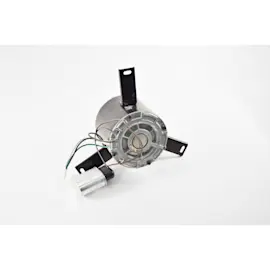
- Check for blower wheel buildup or damage: blower wheel SR531041
- Verify the vent path is not crushed, blocked, or leaking
Why it matters
Poor capture can leave more grease on cabinets, more lingering odors, and more smoke in the kitchen. Keeping the filter clean and the ducting correct helps your Kenmore downdraft system perform as strongly as it can.
Last updated: January 2026
How does a downdraft ventilation system work?
A downdraft ventilation system pulls cooking smoke, steam, and odors sideways and downward at the cooktop, then moves that air through a blower and ductwork to vent outdoors (or through filters on some setups). For Kenmore model 23310797, correct blower orientation and proper ducting are key to strong airflow.
What’s happening inside the system
A typical downdraft setup uses these components to move air:
- Intake/vent opening near the cooking surface captures fumes
- Filter traps grease before it reaches the blower
- Blower wheel and motor create suction and move air
- Damper helps prevent backdraft when the fan is off
- Ductwork and wall/roof cap carry air outside (ducted installations)
If airflow seems weak, the installation guide calls out common causes such as an undersized duct, debris restrictions, or a damper blade that is not opening.
Ducted vs. filtered (recirculating) airflow
Most downdraft systems are designed to exhaust air through ductwork. Here is the practical difference:
| Setup | Where the air goes | What matters most |
|---|---|---|
| Ducted (vented) | Outdoors through metal ductwork | Duct size, length, damper operation, sealing |
| Filtered (recirculating) | Back into the kitchen after filtering | Filter condition, fan speed, cabinet sealing |
For this Kenmore power module, the installation guidance emphasizes ducting to the outdoors and using metal ductwork.
Parts that most directly affect performance
If the system runs but does not capture smoke well, these are the first items we check:
- Filter SR610080 (grease buildup reduces airflow)
- Blower wheel SR531041 (damage or looseness reduces suction)
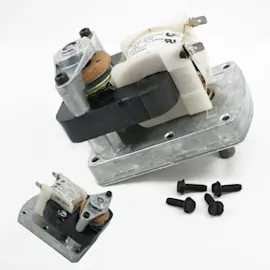
- Control motor S99030132 (speed control issues can mimic weak airflow)
Why it matters
Good downdraft performance depends on airflow. A clean filter, correctly oriented blower (vertical vs. horizontal discharge), and an unrestricted, properly sized duct prevent lingering odors, greasy residue, and slow smoke capture.
For installation and airflow direction details, use the installation guide.
Last updated: January 2026