Installation guide
 Owner’s manual
 Error Codes


What is the lifespan of a Frigidaire Gallery refrigerator?
A Frigidaire Gallery refrigerator typically lasts 10 to 15 years. For your Frigidaire FPHC2398LF1 side-by-side, lifespan depends most on steady temperatures, clean airflow, and staying ahead of water and ice system maintenance; the owner's manual covers normal operation and care.
What affects lifespan the most
- Condenser airflow: Dust buildup and blocked vents make the compressor work harder.
- Door sealing: Poor seals cause longer run times and temperature swings.
- Water and ice system health: Leaks, low water flow, and air in lines stress components.
- Defrost performance: Frost buildup can reduce cooling and overwork fans.
- Filter changes and resets: Timely filter changes help keep water flow consistent.
Maintenance schedule we recommend
| Task | Typical interval | Why it matters |
|---|---|---|
| Replace water filter | Every 6 months (or when prompted) | Protects water flow and ice maker performance |
| Replace air filter | As indicated by the control | Helps reduce odors and keeps airflow fresher |
| Clean condenser area | Every 6 to 12 months | Reduces compressor run time and heat load |
| Check for leaks at fittings | 24 hours after any water work, then periodically | Prevents hidden water damage and valve issues |
Parts that commonly impact longevity
If you’re seeing slow ice production, no ice, or water dispensing issues, these model-matched parts are often involved:
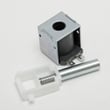
- Refrigerator water inlet valve assembly 242252702 (controls water flow to dispenser and ice maker)
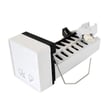
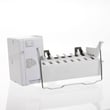
- Ice maker mold 241798231 (ice formation component)
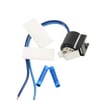
- Refrigerator defrost bi-metal thermostat 5303918214 (helps regulate defrost cycling)
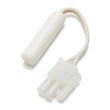
- Refrigerator temperature sensor 240597220 (feeds temperature data to controls)
Why it matters
Most “short lifespan” complaints trace back to heat load (dirty condenser area, poor ventilation) or water system problems (air in lines, restricted flow, small leaks). Keeping temperatures stable and water flow clean helps the sealed system and control boards last longer.
Last updated: February 2026
What is the most reliable side-by-side refrigerator?
No single side-by-side refrigerator is “most reliable” for everyone; the most dependable choice is usually a simpler, well-supported model that matches your needs and is installed correctly. For Frigidaire owners, keeping airflow clear, filters maintained, and temperatures set correctly helps reliability over the long run (see the owner's manual).
What to look for when “reliability” is the goal
We recommend prioritizing these practical factors over brand hype:
- Fewer features that add complexity (especially in-door ice and water)
- Easy access to common service parts (fans, sensors, valves)
- Strong temperature stability (fresh food and freezer hold setpoints)
- Good door sealing and leveling (prevents frost and warm spots)
- Readily available maintenance items (filters, bulbs)
Reliability checklist you can control (especially after install)
A lot of “unreliable fridge” complaints trace back to setup and maintenance. Use this quick checklist:
- Confirm the refrigerator is level and slightly tilted back (doors self-close)
- Verify door seals fully contact the cabinet on all sides
- Recheck water connections for leaks after 24 hours
- Keep condenser area clean and airflow unobstructed
- Replace filters on schedule and confirm they sit flush
For model-specific setup details, follow the installation guide.
Common reliability pain points (and the parts involved)
If you are comparing models, these are the systems that most often drive service calls:
| System | What fails most often | Example part for FPHC2398LF1 |
|---|---|---|
| Ice maker | No ice, jammed harvest, leaking fill | Ice maker mold 241798231 |
| Water dispensing | Slow fill, no water, buzzing valve | Refrigerator water inlet valve assembly 242252702 |
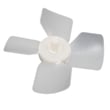
| Cooling airflow | Warm fridge, noisy fan, uneven temps | Refrigerator evaporator fan blade 5308000010 |
| Defrost | Frost buildup, warm temps, fan hitting ice | Refrigerator defrost bi-metal thermostat 5303918214 |
Why it matters
A “reliable” side-by-side is one that maintains safe food temperatures with minimal downtime. Proper leveling, tight door gaskets, clean airflow, and a healthy ice and water system reduce compressor run time and prevent frost and leaks.
Last updated: February 2026
What is the disadvantage of a side-by-side fridge?
A side-by-side refrigerator like the Frigidaire FPHC2398LF1 trades wide, open shelf space for two tall, narrow compartments. The biggest downside is fitting wide items (pizza boxes, party trays) and organizing bulky fresh-food containers, even though you get easy access to both fridge and freezer at eye level.
Common disadvantages (what most owners notice)
- Narrow shelves limit wide platters, sheet pans, and pizza boxes.
- Less flexible fresh-food storage than many bottom-freezer or French door layouts.
- Door bins can feel crowded because each door is narrower.
- External ice and water features add more components to maintain (filters, valves, dispenser parts).
- You may bend more often because both compartments stack items vertically.
Side-by-side vs other styles (quick comparison)
| Feature | Side-by-side | French door / bottom freezer |
|---|---|---|
| Fits wide items | Fair to poor | Good to excellent |
| Freezer access | Very convenient | Convenient, but lower |
| Fresh-food organization | Tall, narrow zones | Wider shelves and drawers |
| Door swing clearance | Often easier in tight kitchens | Can need more clearance |
Why it matters for daily use
If you regularly store wide leftovers, meal-prep trays, or large produce bins, the narrow-compartment design can create frustration and wasted space. If you prioritize quick freezer access and a slimmer door swing, side-by-side can still be the better fit.
Tips to reduce the downsides on FPHC2398LF1
- Use slim, stackable containers to match shelf width.
- Keep wide items on adjustable shelves when possible; avoid overloading door bins.
- Maintain airflow and door sealing; proper leveling helps doors close and seal correctly.
- Plan installation clearances so doors open fully for drawers and baskets (see the installation guide).
- If ice or water performance becomes inconsistent, check the water supply and consider diagnosing the inlet valve (the refrigerator water inlet valve assembly 242252702 is a common related part).
Last updated: February 2026
What fridge to stay away from?
We don’t recommend “staying away” from a specific refrigerator brand or model based on a generic list; instead, we recommend avoiding any fridge that cannot hold safe, steady temperatures, has chronic ice maker or water dispenser leaks, or has poor parts support for your needs. For your Frigidaire FPHC2398LF1, use the owner's manual to confirm proper installation and operating conditions so you can judge performance accurately.
What to avoid (practical red flags)
- Temperature swings (food spoils faster, freezer thaws or refreezes)
- Repeated water leaks at the back or under the unit
- Ice maker that stops producing or overfills frequently
- Loud, constant fan or compressor running (beyond normal cycling)
- Doors that will not seal or stay aligned
- Units installed outside recommended room temperatures
Quick checks you can do on your FPHC2398LF1
The manual guidance for this model is clear: correct setup prevents many “bad fridge” symptoms.
- Plug into a dedicated 115V, 60 Hz, 15A grounded outlet (no extension cord or adapter)
- Do not install where temps drop below 55°F or rise above 110°F
- Keep the toe grille unblocked for airflow
- If water is not connected, keep the ice maker turned off
Common symptom-to-part map (when performance is the issue)
| Symptom | Common cause | Example part on this model page |
|---|---|---|
| No ice or slow ice | Water supply or valve issue | Refrigerator water inlet valve assembly 242252702 |
| Warm fridge, freezer OK | Airflow or evaporator fan issue | Refrigerator evaporator fan blade 5308000010 |
| Frost buildup, warm temps | Defrost system problem | Refrigerator defrost bi-metal thermostat 5303918214 |
Why it matters
A “fridge to avoid” is usually one that cannot maintain stable temperatures in real use. Installation conditions (power, airflow, room temperature) and a few key systems (defrost, fans, water inlet) drive reliability and food safety more than the badge on the door.
Last updated: February 2026