 Owner’s manual
 Error Codes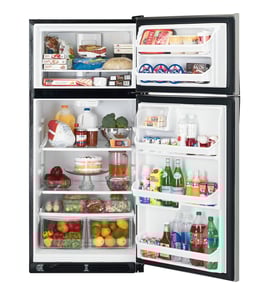



How to tell cubic feet of Kenmore refrigerator by model number?
For Kenmore model 11160712910, the most reliable way to confirm cubic feet is to check the capacity listed in the owner's manual. If you do not see capacity listed for your exact revision, you can estimate it by measuring the interior and converting cubic inches to cubic feet.
- Check the model’s specs in the manual: look for “capacity” or “cu. ft.” in the specifications section of the owner's manual.
- Look for a rating/spec label inside the fresh food section (often on a side wall or near the crisper area); it sometimes lists capacity.
- Measure the usable interior space and calculate an estimate (helpful when labels are missing).
- Use model-family clues carefully: some Kenmore model families share common sizes, but the model number alone is not a guaranteed capacity code.
- Measure the inside of the refrigerator compartment (and freezer, if you want total capacity):
- Height (inches)
- Width (inches)
- Depth (inches)
- Multiply:
H x W x D = cubic inches - Convert to cubic feet:
cubic inches ÷ 1728 = cubic feet
| What you have | What to do | Result |
|---|---|---|
| Interior inches | Multiply H x W x D | Cubic inches |
| Cubic inches | Divide by 1728 | Cubic feet |
| Two compartments | Calculate each, then add | Total cu. ft. |
Capacity affects how you shop for replacement shelves and bins, plan food storage, and compare refrigerator sizes. It also helps when troubleshooting cooling complaints, since overloading a smaller compartment can restrict airflow.
If you are seeing a display code while checking specs, use our Kenmore 111 model top freezer refrigerator error codes guide to interpret the code before troubleshooting further.
Last updated: February 2026
What is the top mount refrigerator?
A top-mount refrigerator is a classic fridge layout where the freezer compartment is on top and the fresh-food (refrigerator) compartment is below. Your Kenmore 11160712910 uses this style to keep everyday refrigerated items at easy reach while storing frozen foods above.
- Freezer on top: cold air is produced and managed in the upper section.
- Refrigerator below: chilled air is routed down to maintain fresh-food temperatures.
- Simple airflow design: fewer moving parts than some multi-door styles.
- Straightforward storage: shelves and bins are typically easy to remove and clean.
| Feature | What you get | What to watch for |
|---|---|---|
| Accessibility | Fresh-food section is at eye level | Freezer items may be higher up |
| Efficiency | Often efficient for the capacity | Door openings affect temps quickly |
| Maintenance | Usually simpler to troubleshoot | Frost/ice issues still possible |
From the product documentation, this Kenmore top-mount platform is listed at approximately:
- Overall size: about 29.9 in wide, 28.8 in deep, 66.3 in high
- Weight: about 176.7 lb
- Refrigerant type: R600a
For the exact configuration, features, and operating guidance for your unit, use the owner's manual.
Knowing you have a top-mount design helps you troubleshoot correctly (airflow, defrost behavior, and door-seal issues differ by layout) and choose the right maintenance steps for temperature control, ice buildup, and storage performance.
Last updated: February 2026
What is the top part of a fridge called?
In a Kenmore top-mount refrigerator like model 11160712910, the top section is the freezer compartment. It is designed to keep foods frozen and, on some configurations, it can also support an optional ice maker.
The freezer’s job is to maintain below-freezing temperatures so food stays safely frozen longer. In a top-mount design, cold air is produced at the evaporator and circulated to cool both the freezer and the fresh food section.
Common freezer features include:
- Freezer shelves or bins for organizing frozen foods
- A freezer door gasket (seal) to prevent warm air leaks
- Air vents that help balance temperatures between compartments
- A defrost system to prevent heavy frost buildup
- Optional ice maker capability on some versions
| What you see | Common name | What it means |
|---|---|---|
| Top compartment | Freezer | Frozen food storage area |
| Bottom compartment | Refrigerator (fresh food) | Above-freezing food storage |
| Divider/air vents | Air damper/vents | Helps move cold air to the refrigerator section |
Knowing the correct name helps when you use the owner's manual for operating tips, temperature control guidance, and troubleshooting. It also helps you describe symptoms accurately, such as “freezer cold but refrigerator warm,” which often points to airflow or evaporator fan issues.
Try these quick checks first:
- Confirm the freezer temperature is set correctly (typical target is 0°F)
- Make sure vents are not blocked by packages or bins
- Check that the freezer door closes fully and the gasket seals all the way around
- Listen for the evaporator fan running when the door switch is pressed
- Look for heavy frost on the back freezer panel (can indicate a defrost problem)
Last updated: February 2026
What is the life expectancy of a Kenmore refrigerator freezer?
Most Kenmore refrigerator-freezer units, including the Kenmore 11160712910 top-mount refrigerator, typically last 12 to 15 years with normal household use. Consistent cleaning, good airflow around the cabinet, and fixing cooling or sealing issues early are what most often push lifespan toward the high end.
- Condenser cleanliness: Dust buildup makes the compressor run hotter and longer.
- Ventilation clearance: Blocked airflow around the refrigerator increases wear.
- Door gasket condition: Air leaks force longer run times and can cause frost issues.
- Temperature settings: Over-cold settings can increase run time and icing.
- Ice maker and water system care (if equipped): Correct water pressure and filter changes help prevent leaks and valve problems.
| Task | How often | Why it helps |
|---|---|---|
| Vacuum/brush condenser area | Every 6 to 12 months | Reduces compressor workload |
| Check door seal for gaps and tears | Every 3 to 6 months | Prevents warm air intrusion |
| Confirm temps are stable (fresh food and freezer) | Monthly | Catches cooling problems early |
| Replace water filter (if used) | About every 6 months | Protects water valve and improves flow |
- Compressor runs almost constantly, even after cleaning and good airflow
- Temperatures swing (food spoils faster or freezer thaws)
- Excess frost buildup or repeated defrost problems
- Water leaks that return after clearing the drain and checking supply lines
- Loud, persistent fan or compressor noises
A refrigerator that is working harder than it should uses more energy and puts extra stress on the sealed system and compressor. Basic upkeep and quick troubleshooting often prevent the most expensive failures.
For model-specific operating and care guidance, use the owner's manual. If you’re troubleshooting display codes on Kenmore 111 models, use our Kenmore 111 model top freezer refrigerator error codes guide.
Last updated: February 2026
What is the code Sy Ef on a Kenmore refrigerator?
On Kenmore top-mount refrigerator model 11160712910, SY EF is not a standard Kenmore error-code format; it usually indicates the display is showing a misread or incomplete code (often from a brief power interruption or a stuck key). Start with a reset and then confirm the exact characters shown.
- Write down the code exactly as shown (uppercase/lowercase, spaces, flashing segments).
- Watch the display for 60 seconds; some models alternate between two codes.
- Check whether any buttons feel stuck or continuously pressed.
- If the code appeared after a power outage, treat it as a reset-related display event first.
- Unplug the refrigerator (or turn off the breaker) for 5 minutes.
- Restore power and allow 10 minutes for the control to stabilize.
- Verify both compartments are cooling and the interior lights and fans operate normally.
- If the code returns, check for obvious airflow restrictions (blocked vents, overpacked freezer).
Many 7-segment displays can make letters look similar. Here are common look-alikes to re-check:
| What you see | Often actually is | Why it matters |
|---|---|---|
| SY | 5Y or S1 | Segment display can make numbers look like letters |
| EF | E1, E7, or F1 | Missing segments can change the meaning of the code |
| “SY EF” | Two alternating codes | Some controls cycle codes instead of showing one |
Using the correct code is the difference between a simple reset and targeted troubleshooting (fan, defrost, sensor, or control). A misread code leads to replacing the wrong parts and losing cooling time.
For model-specific display behavior and any documented codes for 11160712910, use the 11160712910 owner's manual. For Kenmore 111-series code patterns and examples, use Kenmore 111 model top freezer refrigerator error codes.
Last updated: February 2026





