Installation guide
 Owner’s manual
 Error Codes


Are bottom mount fridges better?
Yes, a bottom-mount refrigerator like the GE CFCP1NIXCSS is “better” for many households because the fresh-food section sits higher, so you reach everyday items at eye level and bend less. The tradeoff is that you’ll bend more often for frozen foods in the lower drawer.
What “better” means in day-to-day use
Bottom-mount designs usually feel more convenient when you use the refrigerator compartment more than the freezer.
- Fresh foods are easier to see and grab without crouching
- Less bending for common tasks like getting milk, produce, and leftovers
- Wide shelves make it easier to organize larger platters and meal prep containers
- Freezer drawer can hold bulky items, but you’ll bend to access it
- Door swing and clearance matter more in tight kitchens (plan the install space)
Quick comparison: bottom-mount vs top-freezer
| Feature | Bottom-mount (like CFCP1NIXCSS) | Top-freezer |
|---|---|---|
| Fresh-food access | Easier (higher) | Lower (more bending) |
| Freezer access | Lower drawer (more bending) | Easier (higher) |
| Organization | Strong for fresh food | Strong for freezer-first users |
| Typical cost | Often higher | Often lower |
Installation and clearance considerations (often overlooked)
A “better” fridge is also one that fits and vents correctly. For this GE bottom-mount style, we recommend confirming clearances and doorway width before moving it into place using the installation guide.
- Measure doorways and turns before delivery or moving
- Leave space for airflow at the top, sides, and back
- Pull the refrigerator straight out when servicing; avoid sliding sideways to protect floors
- Make sure the power cord and any icemaker water line do not get pinched when pushing back
Why it matters
Choosing the right configuration reduces daily strain and helps prevent temperature issues caused by poor airflow or tight clearances. A bottom-mount is a strong choice when fresh-food convenience is the priority.
Last updated: February 2026
Is GE CFCP1NIXCSS considered high end?
Yes. The GE CFCP1NIXCSS is typically considered a premium, high-end style refrigerator within GE’s lineup because it’s a built-in, bottom-mount design with higher-end fit and finish than standard freestanding models. For the exact features and configuration for your unit, use the owner's manual.
What “high end” means for this GE bottom-mount refrigerator
In our experience, refrigerators are “high end” when they emphasize built-in installation, design-forward appearance, and premium components.
Common high-end indicators include:
- Built-in or integrated-style installation (flush, cabinet-depth look)
- Higher parts cost and more specialized components (controls, boards, inverter)
- Tighter door alignment and sealing requirements
- More advanced temperature management (multiple sensors, control boards)
- Premium accessories such as filtration and icemaker options
Quick comparison: premium built-in vs standard freestanding
| Feature | Premium/built-in style (like CFCP1NIXCSS) | Standard freestanding |
|---|---|---|
| Installation | More precise leveling and fit | More forgiving |
| Service access | Often tighter spaces | Usually easier |
| Parts complexity | More electronics and sensors | Typically simpler |
| Typical price tier | Higher | Lower to mid |
Parts on this model that reflect a more premium design
Seeing these types of parts listed for CFCP1NIXCSS is a strong sign you’re in a higher-end category:
- Inverter WR49X10283 (supports variable-speed compressor operation)
- Refrigerator main board WR55X10956 (manages cooling logic and system inputs)
- Temperature sensor WR55X10025 (feeds temperature data to the controls)
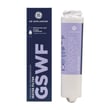
- GE smartwater refrigerator water filter GSWF (filtration system support)
Why it matters
“High end” usually means better aesthetics and features, but it also means installation accuracy and maintenance matter more. For example, door alignment and sealing are critical for stable temperatures and preventing frost or moisture issues.
Last updated: February 2026
What is the most common problem with a GE refrigerator?
The most common issue we see with a GE refrigerator like model CFCP1NIXCSS is a cooling complaint (fresh food too warm, freezer too warm, or temperatures that swing). In many cases, the cause is airflow, control settings, or a failed cooling component such as a fan motor, sensor, or defrost part; use the owner's manual to confirm control settings and normal operation.
Quick checks first (no parts needed)
- Make sure doors fully close and seals are making contact all the way around.
- Avoid blocking air vents with food; poor airflow causes warm spots.
- Set temperatures one step colder if compartments are too warm (then wait 24 hours to stabilize).
- If the unit was just installed or recently unplugged, allow 12 to 24 hours for temperatures to recover.
- If the compressor seems to run a lot, that can be normal after loading groceries or during hot weather.
Common “not cooling” causes and the parts that often fix them
If basic checks do not help, these are frequent repair paths for cooling problems:
| Symptom | What it often points to | Example part for CFCP1NIXCSS |
|---|---|---|
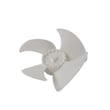
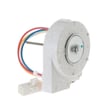
| Freezer cold but fridge warm | Airflow problem (evaporator fan or damper) | Rca refrigerator evaporator fan motor WR60X10185, refrigerator air damper WR17X12456 |
| Frost buildup, warming over time | Defrost system issue | Refrigerator defrost bi-metal thermostat WR50X10069 |
| Temps fluctuate or read wrong | Sensor or control issue | Temperature sensor WR55X10025 |
Why it matters
Cooling problems can spoil food, overwork the compressor, and create secondary issues like ice buildup or water leaks. Catching airflow and defrost problems early usually prevents bigger repairs.
When it is not just “cooling”
These are also very common GE refrigerator complaints:
- Ice maker slow or not making ice (new installs can take 12 to 24 hours to start producing ice).
- Water dispenser weak or not working (often air in the line or a clogged filter).
- Unusual noises (often fans cycling on and off).
- Water leaks (commonly a drain or water supply issue).
For model-specific operating details and troubleshooting steps, follow the owner's manual.
Last updated: February 2026