



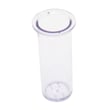

Which brand of food processor is best?
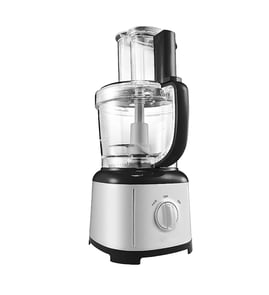
KitchenAid is one of the best food processor brands for most home kitchens because it balances performance, durability, and widely available replacement parts; for the KitchenAid KFP1466ER0 specifically, choosing KitchenAid also makes it easier to keep the machine running long-term by replacing wear items like the bowl, blade, or discs.
How we recommend choosing the “best” brand
Different brands win for different priorities; we focus on what affects real-world results and ownership.
- Power and consistency: strong motor and stable speed under load (dense doughs, hard cheese)
- Build quality: tight-fitting bowl and lid, sturdy base, durable drive components
- Attachments you will actually use: slicer, shredder, dicing kit, mini bowl
- Parts availability: bowls, blades, pushers, switches, and motor components
- Ease of cleaning: fewer crevices, dishwasher-safe components where applicable
Best brand by need (quick comparison)
| If you care most about... | What to look for | Brand direction |
|---|---|---|
| Everyday chopping, slicing, shredding | Solid bowl fit, sharp multipurpose blade | KitchenAid is a strong pick |
| Dicing and prep versatility | Dicing kit support, stable feed tube | KitchenAid models that support dicing |
| Long-term serviceability | Replaceable bowl, blade, discs, switches | KitchenAid with available parts |
| Budget and occasional use | Smaller capacity, simpler controls | Value-focused brands can work |
Keeping a KitchenAid KFP1466ER0 performing like “the best”
Even a great brand feels disappointing when a worn accessory or cracked bowl causes leaks, wobble, or poor cutting. For this model, these parts are common performance drivers:
- Food processor multi-purpose blade WPW10451463 (primary chopping and mixing blade)
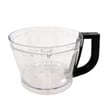
- Food processor bowl W10723445 (main work bowl; fit and sealing affect results)
- Shredder disc WPW10451465 (shredding performance depends on sharpness and true alignment)
- Disc slicer W10723406 (slice thickness consistency depends on disc condition)
- Dicing assembly W10724215 (dicing quality depends on a straight grid and proper seating)
Why it matters
“Best” is not only about brand reputation; it is about whether the food processor stays safe, stable, and consistent over years of use. A brand with strong parts support helps you restore performance instead of replacing the whole unit.
Last updated: February 2026
How do I tell what size my KitchenAid mixer is?
To tell what size your KitchenAid stand mixer is, we match the mixer’s model number to its bowl capacity and series. Since this page is for the KitchenAid KFP1466ER0 food processor (not a mixer), use the mixer’s model tag and bowl markings to identify the correct quart size.
Fast ways to identify mixer size
- Find the model number on the mixer’s trim band or underside of the base (many start with KSM).
- Check the bowl for stamped markings (common clues include K45, K5, K6).
- Look at the head style: tilt-head mixers are commonly smaller; bowl-lift mixers are commonly larger.
- Measure usable capacity: if you have the bowl, its quart rating is the most direct “size” indicator.
- If you are shopping parts, confirm the exact model number first so attachments and bowls fit correctly.
Typical KitchenAid mixer sizes (quick reference)
| Mixer type | Common bowl size range | What it’s usually used for |
|---|---|---|
| Tilt-head | 3.5 to 5 quarts | Everyday mixing, lighter doughs |
| Bowl-lift | 5 to 7+ quarts | Heavier doughs, larger batches |
Why it matters
Mixer “size” is really about bowl capacity and fit. Bowls, beaters, and accessories are designed around specific model families; the wrong size can cause poor mixing, rubbing, or a bowl that will not lock in.
If you meant this KitchenAid KFP1466ER0 food processor
KFP1466ER0 is a food processor model, so “quart size” does not apply the same way as a stand mixer. If you are trying to identify or replace food processor components, match parts by model number and component type, such as the food processor multi-purpose blade WPW10451463 or food processor bowl W10723445.
Last updated: February 2026
What should you not put in a food processor?
For your KitchenAid KFP1466ER0 food processor, avoid processing very hot foods, large amounts of thin liquids, extremely hard items (like big bones or solid frozen blocks), and oversized tough meats; these can overwork the motor, damage the bowl, or dull the cutting edges on the blade.
Items to avoid (and what to use instead)
- Hot foods or boiling liquids: let food cool first to prevent pressure and splatter.
- Thin liquids in large volume (smoothies, soups): use a blender or process in very small batches.
- Hard items: large bones, fruit pits, or rock-hard cheese rinds.
- Solid frozen blocks: thaw slightly; cut into smaller pieces first.
- Very tough, large meat chunks: trim, cube small, and work in short pulses.
- Overfilled batches: too much food can stall the blade and strain the drive.
Why it matters for KFP1466ER0
A food processor is designed for chopping, slicing, shredding, and mixing at controlled loads. Pushing it beyond that can strip drive components, crack the work bowl, or quickly dull the cutting surfaces.
Quick prep guide (safer processing)
| Food type | Better approach | Why it helps |
|---|---|---|
| Warm soup base | Cool to warm, then process | Reduces splatter and stress |
| Frozen fruit | Thaw 5 to 10 minutes, cut smaller | Prevents stalling |
| Meat | Cube 1-inch pieces, pulse | Avoids binding |
| Hard vegetables | Pre-cut into chunks | Keeps feed even |
Parts that commonly get stressed when overloaded
If you notice poor chopping, leaking, or the unit struggling after a jam, these model-matched parts are often involved:
- Food processor multi-purpose blade WPW10451463 (dulling or nicks reduce performance)
- Food processor bowl W10723445 (cracks, leaks, or worn locking surfaces)
- Motor, with gearbox W10724217 (grinding noise, weak power, intermittent drive)
Last updated: February 2026
What is the best food processor that does everything?
If you want a food processor that “does everything,” the best choice is the one that matches your most-used tasks (chopping, slicing, shredding, dicing) and has the right accessories. For KitchenAid KFP1466ER0 owners, adding the right attachments and keeping key wear parts fresh often delivers the all-around performance people are looking for.
What “does everything” really means
Most all-in-one performance comes from having the right blade and disc set, plus a stable bowl and feed system.
- Chopping and pureeing: multi-purpose blade
- Slicing: slicer disc with consistent thickness
- Shredding: shredder disc for cheese and vegetables
- Dicing: dicing kit (grid plus blade)
- Batch prep: larger bowl capacity and a secure pusher
Best all-around setup for KFP1466ER0
If your goal is maximum versatility with your current KitchenAid, these are the most impactful add-ons and replacements.
| Task | Part to check/replace | What you gain |
|---|---|---|
| Everyday chopping | Food processor multi-purpose blade WPW10451463 | Cleaner cuts, less smearing, faster prep |
| Slicing | Disc slicer W10723406 | More even slices, less jamming |
| Shredding | Shredder disc WPW10451465 | Faster shredding, more consistent results |
| Dicing | Dicing assembly W10724215 | True dicing without hand-cutting |
| Feed control | Food processor pusher W11715728 | Safer, steadier feeding and better results |
When it’s better to replace the whole machine
A new food processor makes sense when the motor or controls are failing, or when the bowl no longer locks securely.
- Intermittent power or no-start issues (often switch or motor related)
- Excessive noise, burning smell, or weak torque under load
- Cracked bowl or persistent leaking around the work bowl area
- Missing multiple accessories and the cost to rebuild is high
Why it matters
A “do-everything” food processor is mostly about consistent results and fewer workarounds. Sharp cutting parts, a stable bowl, and the right discs reduce prep time, improve texture, and help prevent jams and overloads.
Last updated: February 2026
How old is my KitchenAid mixer by serial number?
This parts page is for the KitchenAid food processor model KFP1466ER0, not a stand mixer; serial-number dating methods vary by product line. For a KitchenAid stand mixer, the serial number can be used to identify the production date, but the most reliable first step is confirming you have the correct model and serial tag.
Where to find the serial number
On most KitchenAid stand mixers, the serial tag is typically located in one of these spots:
- Under the base
- On the back of the pedestal
- On the rear of the mixer head
- On a label near the power cord entry
How serial-number dating usually works
KitchenAid commonly encodes a build timeframe in the serial number; the exact pattern depends on the mixer generation.
Typical approaches you will see:
- A year code (letter or number) followed by a week number (often two digits)
- Older formats that use a different sequence (often associated with earlier production runs)
Quick accuracy checks
- Use the serial number for dating; the model number is for identifying the exact product version.
- Copy the serial number exactly; confusing 0/O or 1/I changes the result.
- If the label is worn, take a clear photo and zoom in before decoding.
If you are actually working on the KFP1466ER0 food processor
If your goal is to service the KFP1466ER0 food processor, age is less important than matching the correct replacement part by model. Common KFP1466ER0 items customers replace include the food processor bowl W10723445 and the food processor multi-purpose blade WPW10451463.
| What you are trying to do | Best identifier to use | Example |
|---|---|---|
| Date a stand mixer | Serial number | Year code plus week number |
| Order the right part | Model number | KFP1466ER0 |
Why it matters
KitchenAid changes designs across product lines and production runs; confirming the correct model prevents ordering a bowl, blade, switch, or housing that will not fit.
Last updated: February 2026